

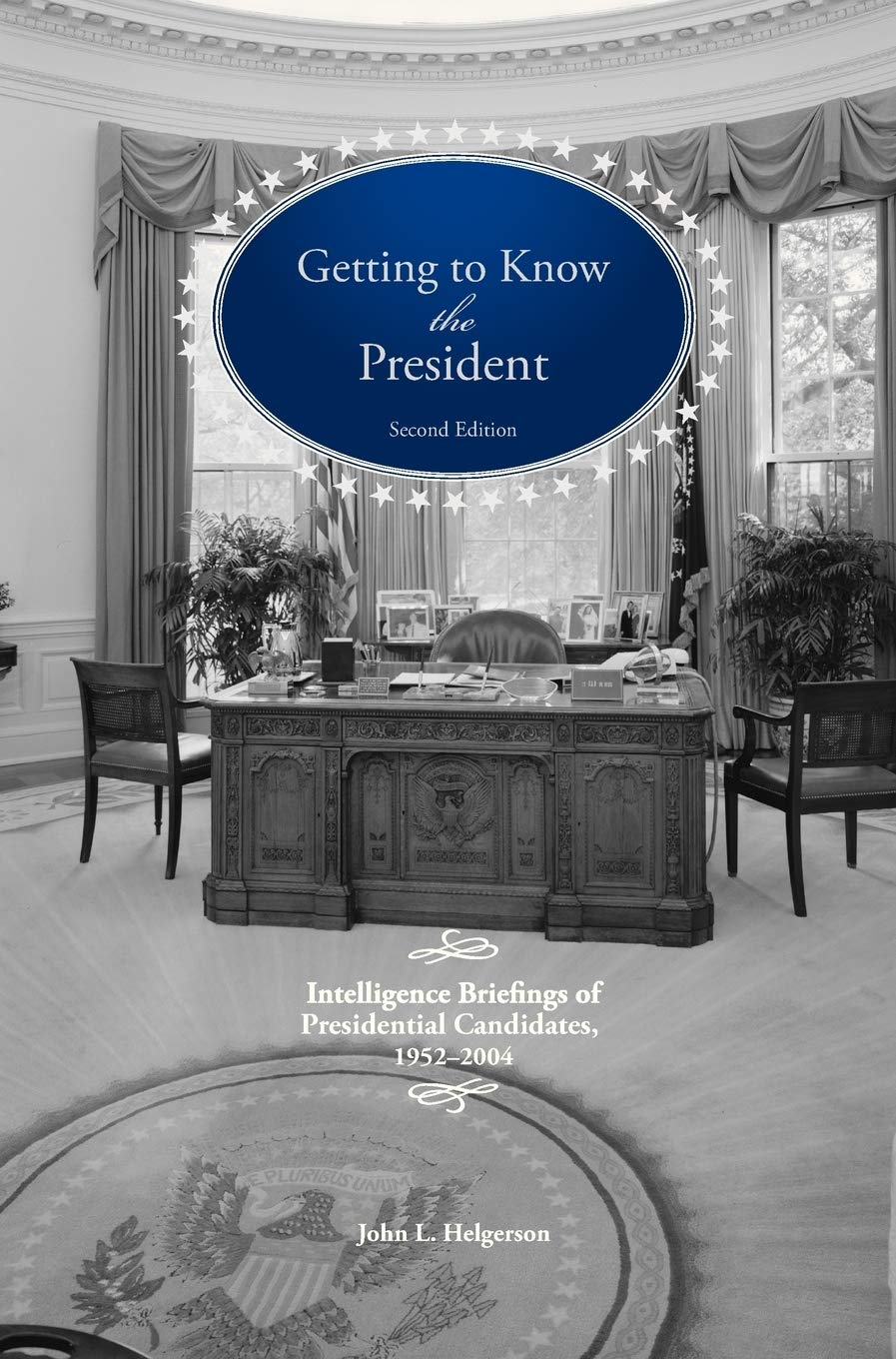
Getting To Know the President: Intelligence Briefings of Presidential
Getting To Know the President: Intelligence Briefings of Presidential
Price subject to change. Tap below for current.
Couldn't load pickup availability
In this review of Getting To Know the President, John Helgerson offers a focused, archival study of how the US intelligence community briefed presidential candidates and presidents-elect from 1952 through 2004. This updated second edition, produced by the CIA's Center for the Study of Intelligence, is best for readers who want a sober, document-based account of briefing mechanics and the relationship between intelligence agencies and the executive. The single biggest reason to buy is its unique, primary-source perspective on how intelligence shaped transitions and early presidencies.
Key Features
- Updated second edition: Adds coverage of the three elections and transitions between 1996 and 2004 so readers see more recent briefing practices and continuity over time.
- Document-based analysis: Draws on internal accounts and historical records to explain the mechanics of briefings rather than relying on speculation.
- Focus on interaction: Examines how briefers and principals interacted, giving insight into communication dynamics that affect decision making.
- Practical guidance: Includes observations on how and what to brief during campaigns and transitions, useful to scholars of executive decision processes.
- Institutional perspective: Shows how intelligence services influenced, and were influenced by, presidents across decades, illuminating long-term patterns.
Who It's For
This book is aimed at historians, political scientists, intelligence scholars, and informed readers with a particular interest in the relationship between the intelligence community and the presidency. Those researching presidential transitions, briefing protocol, or the evolution of intelligence support will find the material directly relevant.
Readers seeking a narrative biography of presidents or a polemical critique of intelligence policy should look elsewhere; this is an analytical, archival study that stresses procedure and institutional interaction rather than partisan argument or personal profiles.
Pros & Cons
Pros
- Provides a rare, authoritative window into intelligence briefings across five decades, valuable for primary-source study.
- Updated material extends the book's usefulness to include late 20th and early 21st century transitions.
- Clear attention to the mechanics of briefing offers concrete lessons about information sharing in campaigns and transitions.
Cons
- Style is academic and procedural, which may feel dry to readers expecting narrative or colorful anecdotes.
Specifications
| Title | Getting To Know the President: Intelligence Briefings of Presidential Candidates, 1952-2004 |
| Author | John L Helgerson |
| Contributors | Christopher Andrew; Robarge David (associated names) |
| Edition | Updated second edition |
| Publisher | CIA Center for the Study of Intelligence |
| Coverage | Intelligence briefings to candidates and presidents-elect, 1952-2004 |
Our Verdict
Getting To Know the President is a tightly focused, well-documented study that should be purchased by anyone researching intelligence support to the executive or presidential transitions. Its archival approach and updated content make it good value for scholars and policy students who need a clear account of briefing practices and institutional effects across decades.
Frequently Asked Questions
Does this edition update the original?
Yes. The second edition is revised and updated to include accounts of intelligence support in the elections and transitions through 2004.
Is this a partisan critique?
No. The work is an analytical, institutional study focused on briefing mechanics and relationships rather than partisan commentary.
Who authored the book?
The study is by John L Helgerson and is associated with contributors Christopher Andrew and Robarge David under the CIA Center for the Study of Intelligence.
Editor's Take
A well-documented, archival study ideal for scholars of intelligence and presidential transitions; it updates the original with coverage through 2004 and explains briefing mechanics and institutional effects.

Recently viewed
Recently viewed products will appear here as customers browse the store.