

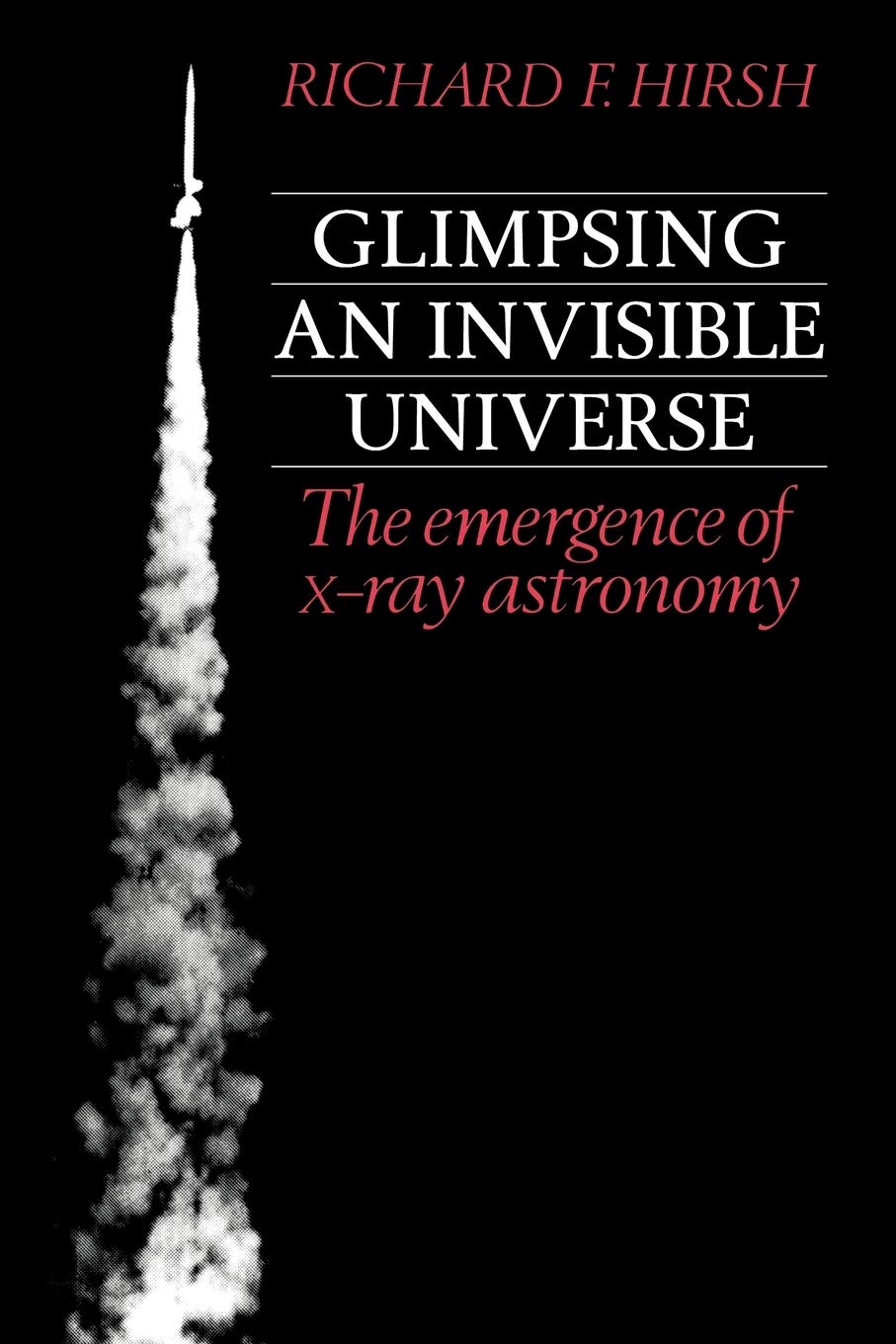
Glimpsing an Invisible Universe: The Emergence of X-ray Astronomy
Glimpsing an Invisible Universe: The Emergence of X-ray Astronomy
Price subject to change. Tap below for current.
Couldn't load pickup availability
In this review of Glimpsing an Invisible Universe: The Emergence of X-ray Astronomy, the reviewer finds a focused historical account best suited to readers who want a clear narrative of how X-ray astronomy began. The book charts developments from the late 1950s through the early formative years, showing how technical advances and public policy shaped the field. For anyone curious about the institutional and scientific shifts that turned X-ray detection into a mainstream astronomical tool, this paperback provides a readable, well-documented perspective and a useful foundation for further study.
Key Features
- Historical narrative: The book traces the discovery of high-energy radiation beyond the solar system, helping readers understand the context of early observations.
- Focus on early development: Coverage of the initial phases through the point when broader astronomical questions could be addressed gives a clear sense of scientific progress.
- Policy and funding analysis: The author highlights how the emergence of federal funding influenced research priorities and institutional structure in astronomy.
- Technical evolution: Descriptions of instrumental and technical advances show how practical changes enabled new discoveries in X-ray detection.
- Three transformations: The text emphasizes augmentation of optical observations, federal funding dominance, and altered project scale, which frames the discipline-level changes.
Who It's For
The book is aimed at readers with an interest in the history of science, early space and high-energy astronomy, and the interplay between technology and research policy. Graduate students, historians of science, and informed amateur astronomers will find the coverage of institutional shifts and technical milestones especially valuable.
It is less suitable for readers seeking a textbook-style primer on X-ray astrophysics or a modern survey of recent discoveries; specialists looking for up-to-date observational data or detailed equations should consult technical monographs or current research reviews instead.
Pros & Cons
Pros
- Well-structured narrative that clarifies how early observations led to the establishment of X-ray astronomy as a field.
- Strong emphasis on the role of federal funding and public policy gives useful context often missing from purely scientific accounts.
- Clear explanation of how technical advances translated into new research opportunities for astronomers.
Cons
- As a historical account in paperback form, it does not provide recent observational data or detailed technical formulas that a practicing astrophysicist might want.
Specifications
| Title | Glimpsing an Invisible Universe: The Emergence of X-ray Astronomy |
| Author | Richard F. Hirsh |
| Format | Paperback |
| Scope | Early development of X-ray astronomy from late 1950s onward |
| Focus areas | Discovery, technical progress, public policy, federal funding |
| Intended audience | Historians of science, students, informed amateurs |
Our Verdict
Glimpsing an Invisible Universe is a concise, well-argued history that explains how X-ray astronomy emerged through technical innovation and changing funding landscapes. Readers seeking a narrative account of scientific and institutional change will find it good value; those needing current data or technical depth should pair it with modern research sources.
Frequently Asked Questions
Does this book cover the discovery timeline?
Yes. It begins in the late 1950s and follows the early discoveries and developments that established X-ray astronomy.
Is it a technical textbook?
No. The book is a historical and institutional account rather than a detailed technical or mathematical treatment.
Who wrote the book?
The author is Richard F. Hirsh, who frames the subject around scientific, technical, and policy changes.
Editor's Take
A concise, well-argued history showing how technical advances and federal funding shaped the emergence of X-ray astronomy; ideal for historians and informed readers seeking narrative context.

Recently viewed
Recently viewed products will appear here as customers browse the store.