

Guide to Assembly Language: A Concise Introduction - Quick Start
Guide to Assembly Language: A Concise Introduction - Quick Start
Price subject to change. Tap below for current.
Couldn't load pickup availability
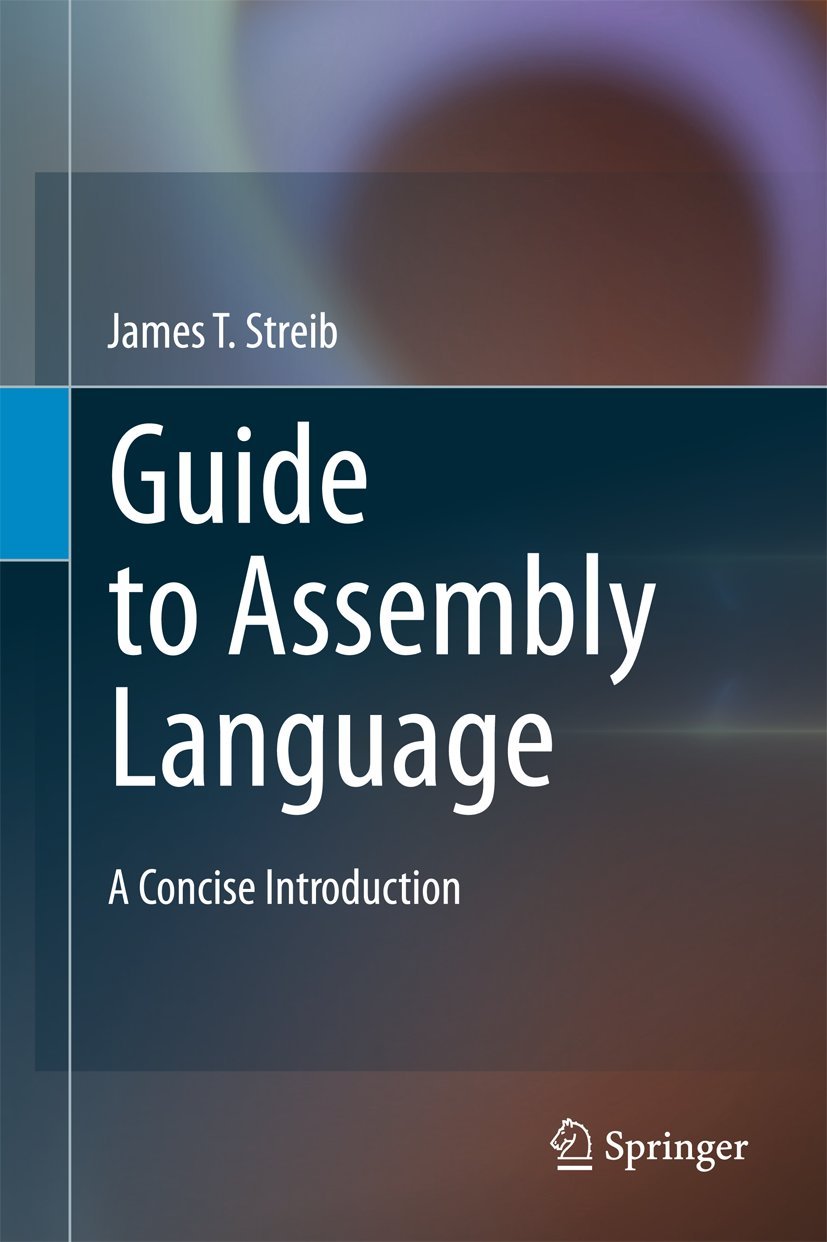
In this review of Guide to Assembly Language: A Concise Introduction the bottom line is simple: this compact programming book is for readers who want a fast, hands-on path into Intel 32-bit assembly. The reviewer found it most valuable for students and programmers who prefer learning by doing, because the text pairs concise explanation with complete example programs that let a reader begin writing assembly quickly. The book's focus on practical code and the relationship between high-level and low-level languages makes it an efficient learning tool rather than a broad historical survey.
Key Features
- Hands-on programming: Complete example programs in each chapter let readers practice immediately and reinforce concepts by coding along.
- Intel 32-bit focus: Coverage of the Intel 32-bit processor gives a concrete architecture context that clarifies register use and instruction effects.
- Clear topic progression: Chapters move from general purpose registers to arithmetic, selection, and iteration structures in a logical, tutorial style.
- Input/output and data handling: Practical sections on I/O, arrays, and strings show how assembly interacts with real program data and external interfaces.
- Procedures and macros: Discussion of procedures and macros prepares readers for modular code organization at the assembly level.
Who It's For
The book is best suited to computer science students, hobbyists, and software engineers who already know a high-level language and want to understand how that code maps to machine-level instructions. Its concise nature and program-centric approach make it ideal for readers who want to build practical skills quickly rather than read a long theoretical treatise.
Readers who need exhaustive reference material, coverage of multiple architectures beyond Intel 32-bit, or in-depth performance analysis should look elsewhere; this title prioritizes fast learning and applied examples over encyclopedic completeness.
Pros & Cons
Pros
- Practical examples let learners write assembly from the start and see immediate results.
- Focused treatment of Intel 32-bit architecture clarifies register usage and instruction behavior.
- Concise chapters with summaries and exercises make it efficient for self-study.
Cons
- Limited to Intel 32-bit perspective, so readers seeking ARM or 64-bit specifics will need additional resources.
Specifications
| Title | Guide to Assembly Language: A Concise Introduction |
| Author | James T. Streib |
| Processor focus | Intel 32-bit |
| Topics covered | Registers, I/O, arithmetic, selection, iteration, logic, shifts, stack |
| Includes | Complete programs, chapter summaries, exercises |
| Advanced topics | Procedures, macros, arrays and strings, machine language discovery |
Our Verdict
Guide to Assembly Language: A Concise Introduction is a compact, practice-focused manual that helps motivated learners start programming in assembly quickly. It offers strong value to students and developers who want hands-on understanding of Intel 32-bit internals and the mapping between high-level code and machine instructions.
Frequently Asked Questions
Does this book teach by example?
Yes. Each chapter includes complete example programs and exercises to reinforce learning through hands-on coding.
Which processor architecture does it use?
The text focuses on the Intel 32-bit processor architecture for concrete, practical demonstrations.
Is this a comprehensive reference?
No. It is concise and practical; readers needing exhaustive coverage or other architectures should supplement it with additional references.
Editor's Take
A compact, practice-focused manual that helps students and programmers quickly start writing Intel 32-bit assembly by pairing concise explanations with complete example programs and exercises.

Recently viewed
Recently viewed products will appear here as customers browse the store.