

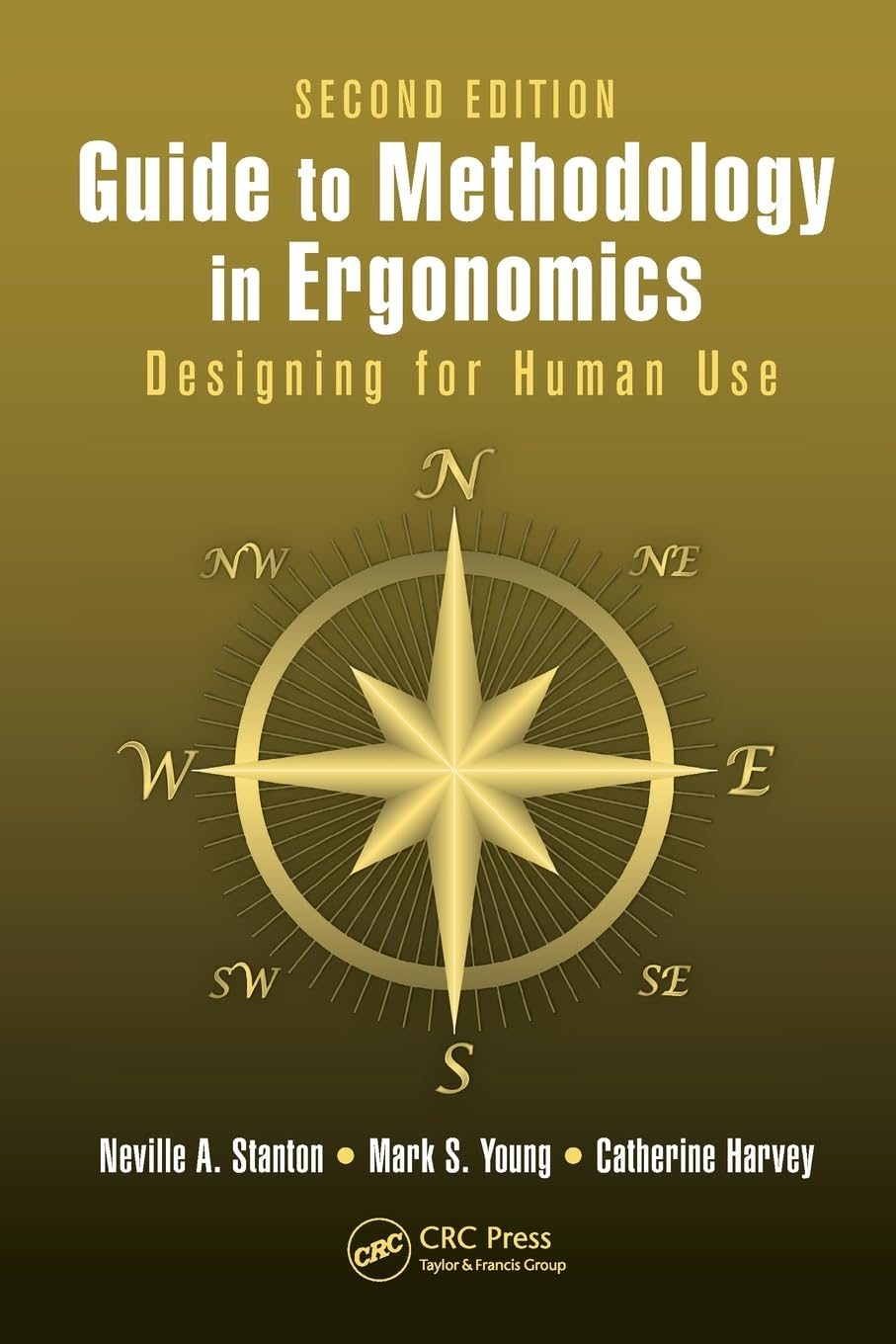
Guide to Methodology in Ergonomics - Practical Methods for Design
Guide to Methodology in Ergonomics - Practical Methods for Design
Price subject to change. Tap below for current.
Couldn't load pickup availability
Our review of Guide to Methodology in Ergonomics finds it best suited for designers, human factors practitioners and students who need a concise, practical introduction to ergonomics methods. Packed with illustrations and real examples, this second edition focuses on how to apply ergonomics during product development to reduce interaction time and user error. The book's clear walkthroughs of methods make it a useful field reference rather than a dense academic treatise, and the added co-author and case studies update examples to reflect current technology.
Key Features
- Concise introductions: Each method is presented in a straightforward way so a practitioner can quickly understand when and how to apply it.
- Practical examples: Illustrations and worked examples show how ergonomics methods affect real product and interface designs.
- Twelve methods explained: The book details execution steps for 12 ergonomics methods that suit a wide range of product types.
- Case studies added: Four case studies in the new edition demonstrate method application across modern design scenarios.
- Design process context: The authors highlight where ergonomics methods fit in the design process to help select the right technique at the right time.
Who It's For
This book is aimed at practicing designers, ergonomists and engineering students who need a practical, method-focused resource to support product and interface evaluations. It is especially useful for teams that want clear, applied guidance to reduce user error and shorten device interaction time.
Those seeking exhaustive theoretical background or a heavily research-focused text should look elsewhere; this is a hands-on manual of methods and case studies rather than a comprehensive academic survey of ergonomics literature.
Pros & Cons
Pros
- Clear, applied explanations make it easy to adopt methods in real design projects.
- Illustrations and examples help translate abstract techniques into actionable steps.
- Updated edition adds a co-author and four case studies that reflect current technology contexts.
Cons
- Not intended as a deep theoretical reference, so readers needing exhaustive academic citations may find it limited.
Specifications
| Title | Guide to Methodology in Ergonomics: Designing for Human Use, Second Edition |
| Authors | Neville Stanton, Mark S. Young, Catherine Harvey |
| Edition | Second edition |
| Content focus | Execution of 12 ergonomics methods with illustrations and examples |
| New in this edition | Four case studies, additional co-author, updated examples, CPA information |
| Primary benefit | Helps conduct ergonomics analysis to reduce interaction time and user error |
Our Verdict
Guide to Methodology in Ergonomics is a practical, well-illustrated manual for anyone who must apply ergonomics methods during product development. It provides clear, usable steps and up-to-date case studies, making it good value for designers and practitioners who want methods they can put into practice without wading through dense theory.
Frequently Asked Questions
Does this edition include new case studies?
Yes, the second edition adds four case studies to illustrate methods with current technology examples.
How many ergonomics methods are covered?
The book details the execution of 12 ergonomics methods applicable to product and interface design.
Is this a theoretical textbook?
No, it is a concise, practical guide focused on method application rather than exhaustive theoretical discussion.
Editor's Take
A practical, well-illustrated manual for designers and practitioners, offering clear steps for 12 ergonomics methods and useful case studies that make it good value for applied ergonomics work.

Recently viewed
Recently viewed products will appear here as customers browse the store.