

Handbook of Complex Environmental Remediation Problems - Practical A-Z
Handbook of Complex Environmental Remediation Problems - Practical A-Z
Price subject to change. Tap below for current.
Couldn't load pickup availability
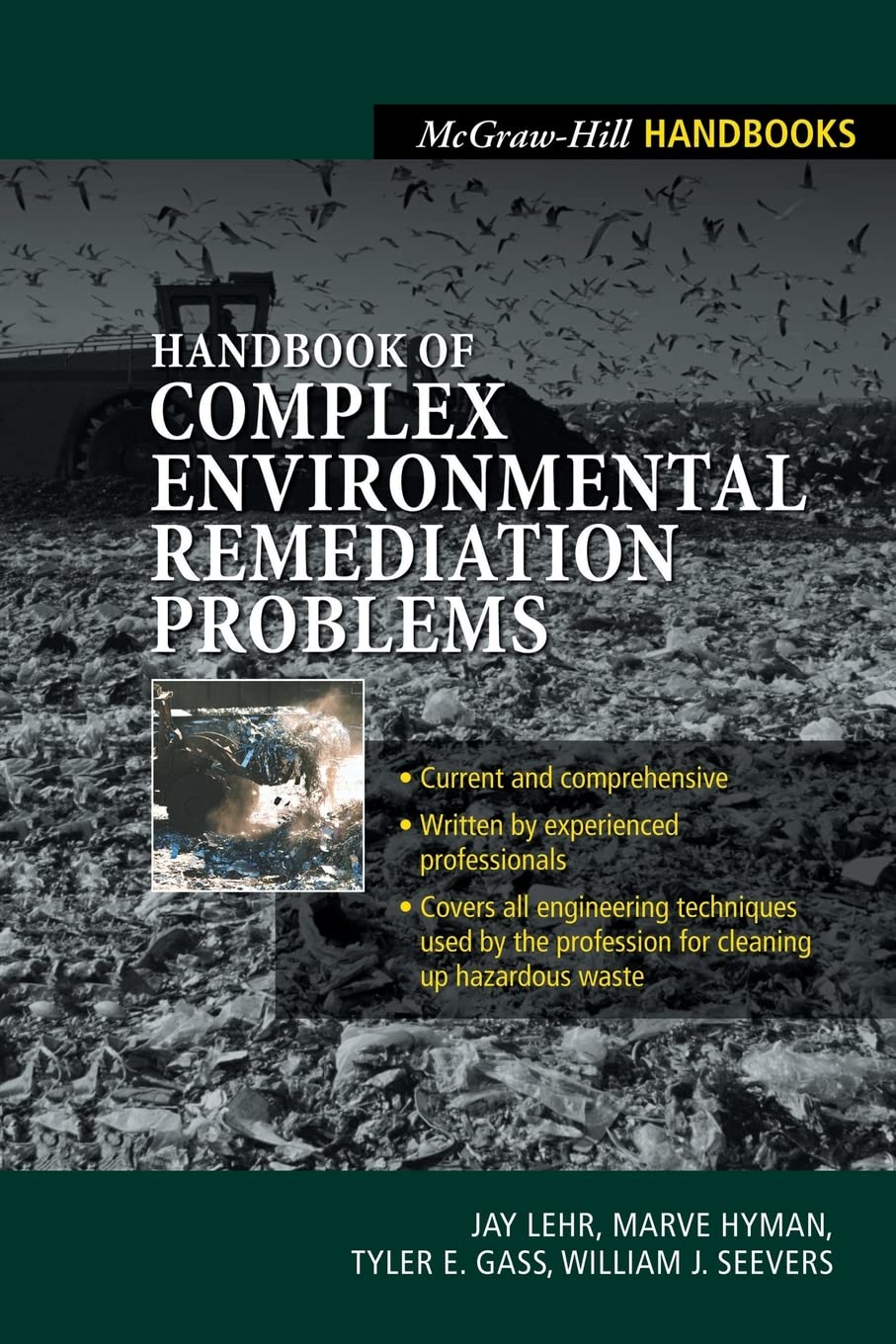
Our review of Handbook of Complex Environmental Remediation Problems finds it to be a practical, reference-first manual for professionals tackling hazardous waste clean-up. Written by Jay H. Lehr, Marve Hyman, Tyler Gass and William J. Seevers, the book earns its place on the shelf because it compiles current engineering solutions and offers actionable guidance on waste minimization and pollution prevention. For engineers and managers who need concise, applied methods for remediation projects, this handbook delivers structured, real-world approaches rather than purely theoretical discussion.
Key Features
- Comprehensive A-Z coverage: The handbook provides a broad review of contemporary engineering solutions so readers can find methods for a wide range of remediation scenarios.
- Practical guidance from specialists: Advice from experienced practitioners helps translate remediation theory into on-the-job tactics that save time during clean-up planning.
- Waste minimization focus: Sections on pollution prevention and waste minimization give engineers clear strategies to reduce downstream treatment and disposal costs.
- International and US applications: Examples and approaches cover regulatory and technical contexts that are applicable both domestically and internationally.
- Multi-discipline relevance: Content is written to assist environmental, safety, chemical and civil engineers as well as managers and regulators evaluating remediation results.
Who It's For
The handbook is best suited for practicing environmental engineers, safety engineers, industrial hygienists and civil engineers who are directly responsible for planning or supervising hazardous waste clean-up projects. Project managers and regulatory reviewers will also find the practical methods and comparison of engineering solutions useful when evaluating remediation strategies.
It is less appropriate for readers seeking an introductory textbook or classroom-focused treatment; novices without field experience may find the material dense. Those looking for a deep academic or research-only analysis should supplement this handbook with primary literature and case studies.
Pros & Cons
Pros
- Broad, applied coverage that makes it a ready reference for many remediation situations.
- Direct guidance on waste minimization and pollution prevention that supports cost reduction in projects.
- Useful cross-discipline focus that helps teams of engineers and managers coordinate on cleanup plans.
Cons
- Not written as an introductory textbook, so readers without field experience may need supplementary basics.
Specifications
| Title | Handbook of Complex Environmental Remediation Problems |
| Authors / Brand | Jay H. Lehr; Marve Hyman; Tyler Gass; William J. Seevers |
| Scope | Comprehensive review of current engineering remediation solutions |
| Focus Areas | Hazardous waste clean-up; waste minimization; pollution prevention |
| Applications | US and international remediation projects |
| Primary Audience | Environmental, safety, chemical and civil engineers; managers; regulators |
Our Verdict
Handbook of Complex Environmental Remediation Problems is a solid, practical reference for professionals who need actionable engineering methods and guidance on waste minimization. It is good value for practitioners and project managers because it consolidates current solutions and international applications into a single, usable resource, though newcomers should pair it with more introductory materials.
Frequently Asked Questions
Does this handbook cover both US and international regulations?
The book includes applications and approaches relevant to both US and international remediation contexts, focusing on engineering solutions rather than statutory text.
Is this suitable for students learning remediation for the first time?
It is primarily a practitioner reference; students may find it dense and should use it alongside foundational textbooks for introductory learning.
Will it help with reducing project disposal costs?
Yes, the handbook emphasizes waste minimization and pollution prevention practices that can reduce treatment and disposal expenses when implemented correctly.
Editor's Take
Handbook of Complex Environmental Remediation Problems is a practical reference for remediation professionals, consolidating current engineering solutions and waste minimization guidance into a single, usable resource; novices should pair it with introductory materials.

Recently viewed
Recently viewed products will appear here as customers browse the store.