

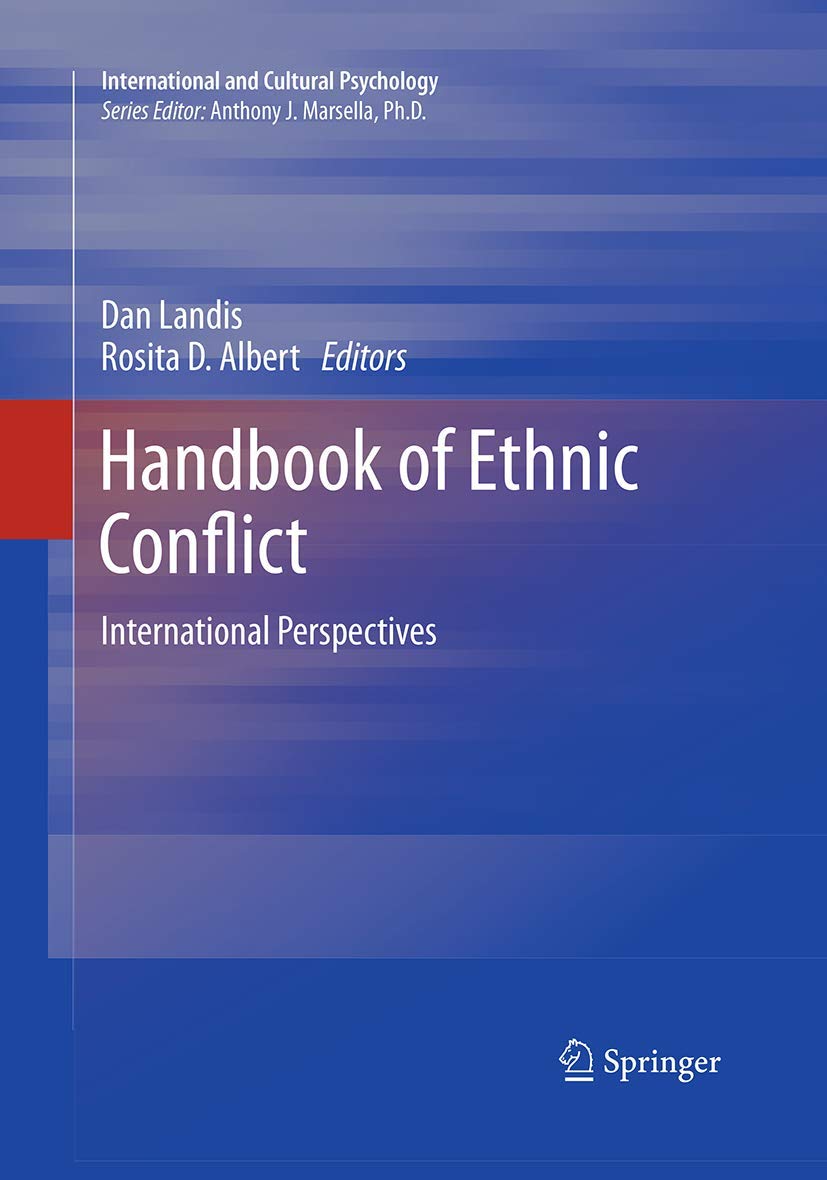
Handbook of Ethnic Conflict: International Perspectives
Handbook of Ethnic Conflict: International Perspectives
Price subject to change. Tap below for current.
Couldn't load pickup availability
In this review the Handbook of Ethnic Conflict: International Perspectives is evaluated as a scholarly resource aimed at readers seeking a psychological understanding of contemporary ethnic warfare. The book is best for graduate students, researchers, and practitioners who need a crossnational, interdisciplinary perspective on why ethnic conflicts persist and how they affect civilians; the single biggest reason to buy is its focused attempt to frame ethnic violence in psychological terms rather than purely political or economic ones, offering context useful for study, teaching, and policy discussion.
Key Features
- Psychological focus: The volume emphasizes psychological explanations for ethnic warfare, helping readers explore how identity, perception, and group processes fuel conflict.
- International perspective: Contributors examine intrastate ethnic conflicts from multiple regions, making the material relevant to comparative research and global case studies.
- Civilian impact spotlight: The book highlights that civilians comprise over 80 percent of casualties, underlining humanitarian and policy implications for postconflict recovery.
- Interdisciplinary approach: By relating psychological theory to political and economic causes, the handbook supports integrated analysis rather than onedimensional explanations.
- Scholarly utility: The collection is structured to support coursework and literature reviews for students and counselors interested in ethnopolitical trauma and resilience.
Who It's For
This handbook is well suited for graduate students in psychology, political science, and related social sciences who need a rigorous, researchoriented treatment of ethnic conflict. Professors preparing seminar readings and policy analysts seeking psychological frameworks to complement political or economic accounts will also find it useful.
Readers looking for a brief primer, narrative journalism, or an operational field manual for peacekeeping should look elsewhere, as the book prioritizes theoretical and research perspectives over practical stepbystep guidance.
Pros & Cons
Pros
- Offers a sustained psychological understanding of ethnopolitical violence that complements political analyses.
- Addresses the disproportionate civilian toll, making it relevant to humanitarian and clinical concerns.
- Provides comparative insight from multiple international contexts for crossregional study.
Cons
- Not designed as a practical field guide, so readers seeking operational conflict resolution tools may need supplemental resources.
Specifications
| Title | Handbook of Ethnic Conflict: International Perspectives |
| Editors/Authors | Dan Landis, Rosita D. Albert |
| Subject focus | Psychological understanding of ethnic warfare |
| Scope | International and comparative perspectives on intrastate ethnic conflicts |
| Primary themes | Civilian impact, group processes, identity, trauma |
| Intended audience | Graduate students, researchers, practitioners |
Our Verdict
The Handbook of Ethnic Conflict is a valuable academic resource for those seeking a psychologically grounded analysis of ethnic warfare and its effects on civilians. It is good value for researchers and instructors who need comparative, theorydriven chapters that link identity, group behavior, and trauma to contemporary conflicts.
Frequently Asked Questions
Does this book focus on modern conflicts?
Yes; it emphasizes recent intrastate ethnic conflicts and their psychological dimensions in the postCold War era.
Who will benefit most from reading it?
Graduate students, scholars, and policy analysts interested in psychological perspectives on ethnopolitical violence will benefit most.
Is it a practical field manual?
No; the handbook is oriented toward theory and research rather than stepbystep field operations.
Editor's Take
The Handbook of Ethnic Conflict is a rigorous, psychologically focused volume ideal for graduate students and researchers seeking comparative, theorydriven analysis of ethnopolitical violence and its civilian consequences.

Recently viewed
Recently viewed products will appear here as customers browse the store.