

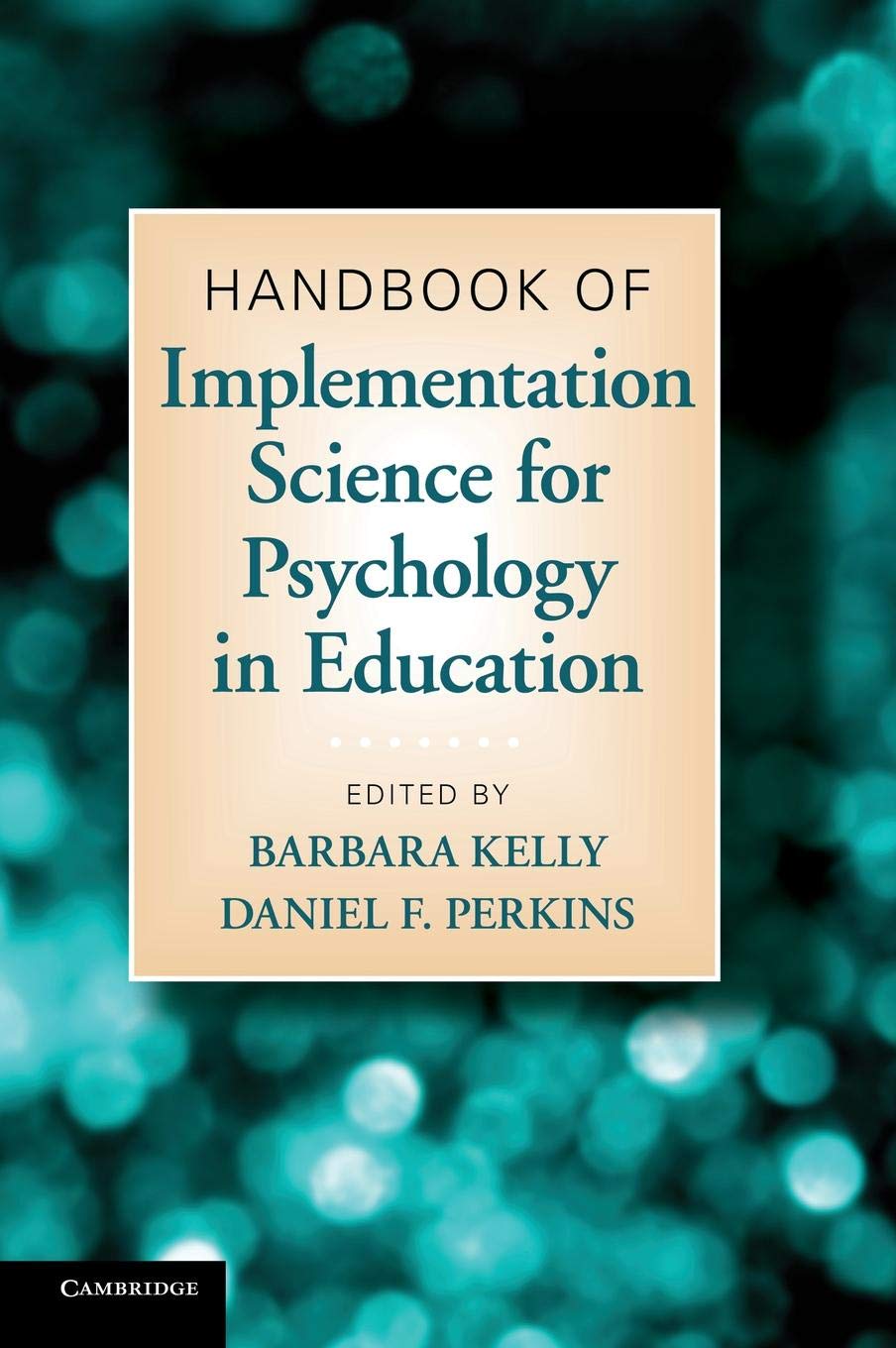
Handbook of Implementation Science for Psychology in Education
Handbook of Implementation Science for Psychology in Education
Price subject to change. Tap below for current.
Couldn't load pickup availability
In this review the Handbook of Implementation Science for Psychology in Education is assessed as a pragmatic, evidence-based resource for translating psychological research into real-world educational practice. The book is best for researchers, school leaders, and practitioners who need a structured way to design, support, and evaluate interventions; its single biggest strength is the range of practical, research-grounded strategies across 27 chapters that move beyond theory and address implementation problems educators actually face. This review finds the volume especially useful where sustained, organization-level change is the goal.
Key Features
- Evidence-based approaches: The chapters present proven policies and strategies that help practitioners design interventions grounded in research, reducing the gap between science and practice.
- Wide scope: Coverage runs from epistemology through statistics to examples, giving readers both conceptual grounding and methodological tools for implementation work.
- Practical orientation: The handbook focuses on usable guidance for school programs and organizational development rather than abstract theory alone, making it immediately relevant to implementers.
- Multi-author perspectives: With 27 chapters, readers gain diverse insights and applied methods, useful for tailoring approaches to different educational settings.
- Focus on outcomes: Emphasis throughout is on the effectiveness of research in real-world contexts, helping teams plan for measurable improvement.
Who It's For
The handbook is aimed primarily at educational psychologists, district leaders, program developers, and researchers who want to move from efficacy studies to sustainable, system-level implementation. Its emphasis on policies, methods, and statistical considerations suits those managing or evaluating interventions across classrooms, schools, or districts.
Practitioners seeking brief how-to checklists or a single quick-fix technique may find the volume dense; similarly, readers looking only for introductory psychology content should look elsewhere. Those committed to evidence-based change and willing to engage with detailed chapters will get the most value.
Pros & Cons
Pros
- Comprehensive, research-backed strategies that bridge theory and practice for better educational outcomes.
- Practical guidance for organizational development and program design across multiple contexts.
- Diverse chapter authors provide methodological breadth from epistemology to applied statistics.
Cons
- The depth and breadth of material can be dense for readers seeking a quick reference or short summaries.
Specifications
| Title | Handbook of Implementation Science for Psychology in Education |
| Authors | Barbara Kelly, Daniel F. Perkins |
| Chapters | 27 chapters covering policy, strategy, methods, and examples |
| Focus | Implementation science for psychology applied to education and organizations |
| Content scope | Epistemology, statistics, practical implementation examples |
| Audience | Researchers, school leaders, program developers, educational psychologists |
Our Verdict
The Handbook of Implementation Science for Psychology in Education is a worthwhile investment for professionals aiming to translate research into lasting educational change. Its evidence-based strategies and broad methodological coverage make it especially good value for teams responsible for program design, evaluation, or organizational development who need depth and practical guidance rather than a brief overview.
Frequently Asked Questions
Does this book include practical examples for schools?
Yes, the handbook includes applied examples alongside policy and methodological chapters to illustrate implementation in educational settings.
Who are the primary authors?
The work is credited to Barbara Kelly and Daniel F. Perkins and collects contributions across 27 chapters.
Is this suitable for beginners in implementation science?
It is most useful for readers with some background or commitment to evidence-based change; absolute beginners may find parts dense but still informative.
Editor's Take
The handbook is a substantive, evidence-based resource for researchers and school leaders who need practical strategies to translate psychological research into sustained educational change; it offers depth and methodological breadth, though it can be dense for quick-reference needs.

Recently viewed
Recently viewed products will appear here as customers browse the store.