

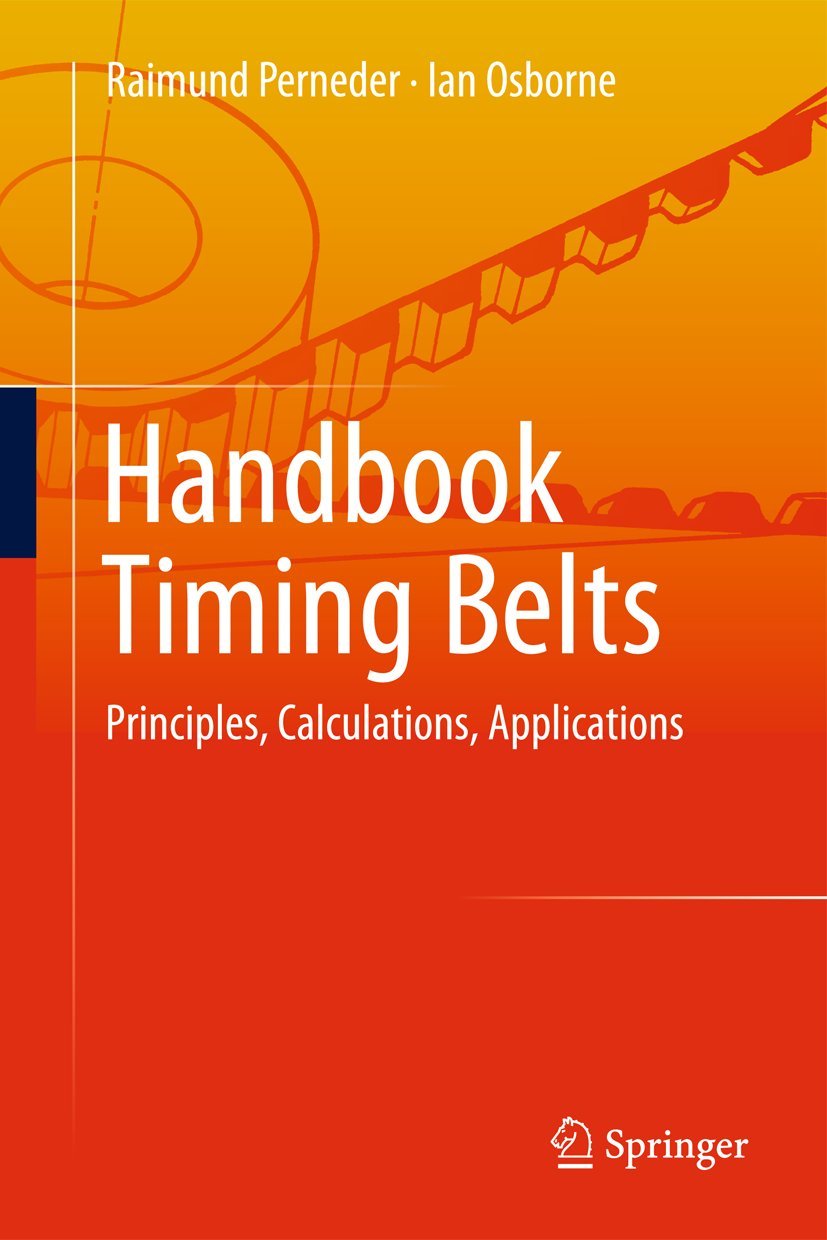
Handbook Timing Belts: Principles, Calculations, Applications
Handbook Timing Belts: Principles, Calculations, Applications
Price subject to change. Tap below for current.
Couldn't load pickup availability
In this review of Handbook Timing Belts: Principles, Calculations, Applications the bottom line is straightforward: engineers and technicians who design or maintain power transmission and automated handling systems will find a concise, experience-driven reference that helps with real-world dimensioning and problem solving. The book distills decades of professional practice into clear guidelines for timing belt drives, offering worked examples and practical advice on compensating for adverse operating conditions so readers can improve reliability and exact positioning in demanding, high-speed applications.
Key Features
- Practical dimensioning guidance: The author presents step-by-step rules for sizing timing belt drives so designers can select belts that meet load and speed requirements with confidence.
- Worked examples from industry: Clear examples from power transmission, transport and linear transfer technology illustrate how calculations are applied to real systems.
- Advice on adverse conditions: The book offers methods to deal with belt damage and compensate for unfavorable operating environments to extend service life.
- Drive optimization tips: Concise recommendations on improving drive performance help reduce backlash and maintain exact positioning in robotic and automated systems.
- Low-maintenance focus: Emphasis on solutions suited for continuous-operation applications helps planners choose options that minimize downtime.
- High-speed positioning: Coverage of high operating speed considerations supports designs that require precision at dynamic start-up and stop conditions.
Who It's For
This handbook is aimed at mechanical engineers, maintenance managers and automation specialists who need a compact technical reference for designing and troubleshooting timing belt drives. It is especially useful for those working with robots, automated transport, or linear transfer systems where low backlash and exact positioning are priorities.
Readers seeking an introductory textbook on belts for hobby projects or those wanting comprehensive theoretical derivations of fundamental mechanics may want a different, more academic volume; this title is focused on practical rules, examples and field-tested guidance rather than exhaustive theory.
Pros & Cons
Pros
- Concise, experience-driven guidelines that speed up the dimensioning process for timing belt drives.
- Practical examples from power transmission and transport systems that clarify application of calculations.
- Useful advice on compensating for belt damage and adverse operating conditions to improve reliability.
Cons
- Not a deep academic treatise, so readers seeking extensive theoretical derivations may find the coverage compact rather than comprehensive.
Specifications
| Title | Handbook Timing Belts: Principles, Calculations, Applications |
| Authors | Raimund Perneder, Ian Osborne |
| Focus | Dimensioning and application of timing belt drives |
| Primary applications | Power transmission, transport, linear transfer technology |
| Key topics | Drive optimization, belt damage compensation, low-backlash operation |
| Intended audience | Engineers, technicians, maintenance and automation professionals |
Our Verdict
Handbook Timing Belts is a practical and compact field guide for professionals who need reliable, experience-based rules for designing and maintaining timing belt drives. It provides good value for engineers and technicians who require clear procedures and examples to achieve low-backlash, high-speed positioning and robust operation in automated systems.
Frequently Asked Questions
Does the book include worked examples for real systems?
Yes, it includes proven examples from power transmission, transport and linear transfer technology to show how calculations apply in practice.
Is this suitable for maintenance staff?
Yes, the handbook offers concise guidelines and advice on compensating for belt damage that are directly useful for maintenance and troubleshooting.
Will it teach fundamental theory?
The focus is practical dimensioning and application; readers seeking extensive theoretical derivations should supplement it with more academic texts.
Editor's Take
A practical, experience-driven handbook for engineers and technicians that provides concise rules, worked examples and advice to design and maintain timing belt drives with reliable, precise performance.

Recently viewed
Recently viewed products will appear here as customers browse the store.