

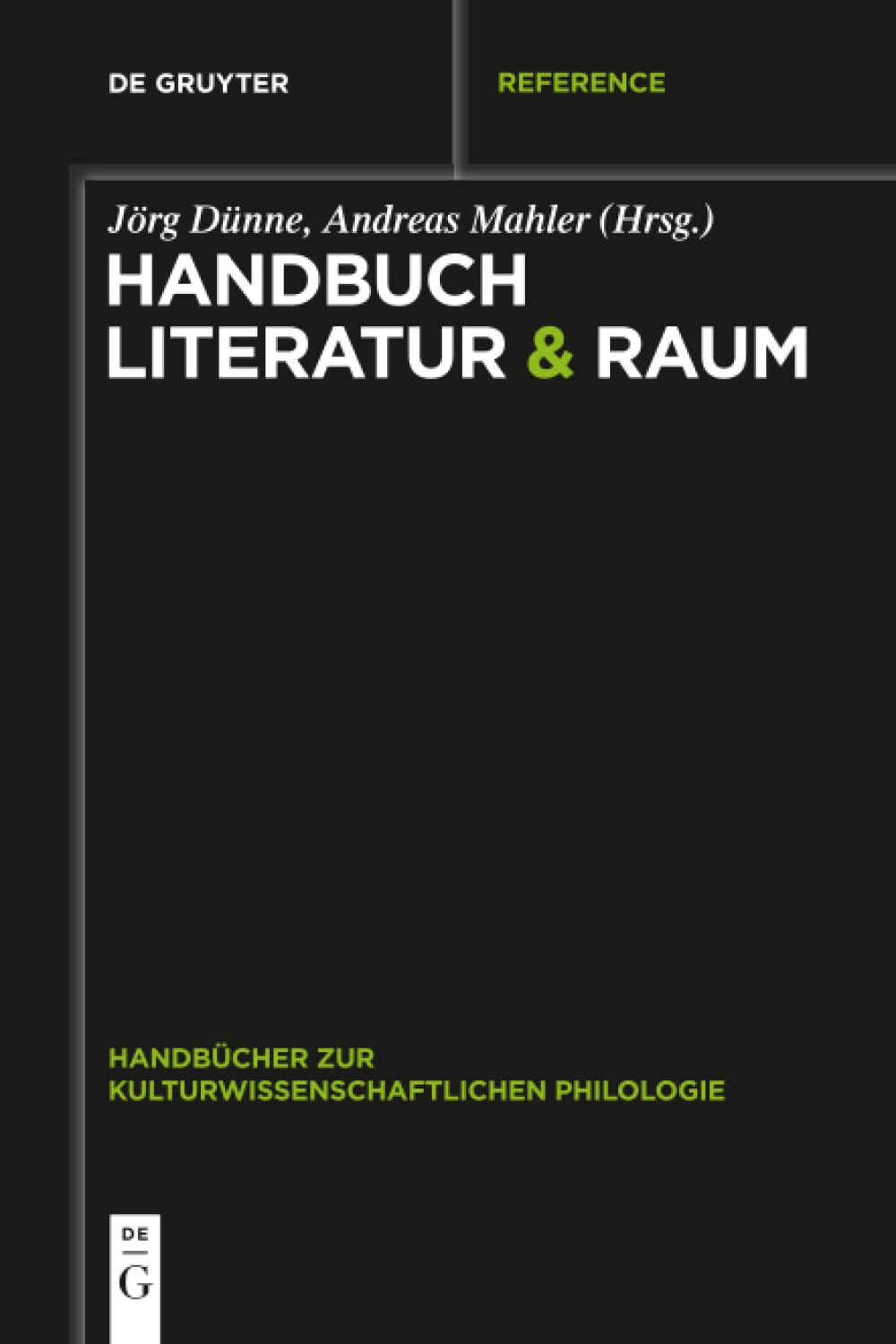
Handbuch Literatur & Raum (Handbucher zur kulturwissenschaftlichen
Handbuch Literatur & Raum (Handbucher zur kulturwissenschaftlichen
Price subject to change. Tap below for current.
Couldn't load pickup availability
In this review of Handbuch Literatur & Raum the reviewer finds it a focused, scholarly resource for readers who want a systematic, literature-centered approach to spatiality. The book is best for graduate students, researchers and advanced readers in literary studies or cultural philology because it treats space not as an auxiliary topic but as a central, theory-rich object: the volume maps models and theories and tests them against literary paradigms from antiquity to the present. The single biggest reason to consult this handbook is its synoptic treatment that links disciplinary reflection with concrete literary paradigms.
Key Features
- Disciplinary focus: The handbook begins from specifically literature-scientific considerations of space, offering readers a philologically grounded starting point for spatial analysis.
- Systematic approach: It presents models and theories to structure the relation between literature and space, helping scholars place case studies in a broader theoretical frame.
- Analytical breadth: Individual paradigms from different literatures and cultures are examined, giving comparative purchase from the ancient period to contemporary texts.
- Thematic clarity: Two guiding categories, reflexivity and productivity, are tested across chapters to show how literature both reflects and produces space.
- Synoptic presentation: The volume combines synoptic overview with detailed analysis, useful for readers who need both orientation and depth in one reference work.
Who It's For
Students at MA and PhD level, university lecturers and researchers in literature, cultural philology, and literary theory will find this handbook particularly valuable as a reference and teaching companion. Its emphasis on models and paradigms makes it suitable for seminar preparation and for framing thesis chapters that concern spatiality in texts.
Readers seeking an introductory primer for casual reading or a brief textbook will want to look elsewhere, as the book assumes familiarity with scholarly debates and disciplinary terminology rather than offering popularized summaries.
Pros & Cons
Pros
- Concentrated theoretical framing that anchors studies of space in literature to well-defined models.
- Cross-cultural and diachronic coverage from antiquity to the present, useful for comparative work.
- Explicit engagement with the categories of Reflexivitat and Produktivitat, which gives readers conceptual tools for analysis.
Cons
- Not designed as a casual or introductory read; readers without prior exposure to literary theory may find it dense.
Specifications
| Title | Handbuch Literatur & Raum (Handbucher zur kulturwissenschaftlichen Philologie, 3) |
| Language | German |
| Series | Handbucher zur kulturwissenschaftlichen Philologie, volume 3 |
| Subject focus | Literature and spatiality; theory and paradigms |
| Scope | Models, theories, and analytical paradigms from antiquity to the present |
| Approach | Synoptic and systematic, literature-centered |
Our Verdict
Handbuch Literatur & Raum is a rigorous, literature-centered handbook that rewards readers who need a systematic theoretical framework and comparative paradigms for the study of spatiality. It is good value for scholars and advanced students because it consolidates models, theory and case studies in one volume, though it is not aimed at casual or introductory readers.
Frequently Asked Questions
Is the book written in German?
Yes. The handbook is a German-language scholarly volume intended for readers comfortable with academic German.
What period does the book cover?
The volume treats literatures and cultures from antiquity through the present, with paradigms drawn across this diachronic range.
Is this suitable for undergraduate coursework?
It is best for advanced undergraduates or graduate seminars; undergraduates without prior theory background may find the material demanding.
Editor's Take
Handbuch Literatur & Raum is a rigorous, literature-centered handbook offering systematic models and diachronic paradigms for the study of spatiality; it is well suited to advanced students and scholars who need theoretical depth.

Recently viewed
Recently viewed products will appear here as customers browse the store.