

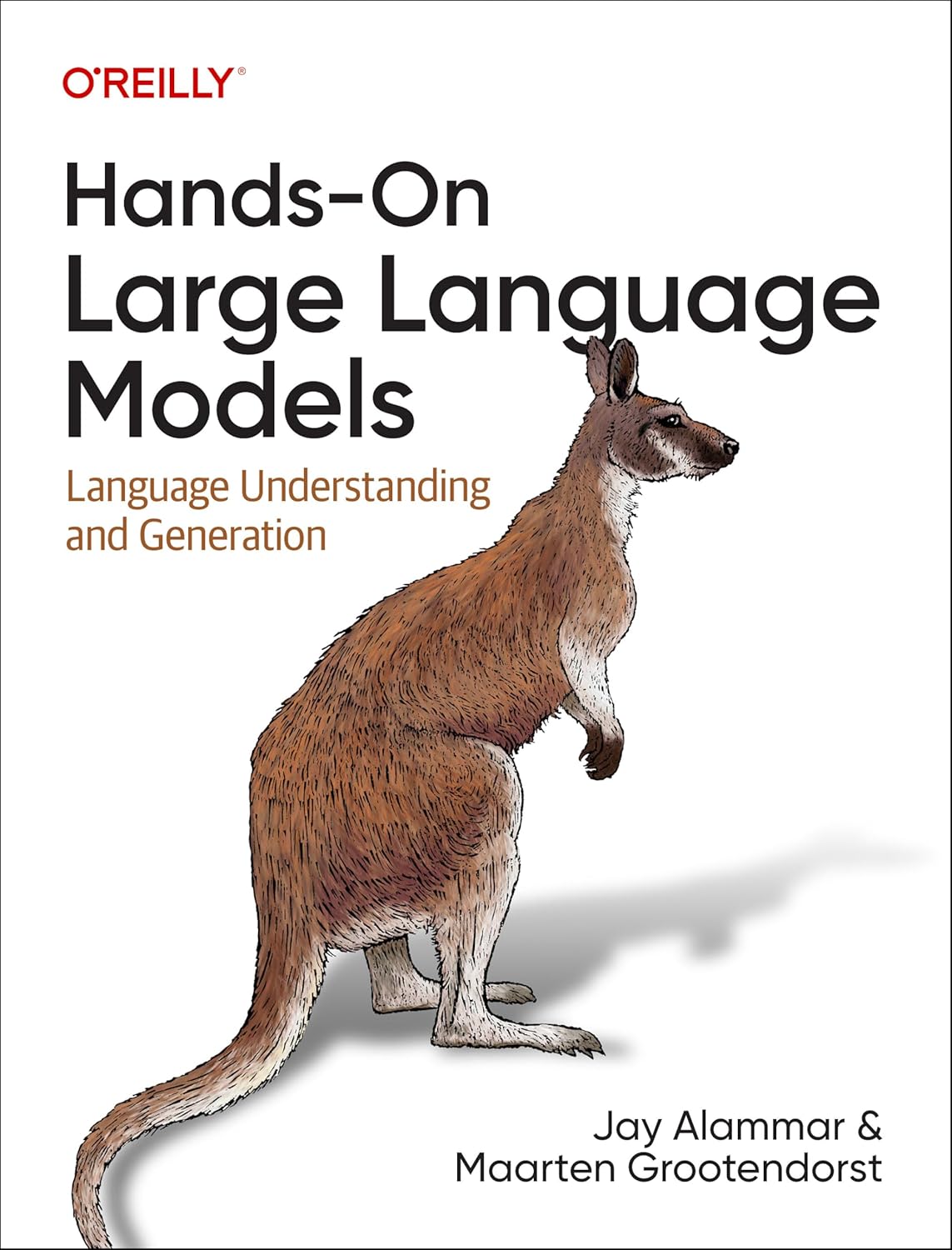
Hands-On Large Language Models: Language Understanding and Generation
Hands-On Large Language Models: Language Understanding and Generation
Price subject to change. Tap below for current.
Couldn't load pickup availability
In this review of Hands-On Large Language Models readers will find a clear, visually rich guide to modern language AI. The book targets practitioners and curious technologists who want practical tools for using pretrained large language models; its single biggest reason to buy is the book's educational clarity, combining concise explanations and diagrams that make complex Transformer concepts approachable. The review highlights how the book helps with real tasks like copywriting, summarization, semantic search, and text classification while noting that code examples may need attention before production use.
Key Features
- Visual explanations: Detailed diagrams clarify the architecture of Transformer language models so readers can grasp design and attention mechanics more quickly.
- Practical use cases: Step-by-step coverage shows how to apply pretrained large language models for copywriting, summarization, and text generation, helping readers move from concept to example.
- Semantic search guidance: The book explains how to build search systems that go beyond keyword matching using embeddings and similarity methods.
- Library and model usage: Readers get guidance on using existing libraries and pretrained models for text classification, search, and clustering to accelerate development.
- Concise organization: Well-structured chapters and clear writing make it easy to follow material and revisit topics as needed for project work.
Who It's For
The book is best for data scientists, ML engineers, and developers who want a practical, visually oriented introduction to large language models and immediate application ideas like summarization and semantic search. It is also useful for technical product managers and students who prefer diagrams alongside explanations to speed comprehension.
It may be less suited for readers looking for exhaustive production-ready code or a deep mathematical derivation of every algorithm; some customers note mixed feedback on code quality, so teams seeking turnkey codebases should expect to adapt examples for robustness and scale.
Pros & Cons
Pros
- Excellent visual quality and diagrams that improve understanding of Transformers and attention mechanisms.
- Strong educational value with clear explanations and organized chapters that aid learning and quick reference.
- Practical focus on real use cases such as copywriting, summarization, semantic search, and classification.
Cons
- Code quality receives mixed feedback and may require refinement before use in production.
Specifications
| Title | Hands-On Large Language Models: Language Understanding and Generation |
| Authors | Jay Alammar, Maarten Grootendorst |
| Subject | Large language models, Transformer architecture, NLP applications |
| Primary topics | Text generation, summarization, semantic search, text classification |
| Approach | Visually educational with diagrams and practical examples |
| Intended readers | Developers, data scientists, ML practitioners, students |
Our Verdict
Hands-On Large Language Models is a well-organized, visually strong practical guide that delivers clear explanations and useful application examples for modern language AI. It represents good value for developers and practitioners who want to learn how to apply pretrained models to tasks like summarization and semantic search, though teams should be prepared to adapt code examples for production use.
Frequently Asked Questions
Does this book explain Transformer architecture?
Yes, it includes visual explanations and diagrams that break down Transformer components and attention mechanisms.
Will the code run in production as-is?
Customers report mixed code quality, so examples are best used as learning references and may need hardening for production.
What practical tasks does the book cover?
The book covers copywriting, summarization, semantic search, text classification, and clustering using pretrained models and libraries.
Editor's Take
Hands-On Large Language Models is a visually strong, practical guide that helps developers apply pretrained models to summarization, semantic search, and classification, though code examples may need refinement for production.

Recently viewed
Recently viewed products will appear here as customers browse the store.