

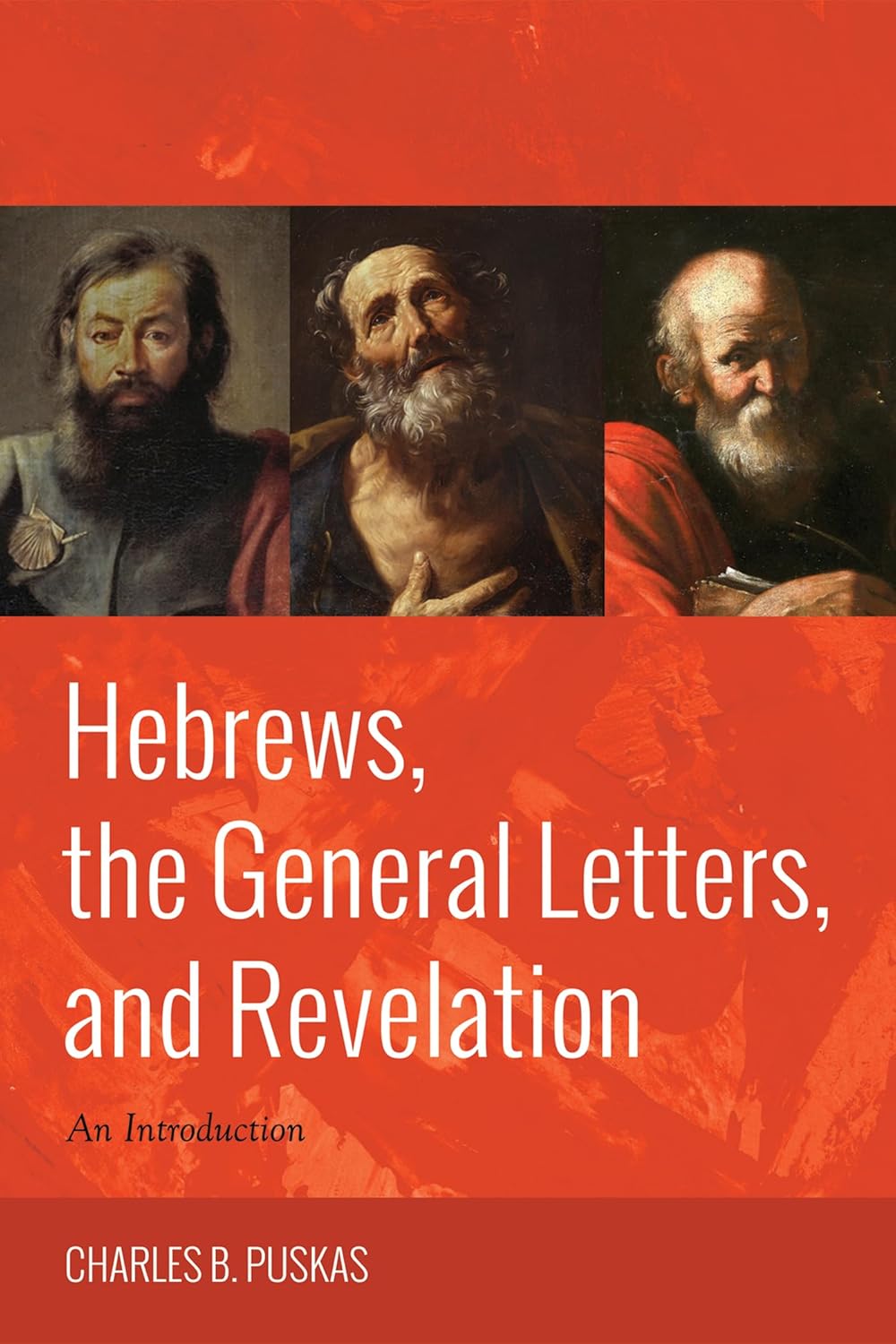
Hebrews, the General Letters, and Revelation: An Introduction
Hebrews, the General Letters, and Revelation: An Introduction
Price subject to change. Tap below for current.
Couldn't load pickup availability
In this review of Hebrews, the General Letters, and Revelation: An Introduction, the reviewer finds a compact and focused supplement for students and pastors who want fuller attention to the last nine New Testament books. Charles B Puskas sets out a corrective to standard NT introductions that often prioritize the Gospels and Pauline letters, making this work valuable for those seeking clearer context and approachable commentary on Hebrews, the Catholic or General Letters, and Revelation.
Key Features
- Focused scope: Concentrates on Hebrews through Revelation to fill the gap left by broader New Testament surveys and give these books sustained attention.
- Canonical perspective: Explains why the term Catholic Epistles or General Letters matters and how these writings found their place in the canon.
- Accessible tone: Written to be usable by students and clergy, the text aims to ignite interest without assuming advanced technical knowledge.
- Supplementary purpose: Designed explicitly to supplement standard NT introductions rather than replace them, making it easy to pair with classroom texts.
- Thematic emphasis: Highlights the imaginative and devotional power of these writings to the whole church, encouraging further study and reflection.
Who It's For
This book is best for seminary students, Bible study leaders, pastors, and informed lay readers who feel the need for a concise introduction to Hebrews, the General Letters, and Revelation. It suits readers who already own a general New Testament introduction and want a targeted supplement on these final books.
Readers seeking exhaustive textual criticism, extensive verse-by-verse commentary, or detailed bibliographic apparatus should look elsewhere; this introduction is intentionally compact and oriented toward overview and interpretation rather than exhaustive scholarship.
Pros & Cons
Pros
- Directly addresses an often neglected portion of the New Testament and restores attention to Hebrews through Revelation.
- Helps readers understand the historical process of canonical recognition for the General Letters and their broad appeal.
- Written in an accessible style that encourages further reading and imagination rather than overwhelming with technical detail.
Cons
- Not a substitute for a full commentary or detailed critical apparatus, which limits use for advanced textual work.
Specifications
| Title | Hebrews, the General Letters, and Revelation: An Introduction |
| Author | Charles B Puskas |
| Scope | Hebrews through Revelation (last nine New Testament books) |
| Purpose | Supplemental introduction to often-neglected NT books |
| Audience | Students, pastors, Bible study leaders, informed lay readers |
| Approach | Canonical and thematic overview with accessible tone |
Our Verdict
Charles B Puskas delivers a focused and useful introduction that corrects a common imbalance in New Testament surveys by foregrounding Hebrews, the General Letters, and Revelation. It is good value for readers who want clear context, canonical perspective, and encouragement to study these writings further without wading into technical scholarship.
Frequently Asked Questions
Does this book cover all of Revelation in detail?
The book provides an introduction and thematic overview of Revelation rather than a verse-by-verse commentary.
Is it suitable for classroom use?
Yes; it is designed as a supplemental text for courses that need fuller treatment of the last nine New Testament books.
Who should not buy this book?
Those seeking exhaustive textual criticism or a detailed academic apparatus should choose a full commentary instead.
Editor's Take
A focused, accessible introduction that restores needed attention to Hebrews through Revelation; ideal as a supplemental guide for students, pastors, and Bible study leaders.

Recently viewed
Recently viewed products will appear here as customers browse the store.