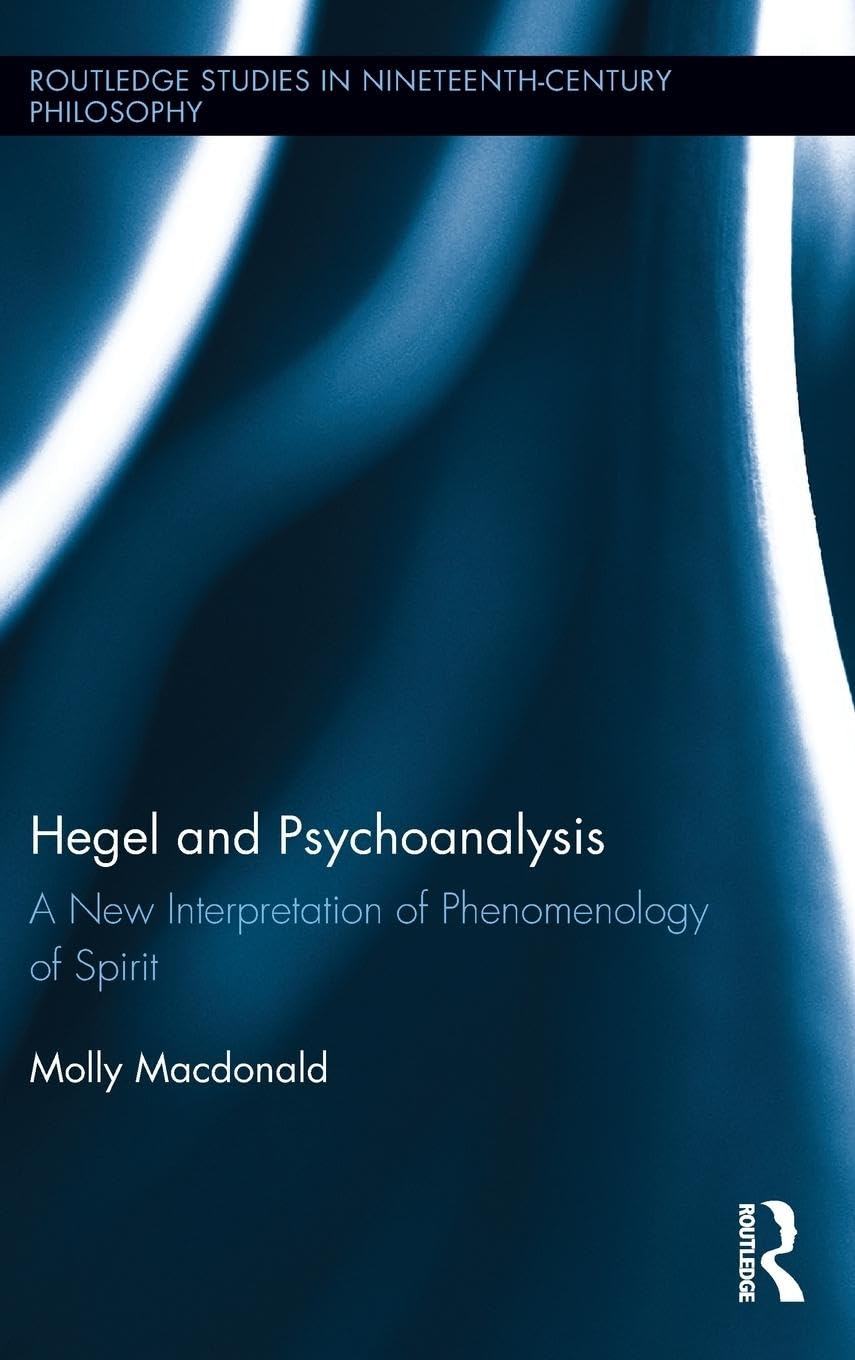
Hegel and Psychoanalysis: Exploring Nineteenth-Century Philosophy
Hegel and Psychoanalysis: Exploring Nineteenth-Century Philosophy
Price subject to change. Tap below for current.
Couldn't load pickup availability
The book Hegel and Psychoanalysis by Molly Macdonald offers a profound exploration of the intricate relationship between Hegelian philosophy and psychoanalytic theory. This scholarly work delves into the depths of nineteenth-century thought, revealing how Hegel's ideas have influenced modern psychological frameworks.
In this comprehensive study, Macdonald meticulously examines the intersections of Hegelian dialectics and psychoanalytic concepts, providing readers with a rich understanding of how these two fields inform one another. The author argues that Hegel's philosophy is not merely a historical artifact but a living discourse that continues to shape contemporary debates in psychology.
One of the standout features of this book is its ability to bridge the gap between philosophical inquiry and psychological practice. Macdonald's insights into the implications of Hegel's work for psychoanalysis are both enlightening and thought-provoking, making this text essential for scholars and practitioners alike.
The structure of the book is thoughtfully organized, guiding readers through complex ideas with clarity. Each chapter builds upon the last, culminating in a comprehensive understanding of how Hegel's theories can be applied to modern psychological issues. This makes Hegel and Psychoanalysis not only a scholarly resource but also a practical guide for those interested in the application of philosophy to real-world psychological challenges.
Moreover, Macdonald's writing is engaging and accessible, ensuring that even those new to Hegelian philosophy can grasp the essential concepts. The inclusion of case studies and examples throughout the text further enhances the reader's comprehension of psychoanalytic theory and its philosophical underpinnings.
In conclusion, Hegel and Psychoanalysis is a vital contribution to the field of philosophy and psychology. It invites readers to reconsider the relevance of Hegel's work in contemporary discussions and encourages a deeper engagement with the philosophical roots of psychoanalysis. This book is a must-read for anyone interested in the dynamic interplay between these two disciplines.
Share