

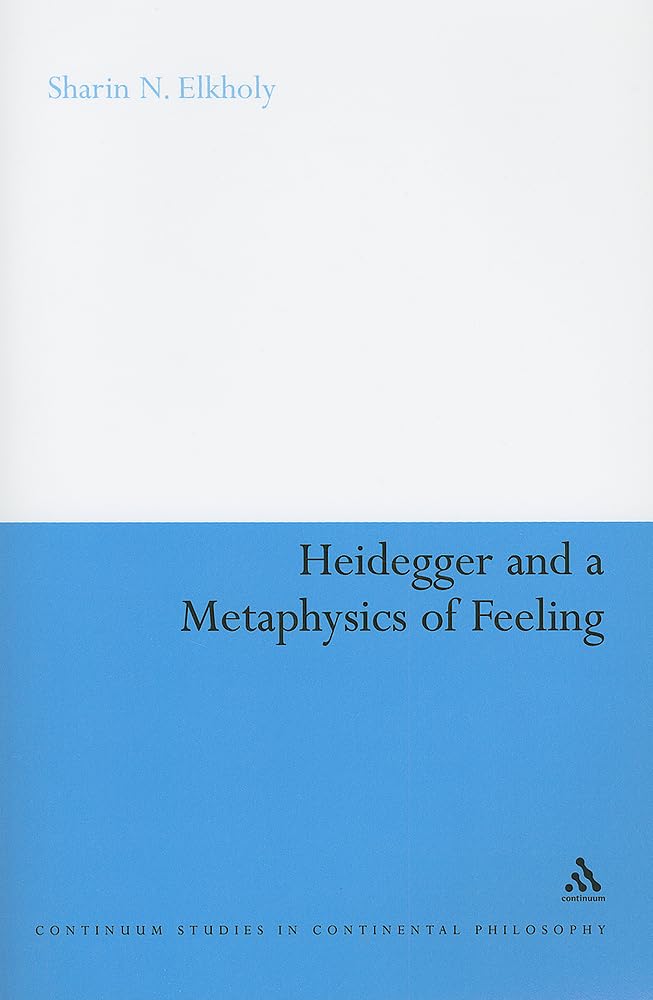
Heidegger and a Metaphysics of Feeling: Angst and the Finitude
Heidegger and a Metaphysics of Feeling: Angst and the Finitude
Price subject to change. Tap below for current.
Couldn't load pickup availability
In this review of Heidegger and a Metaphysics of Feeling, the reviewer argues that Sharin N. Elkholy's study is best suited to readers already comfortable with Heideggerian terminology and interested in reconciling early and later interpretations of Being. The book's single biggest contribution is its sustained claim that elements of the later account of finitude are anticipated in Being and Time, reframing the role of the mood of Angst from an exclusively individual phenomenon to one connected with the finitude of the world. This review evaluates clarity, philosophical argument, and usefulness for scholars and advanced students.
Key Features
- Interpretive thesis: Elkholy argues that the later model of finitude is already present in Being and Time, which helps readers see continuity rather than rupture across Heidegger's work.
- Focus on Angst: The book scrutinizes the mood of Angst as central to how finitude is understood, clarifying its function in existential experience.
- Comparative reading: By contrasting early and later Heidegger, the text offers a useful corrective to readings that isolate individual finitude from world-related finitude.
- Scholarly tone: The writing is aimed at an academic audience and delivers dense, careful argumentation suitable for seminars or research.
- Continuity emphasis: The study foregrounds continuity in Heidegger's thought, offering a reinterpretation that can reshape subsequent scholarship on Being and Time.
Who It's For
The book is aimed at graduate students, scholars of continental philosophy, and serious readers of Heidegger who want a sustained interpretive argument about finitude and Stimmung. Those teaching seminars on Being and Time will find the comparative emphasis useful for stimulating discussion about the relation between early and later texts.
Less suitable for newcomers, general readers, or those seeking an introductory overview of Heidegger: the book presumes familiarity with core concepts and reads as a close philosophical intervention rather than an introductory guide.
Pros & Cons
Pros
- Careful argumentation that makes a clear case for reading continuity between early and later Heidegger.
- Sharp focus on the mood of Angst, clarifying its philosophical role in discussions of finitude.
- Valuable for specialists looking for a novel interpretive move on Being and Time.
Cons
- The dense scholarly style and assumed background may limit accessibility to non-specialists.
Specifications
| Title | Heidegger and a Metaphysics of Feeling: Angst and the Finitude of Being |
| Series | Continuum Studies in Continental Philosophy, 70 |
| Author | Sharin N. Elkholy |
| Subject focus | Heidegger; Angst; finitude; Being and Time; later Heidegger |
| Audience | Graduate students and scholars of continental philosophy |
| Approach | Comparative reading of early and later Heidegger |
Our Verdict
Heidegger and a Metaphysics of Feeling is a compelling scholarly intervention for readers already versed in Heideggerian studies; its argument that the later model of finitude is anticipated in Being and Time is thoughtfully developed and will reward attentive reading. Those seeking a deeper interpretive frame for Angst and finitude will find this a worthwhile investment in critical scholarship.
Frequently Asked Questions
Does this book require prior knowledge of Heidegger?
Yes. The text assumes familiarity with Being and Time and key Heideggerian terminology.
What is the book's main argument?
Elkholy contends that the later account of finitude, linked to the finitude of the world, is already present in Being and Time and reshapes readings of Angst.
Who benefits most from reading this book?
Graduate students, researchers, and instructors in continental philosophy who want a focused, comparative interpretation of Heidegger.
Editor's Take
A compelling scholarly intervention arguing that the later model of finitude is anticipated in Being and Time; best for graduate students and scholars seeking a focused reinterpretation of Angst and finitude.

Recently viewed
Recently viewed products will appear here as customers browse the store.