

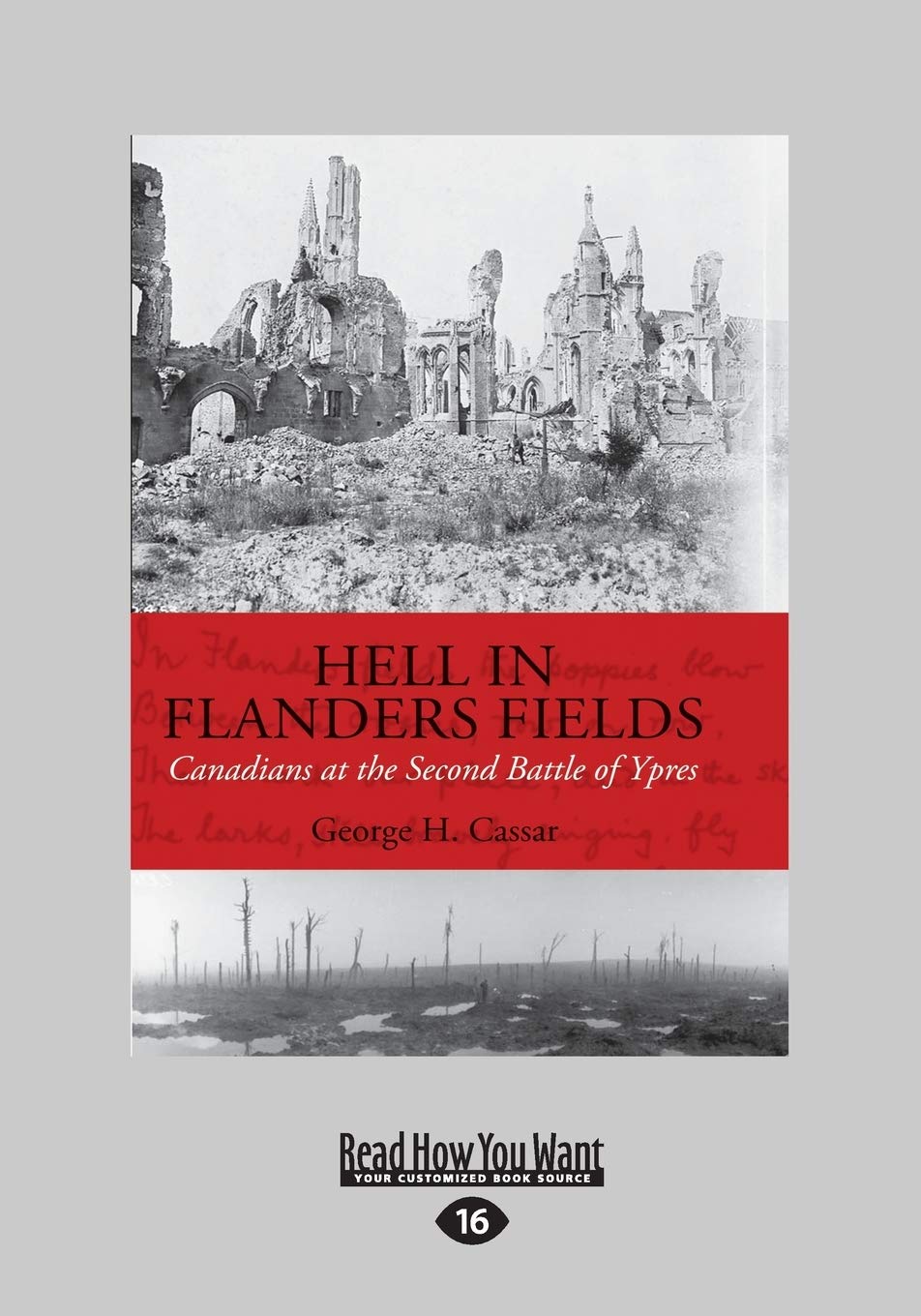
Hell in Flanders Fields: Canadians at the Second Battle of Ypres
Hell in Flanders Fields: Canadians at the Second Battle of Ypres
Price subject to change. Tap below for current.
Couldn't load pickup availability
In this review the book is presented as essential reading for anyone studying Canadian military history or World War I battle narratives. George H. Cassar's Hell in Flanders Fields offers a concentrated, deeply researched account that combines strategic overview with the voices of men who were actually there, and the single biggest reason to read it is its balance of historical context and frontline testimony that explains how Canadian troops held a crucial stretch of line and helped save 50,000 Allied soldiers.
Key Features
- Battle narrative: The book gives a day-by-day account of the Second Battle of Ypres that helps readers follow how events unfolded from April 22, 1915 onward.
- Firsthand testimony: Cassar weaves soldiers' words into the text, adding emotional immediacy and human perspective to the military movements.
- Strategic context: The account highlights why the Canadian defense mattered to the wider Allied line, explaining its broader impact on the campaign.
- Research depth: The writing reflects detailed research, making it useful for students and readers who want more than a surface summary of the fighting.
- Readable prose: The author balances documentary detail and narrative flow so the book is accessible to non-specialists as well as historians.
Who It's For
This title will appeal to readers focused on World War I history, particularly those interested in the Canadian experience and early uses of chemical warfare in 1915. It is aimed at history students, battlefield visitors, and general readers who prefer narrative history grounded in primary accounts.
Those looking for an illustrated coffee-table book, a short overview under 150 pages, or a purely tactical military manual should look elsewhere; this is a researched narrative that prioritizes documentary detail and soldier testimony over pictorial layout or quick-reference checklists.
Pros & Cons
Pros
- Cassar's use of frontline quotes brings a human dimension to the battle narrative that many readers find compelling.
- The book explains the wider significance of the Canadian stand and how it affected Allied forces, which adds value beyond a simple chronology.
- Well-researched material makes it a credible resource for students and readers seeking substance rather than summary.
Cons
- The focus on detailed narrative and testimony may feel dense for readers seeking a concise overview or heavy visual content.
Specifications
| Title | Hell in Flanders Fields: Canadians at the Second Battle of Ypres |
| Author | George H. Cassar |
| Subject | Second Battle of Ypres, World War I, Canadian troops |
| Focus | Battle history blended with frontline testimony |
| Notable date | April 22, 1915 and the five days of fighting |
| Useful for | Students, historians, battlefield visitors |
Our Verdict
Hell in Flanders Fields is a compelling, well-researched narrative that historians and interested readers should buy for its careful blend of strategic explanation and soldiers' voices. It is good value for anyone who wants a substantive, readable account of how Canadian troops held a critical section of the Allied line in 1915.
Frequently Asked Questions
Does this book include firsthand accounts?
Yes, the author integrates the words of men on the front line throughout the narrative.
What period does the book cover?
The core events center on the Second Battle of Ypres beginning April 22, 1915 and the subsequent five days of fighting.
Is this suitable for casual readers?
Yes, but casual readers should expect detailed historical narrative rather than a heavily illustrated overview.
Editor's Take
Hell in Flanders Fields is a well-researched, readable account that combines strategic context and frontline testimony; recommended for students and readers seeking a substantive narrative of the Second Battle of Ypres.

Recently viewed
Recently viewed products will appear here as customers browse the store.