

Hemoglobin Disorders: Molecular Methods and Protocols - Laboratory
Hemoglobin Disorders: Molecular Methods and Protocols - Laboratory
Price subject to change. Tap below for current.
Couldn't load pickup availability
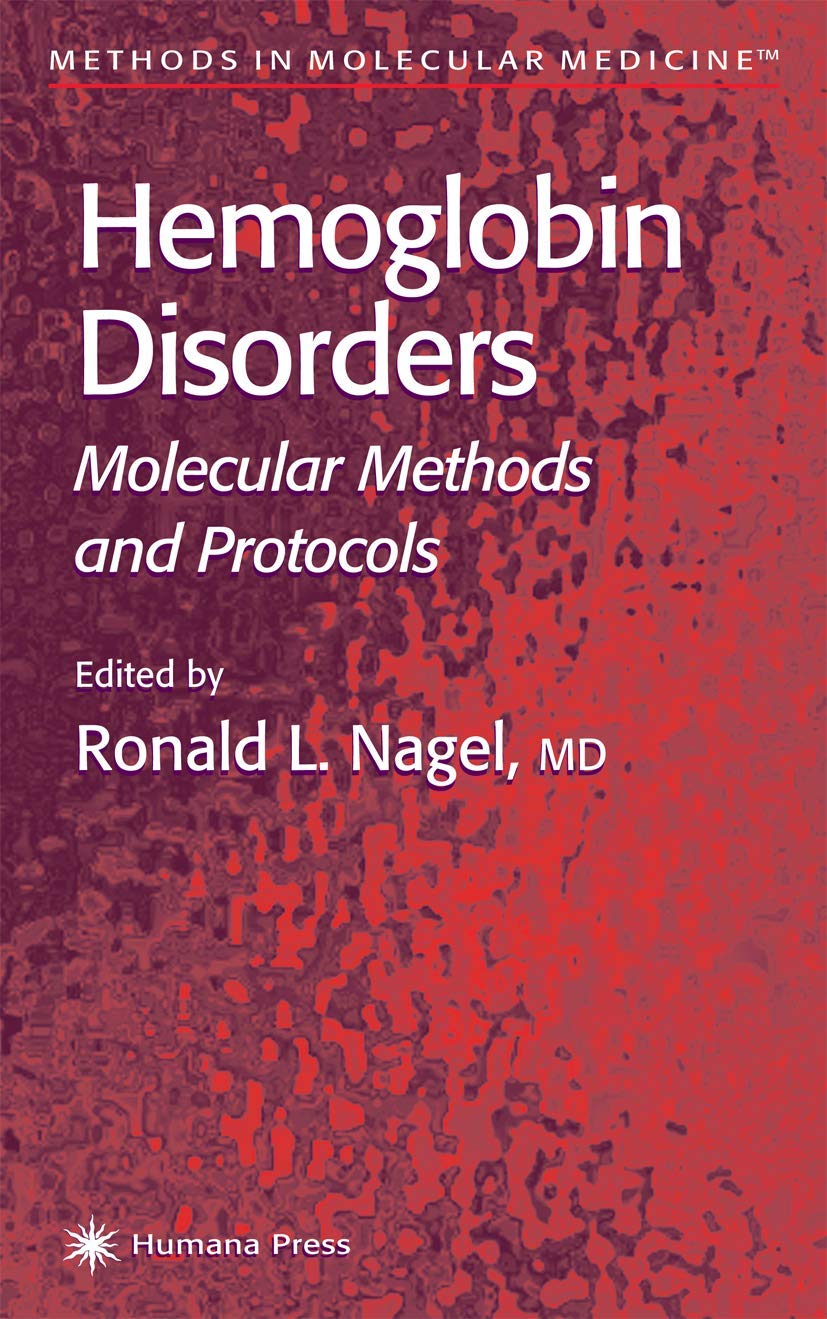
Our review of Hemoglobin Disorders: Molecular Methods and Protocols finds it a focused, historically informed laboratory reference for researchers and clinicians working on hemoglobinopathies. Ronald L. Nagel frames the book as both a methods compendium and a historical survey, making the single biggest reason to consult it the combination of practical molecular protocols with context on the field's development. This volume suits readers who need procedural guidance tied to the evolution of hemoglobin research rather than a general textbook for beginners.
Key Features
- Historical context: A review of milestones traces the Classical, Modern, and Post-Modern periods to clarify how current molecular methods emerged.
- Authoritative perspective: Ronald L. Nagel places techniques within the lineage of key scientists, helping readers appreciate methodological choices.
- Methods focus: Practical molecular protocols are presented alongside discussion, so laboratory workers can apply techniques with awareness of their origins.
- Field orientation: Coverage centers on hemoglobin and hemoglobinologists, making it highly relevant to specialists in blood disorders and genetic analysis.
- Scholarly introduction: The opening review of major contributors provides a compact survey useful for literature framing and citation.
Who It's For
This volume is best for molecular diagnosticians, laboratory scientists, and hematology researchers who require detailed procedural guidance paired with historical understanding of hemoglobin research. It is particularly useful for those designing assays or interpreting genetic variants in hemoglobin disorders.
Those seeking a basic introduction to hematology or a broad clinical textbook should look elsewhere; this is not a patient-oriented guide or an introductory internal medicine primer. Academic readers who value context around methods will find it most rewarding.
Pros & Cons
Pros
- Consolidates laboratory protocols with historical perspective, aiding methodological decisions.
- Authored with an emphasis on seminal figures and milestones, which helps contextualize techniques.
- Focused content makes it a practical reference for specialists rather than a generalist volume.
Cons
- Not intended as a beginner textbook, so readers without prior molecular background may find it dense.
Specifications
| Title | Hemoglobin Disorders: Molecular Methods and Protocols |
| Series | Methods in Molecular Medicine |
| Author | Ronald L. Nagel |
| Subject focus | Hemoglobin disorders and molecular methods |
| Content type | Review of history and laboratory protocols |
| Intended audience | Laboratory scientists, hematology researchers, molecular diagnosticians |
Our Verdict
Hemoglobin Disorders: Molecular Methods and Protocols is a valuable, well-focused reference for practitioners and researchers who need procedural detail framed by the field's history. It represents good value for specialists who want both methods and scholarly context, though it is not aimed at novices looking for a general clinical textbook.
Frequently Asked Questions
Does this book include laboratory protocols?
Yes, the volume combines practical molecular protocols with discussion of their historical development.
Who is the author and why does that matter?
Ronald L. Nagel authors the volume, providing an informed perspective that links techniques to key contributors in hemoglobin research.
Is this suitable for beginners?
Not primarily; the book is geared toward readers with some molecular or hematology background rather than complete beginners.
Editor's Take
A focused, historically aware laboratory reference that pairs practical molecular protocols with context; ideal for hematology researchers and molecular diagnosticians, but not for beginners.

Recently viewed
Recently viewed products will appear here as customers browse the store.