

Historical Epistemology of Space - Clear Guide to Spatial Knowledge
Historical Epistemology of Space - Clear Guide to Spatial Knowledge
Price subject to change. Tap below for current.
Couldn't load pickup availability
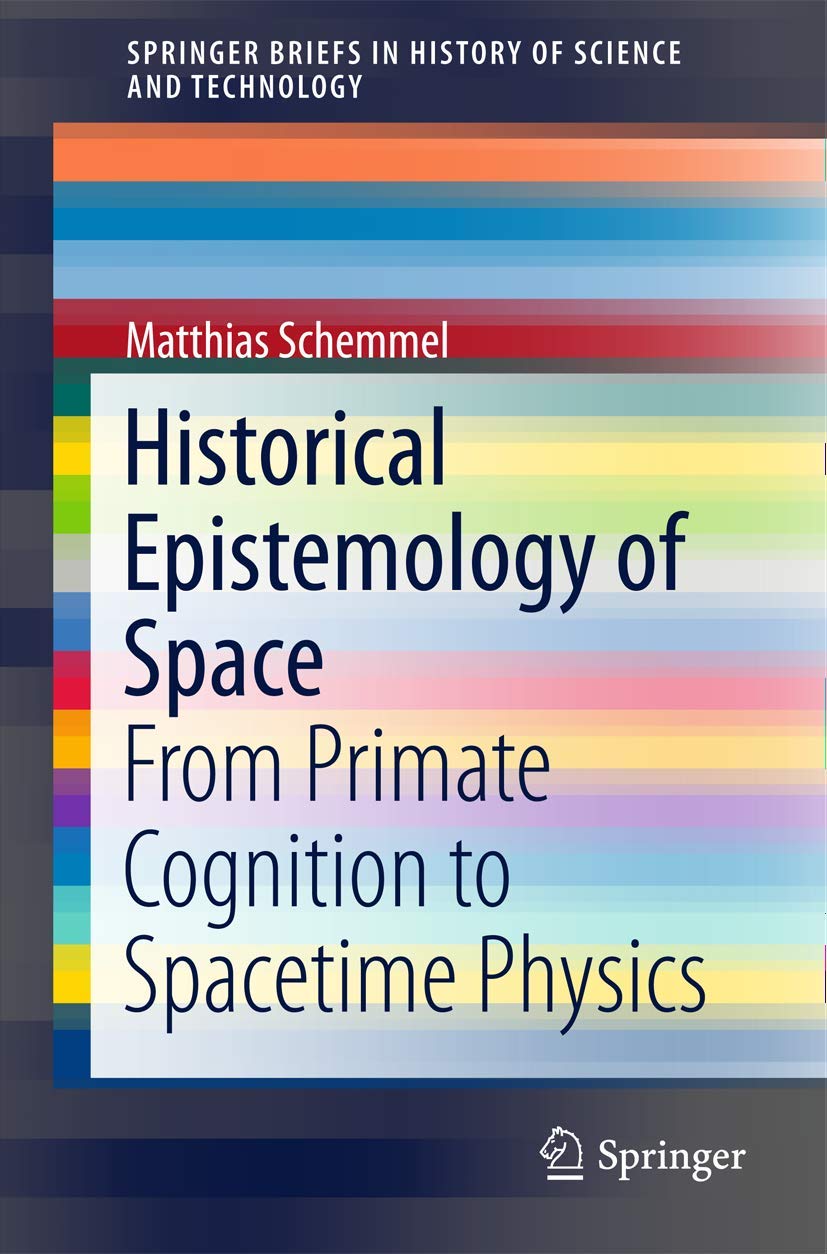
In this review of Historical Epistemology of Space the reviewer finds a focused, interdisciplinary monograph best suited to readers who want a historically grounded account of how humans developed spatial knowledge. The book's single biggest strength is its attempt to link everyday orientation and primate cognition to high-level scientific concepts such as Newtonian absolute space and Einsteinian curved spacetime, offering a sustained historical perspective rather than a purely philosophical or technical account. This makes it a distinctive review subject for anyone curious about the long-term roots of spatial thought.
Key Features
- Historical scope: Traces the long-term development of spatial thinking to show how scientific concepts of space grow from pre-scientific structures of knowledge.
- Interdisciplinary approach: Integrates findings from cognitive studies, primate orientation and history of science to illuminate relations between experience and cognition.
- Focus on elementary structures: Analyzes basic forms of spatial knowledge so readers can see how complex scientific models are grounded in simpler cognitive patterns.
- Linking theory and practice: Compares concrete orientation behaviors with abstract theories such as Newtons and Einsteins accounts to reveal continuities and ruptures in conceptual development.
- Concise monograph format: Presents a compact, readable treatment that is manageable for graduate seminars or individual study without requiring prior specialization.
Who It's For
This book is well suited for graduate students and researchers in philosophy of science, epistemology and history of science who want a comparative, historically informed account of spatial concepts. It will also appeal to cognitively minded readers interested in how primate orientation and human perceptual systems inform later scientific theorizing.
It is less appropriate for readers seeking technical introductions to the mathematics of general relativity or a primary textbook in physics; specialists looking for detailed mathematical derivations should consult physics texts instead.
Pros & Cons
Pros
- Offers a clear, historically grounded perspective that connects everyday spatial cognition to advanced scientific concepts.
- Interdisciplinary synthesis draws on cognitive studies and history to provide fresh angles on long-standing epistemological problems.
- Concise format makes it accessible for classroom use and targeted research reading.
Cons
- Not a substitute for technical physics or mathematical treatments of spacetime; readers expecting detailed equations may be disappointed.
Specifications
| Title | Historical Epistemology of Space |
| Subtitle / Series | SpringerBriefs in History of Science and Technology |
| Author / Brand | Matthias Schemmel |
| Subject areas | Philosophy, Epistemology, History of Science |
| Approach | Historical and interdisciplinary analysis |
| Focus | From primate cognition to spacetime physics |
Our Verdict
Historical Epistemology of Space is a well-judged, compact monograph that rewards readers who want to understand how scientific concepts of space are rooted in earlier cognitive and social practices. It is good value for historians of science and philosophers seeking an explanatory bridge between perception and formal theory, though it is not intended as a technical physics text.
Frequently Asked Questions
Does this book cover mathematical details of relativity?
No. The book treats Einsteinian spacetime conceptually and historically rather than as a source of mathematical derivations.
Is this suitable for undergraduate study?
It can be used in advanced undergraduate seminars, but it is best suited to graduate students and researchers familiar with basic issues in epistemology.
Does the author use empirical studies?
Yes, the work integrates empirical findings about primate orientation and cognitive structures as part of its interdisciplinary argument.
Editor's Take
A concise, interdisciplinary monograph that connects primate orientation and human cognition to scientific concepts of space; ideal for historians of science and philosophers who want a historically grounded explanation rather than technical physics.

Recently viewed
Recently viewed products will appear here as customers browse the store.