

Holy Places in the Israeli-Palestinian Conflict - In-depth
Holy Places in the Israeli-Palestinian Conflict - In-depth
Price subject to change. Tap below for current.
Couldn't load pickup availability
In this review of Holy Places in the Israeli-Palestinian Conflict the authors present a detailed, scholarly look at sacred sites and why they matter in the region. The book is aimed at readers who want a nuanced understanding of how religion, law and politics interact at shared holy places; its single biggest strength is the multifaceted approach, bringing legal analysis, historical context and contemporary case studies together to explain both sources of conflict and pathways to toleration. This review assesses readability, scholarship and practical relevance.
Key Features
- Multidisciplinary analysis: Chapters combine legal, political and religious perspectives so readers can see how different disciplines explain tensions at holy places.
- Expert contributions: The book gathers diverse specialists, providing multiple viewpoints that highlight contested narratives and cooperation around sites.
- Focus on legal regulation: Detailed discussion of laws and authorization practices helps readers understand how state and religious authorities manage access and claims.
- Themes of identity and memory: Coverage of identity politics and popular legends explains how social narratives shape claims to sacred space over time.
- Case-based approach: Specific examples of recognition and reproduction of holy sites ground theoretical claims in observable processes.
Who It's For
Scholars and graduate students of Middle Eastern politics, religious studies or international law will find this volume especially valuable because it presents rigorous, sourced arguments about sacred space and governance. Policy analysts and diplomats working on conflict resolution can use the legal and political chapters as background for negotiations involving site access and jurisdiction.
General readers seeking a light introduction should look elsewhere; the book assumes familiarity with regional history and legal concepts and reads like an edited academic volume rather than a popular narrative. Readers wanting a single-author synthesis may also prefer a more interpretive text.
Pros & Cons
Pros
- Comprehensive, multidisciplinary coverage gives a balanced view of religious, political and legal drivers of conflict.
- Contributions from varied experts illuminate competing claims and cooperation at holy places.
- Concrete discussion of legal regulation and authorization offers practical insight for policymakers.
Cons
- The academic tone and depth make it less suitable for casual readers seeking a concise overview.
Specifications
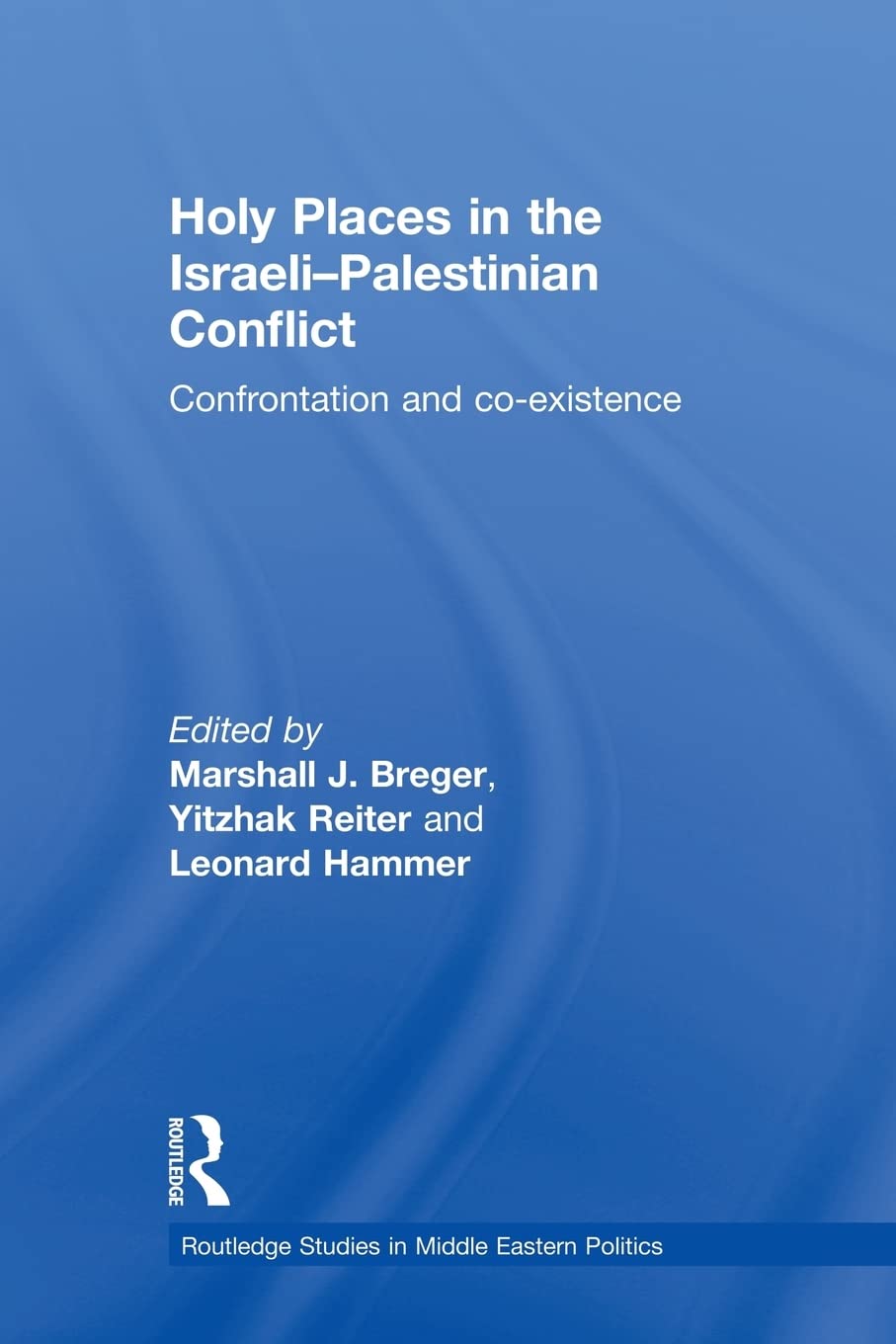
| Title | Holy Places in the Israeli-Palestinian Conflict |
| Series | Routledge Studies in Middle Eastern Politics |
| Authors / Editors | Marshall J. Breger, Yitzhak Reiter, Leonard Hammer |
| Topics covered | Legal regulation, nationalization of holy space, identity politics, popular legends |
| Approach | Edited volume with expert contributions and case studies |
| Regional focus | Palestine and Israel |
Our Verdict
Holy Places in the Israeli-Palestinian Conflict is a substantive, well-structured academic volume that rewards readers who need an in-depth, multidisciplinary study of sacred sites and governance. It is good value for specialists, policy professionals and advanced students because it combines legal detail with political and social analysis, though casual readers may find the style dense.
Frequently Asked Questions
Does this book cover legal issues at holy sites?
Yes. Several chapters focus on legal regulation and the processes of recognition and authorization for new or contested sites.
Who contributed to this volume?
The book brings together a diverse group of experts; the editors are Marshall J. Breger, Yitzhak Reiter and Leonard Hammer.
Is this book suitable for general readers?
It is primarily academic in tone and best suited to specialists, students or professionals rather than casual readers.
Editor's Take
A substantive, multidisciplinary academic volume that offers detailed legal, political and social analysis of sacred sites in Palestine and Israel; ideal for specialists and advanced students.

Recently viewed
Recently viewed products will appear here as customers browse the store.