

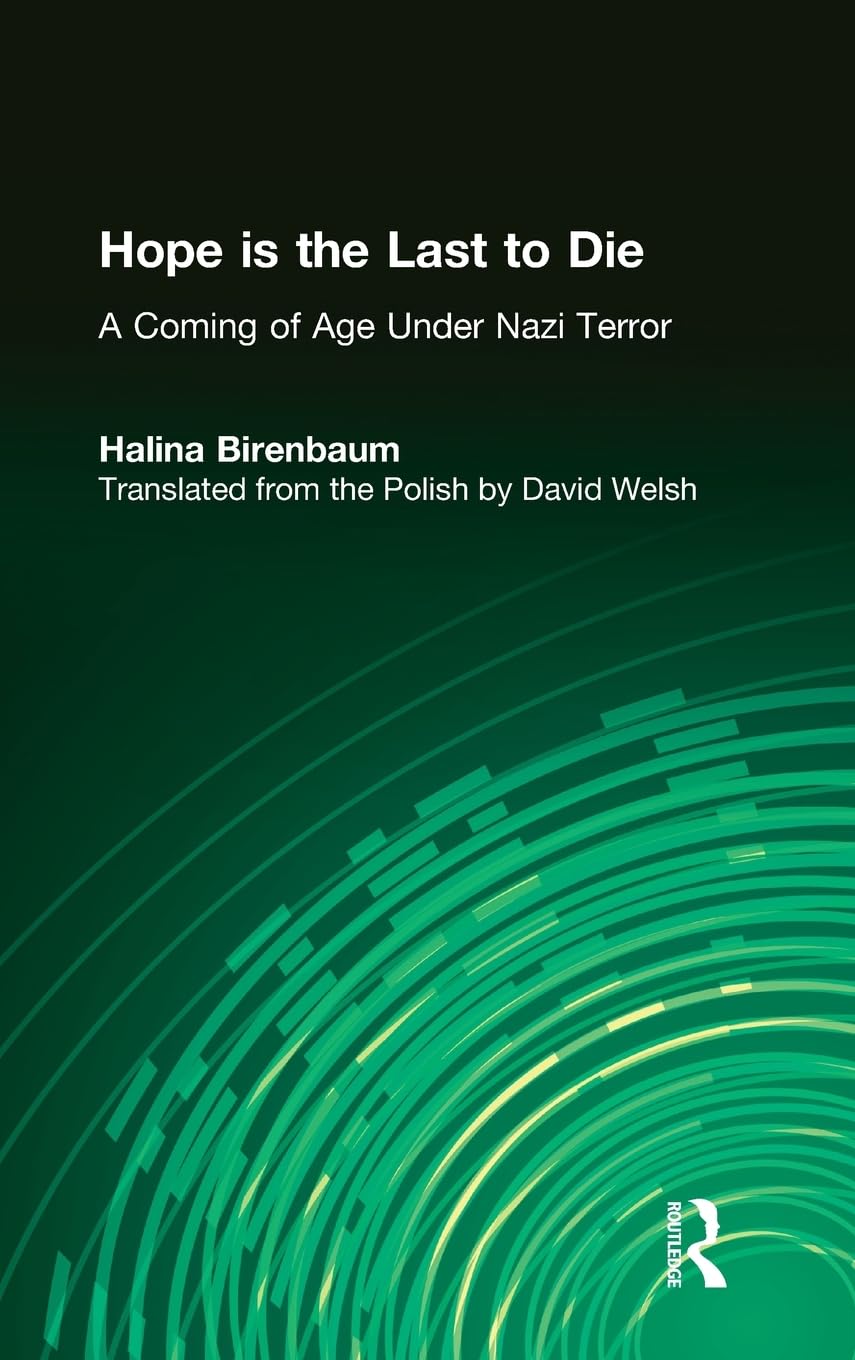
Hope is the Last to Die - Holocaust Memoir Halina Birenbaum
Hope is the Last to Die - Holocaust Memoir Halina Birenbaum
Price subject to change. Tap below for current.
Couldn't load pickup availability
In this review of Hope is the Last to Die, the reviewer finds a quietly powerful Holocaust memoir ideal for readers seeking a personal, tightly focused account of survival. Halina Birenbaum recounts her years from 1939 to 1945 with clear, unadorned prose that makes this edition especially valuable: it includes author revisions, a new epilogue and postscripts that extend the narrative beyond the original translation. The single biggest reason to buy is the firsthand witness perspective across multiple camps, presented in a way that aids historical understanding without sentimentality.
Key Features
- Firsthand account: The book delivers a direct, personal narrative of life in the Warsaw ghetto and deportation, giving readers an intimate view of day-to-day survival.
- Covers multiple camps: The memoir chronicles imprisonment in Majdanek, Auschwitz, Ravensbruck and Neustadt-Glewe, tracing the arc of the authors wartime experience.
- Revised English edition: This edition includes revisions by the author to the original translation, improving clarity and historical detail.
- Expanded material: A new epilogue and postscripts bring the story up to date and complete the narrative circle for readers interested in aftermath and memory.
- Clear prose: The writing is simple and precise, which helps the difficult subject matter remain accessible to students and general readers alike.
Who It's For
This memoir is best for readers of Holocaust history, students studying World War II testimony, and anyone who values survivor testimony presented without rhetorical flourish. It works well in academic settings as a primary-source perspective and for book groups focused on Jewish history.
Those looking for a broad historical survey, an illustrated volume, or a heavily annotated scholarly edition may want to supplement this reading with reference histories or companion texts that offer wider context and archival notes.
Pros & Cons
Pros
- Authentic survivor testimony that spans the Warsaw ghetto and multiple concentration camps.
- The revised translation and new epilogue provide updated reflection and clearer narrative flow.
- Concise, unadorned prose makes traumatic events accessible without sensationalism.
Cons
- Not a heavily annotated academic edition, so readers seeking extensive scholarly apparatus may find it limited.
Specifications
| Title | Hope is the Last to Die |
| Author | Halina Birenbaum |
| Additional contributor | David Welsh |
| Period covered | 1939-1945 |
| Locations described | Warsaw ghetto, Majdanek, Auschwitz, Ravensbruck, Neustadt-Glewe |
| Edition notes | Revisions by author, new epilogue and postscripts |
Our Verdict
Hope is the Last to Die is a compact, essential memoir for readers seeking sincere survivor testimony and a clear narrative of wartime survival. It represents good value for those wanting a readable primary account across several camps, though researchers seeking extensive annotations should pair it with scholarly sources.
Frequently Asked Questions
Does this edition include new material?
Yes. The edition contains author revisions and an expanded epilogue plus postscripts that update the story.
Which camps does the author describe?
The memoir covers the Warsaw ghetto and imprisonment in Majdanek, Auschwitz, Ravensbruck and Neustadt-Glewe.
Is this suitable for classroom use?
Yes. Its clear prose and firsthand perspective make it useful for history classes, though instructors may add contextual readings for broader analysis.
Editor's Take
Hope is the Last to Die is a compact, essential memoir offering sincere survivor testimony across multiple camps; valuable for readers and students seeking a clear, firsthand account, though scholars may want additional annotated sources.

Recently viewed
Recently viewed products will appear here as customers browse the store.