

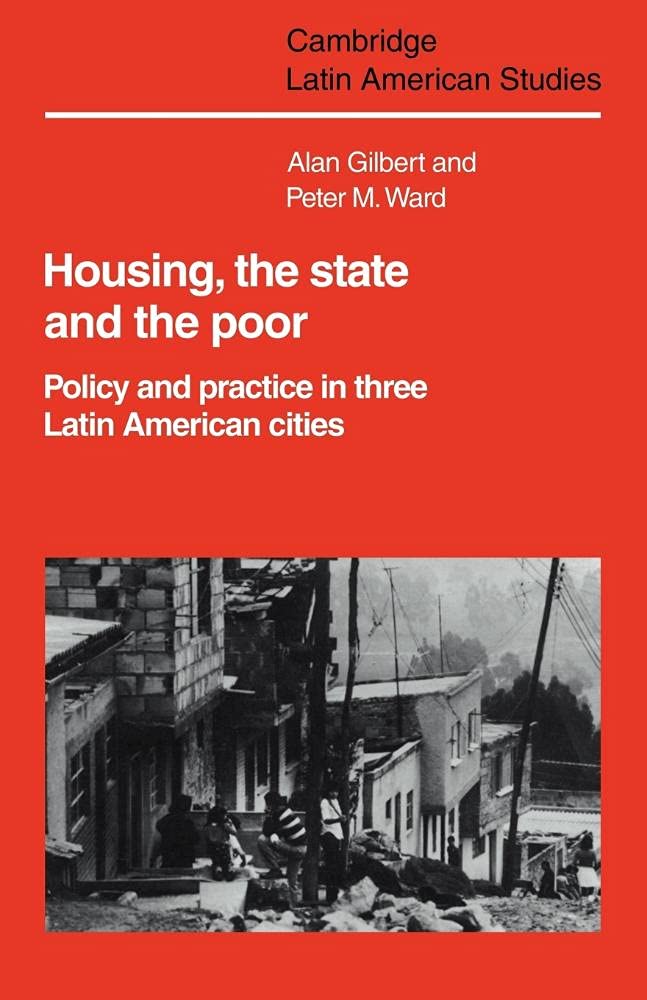
Housing, the State and the Poor: Policy and Practice in Three Latin
Housing, the State and the Poor: Policy and Practice in Three Latin
Price subject to change. Tap below for current.
Couldn't load pickup availability
In this review of Housing, the State and the Poor: Policy and Practice in Three Latin American Cities, the bottom line is clear: this is a careful, historically grounded study for readers who need a focused analysis of low-income housing policy and state action in Latin America. Originally published in 1985, the book is best suited to students, researchers and policy practitioners seeking detailed discussion of how governments, community leaders and the poor interact over barrio servicing and housing provision. The reviewer finds its strength in linking policy aims to the wider interests of the state and in documenting the perspectives of barrio residents.
Key Features
- Historical analysis: The book situates housing policy and service provision within the political and administrative context of the 1980s, helping readers understand past decision drivers.
- Focus on low-income housing: It examines how government policies are aimed at and implemented for low-income dwellers, clarifying gaps between rhetoric and practice.
- Community perspective: The text reports how the poor perceive constraints on barrio servicing and how community organisation affects outcomes.
- State actors considered: By discussing politicians, bureaucrats, landowners and developers, the authors show how provision patterns reflect broader power relationships.
- Comparative city case studies: Coverage of three Latin American cities offers comparative insights rather than a single-city snapshot, useful for cross-city policy reflection.
Who It's For
This book primarily serves advanced undergraduate and graduate students in human geography, urban studies and Latin American social sciences, as well as policymakers interested in the historical roots of contemporary housing challenges. Its academic tone and case-study approach make it a good course text or background reading for research projects.
Readers looking for practical, step-by-step engineering or architectural guidance should look elsewhere; this is a policy and social analysis rather than a how-to manual for construction or modern housing design.
Pros & Cons
Pros
- Provides a strong link between state interests and housing provision, clarifying why policies take particular forms.
- Includes the voices and perspectives of barrio residents, adding empirical depth to policy discussion.
- Useful comparative approach across three cities, enabling broader lessons for Latin American urban studies.
Cons
- Because it was originally published in 1985, some policy contexts and data are dated and require contemporary supplementation.
Specifications
| Title | Housing, the State and the Poor: Policy and Practice in Three Latin American Cities |
| Authors | Alan Gilbert, Peter M. Ward |
| Series | Cambridge Latin American Studies, Series Number 50 |
| First published | 1985 (original publication) |
| Scope | Housing, service needs and state policy for low-income urban populations |
| Regional focus | Three Latin American cities (comparative case studies) |
Our Verdict
Housing, the State and the Poor is a worthwhile read for students and researchers who need a historically informed policy analysis of low-income housing in Latin America; its comparative case studies and attention to community perspectives offer valuable context and remain useful when paired with more recent studies.
Frequently Asked Questions
Is this book an academic study?
Yes. It is written as a scholarly analysis of housing policy and state practice with case studies and policy discussion.
Does it include residents' perspectives?
Yes. The authors discuss how poor residents perceive constraints and how community organisations influence state action.
Is this a practical guide to building housing?
No. The book addresses policy, politics and social dynamics rather than technical construction guidance.
Editor's Take
Housing, the State and the Poor is a valuable, historically grounded comparative study for students and researchers of Latin American housing policy; its community perspectives and state-focused analysis remain useful when paired with contemporary research.

Recently viewed
Recently viewed products will appear here as customers browse the store.