

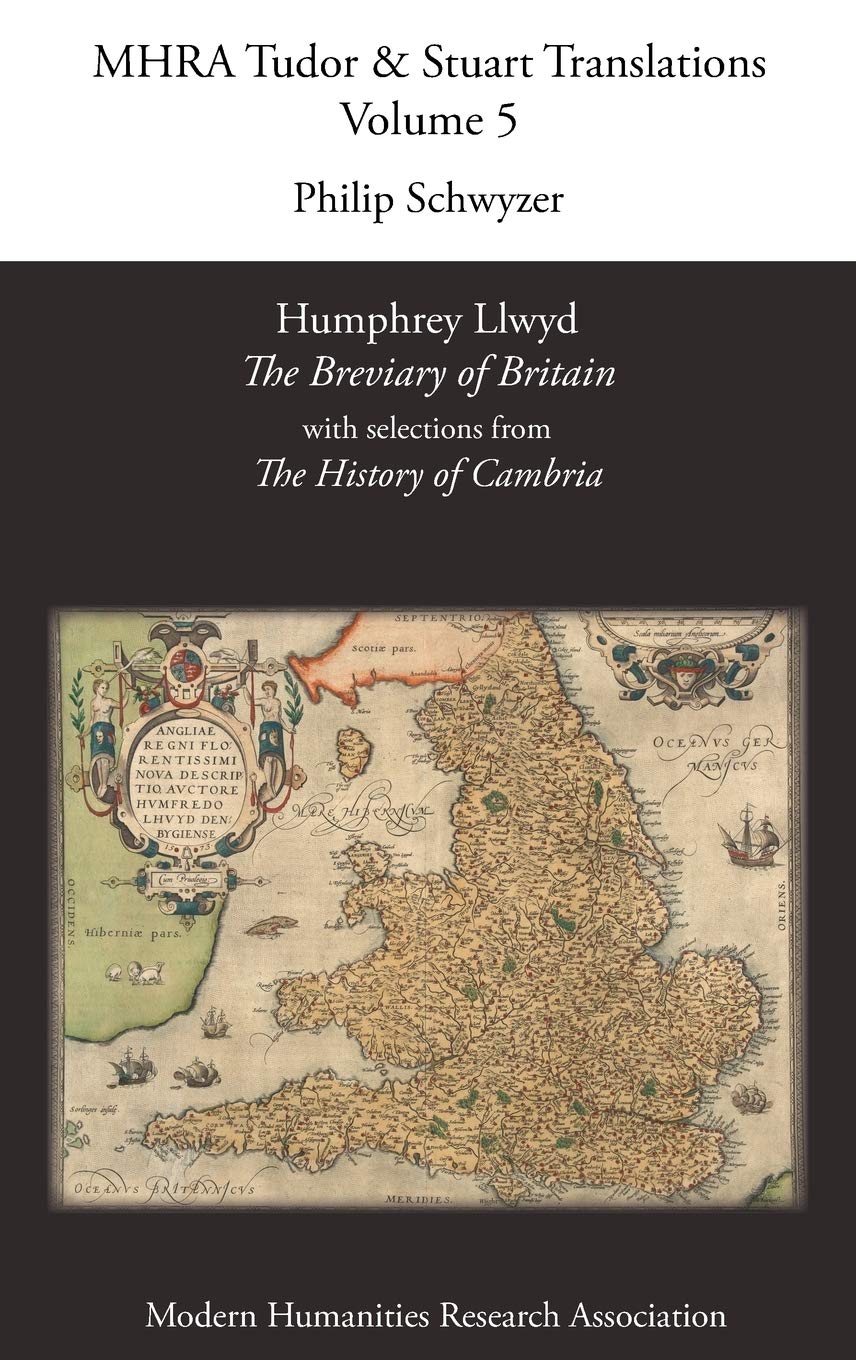
Humphrey Llwyd The Breviary of Britain - Scholarly Edition
Humphrey Llwyd The Breviary of Britain - Scholarly Edition
Price subject to change. Tap below for current.
Couldn't load pickup availability
In this review of Humphrey Llwyd's Breviary of Britain, Philip Schwyzer's scholarly edition is assessed for readers who want a rigorous, contextualized reissue of a formative Tudor text. The edition's single biggest strength is its pairing of Llwyd's 1573 Breviary with selections from Powel's History of Cambria and careful editorial apparatus, which together make it an essential resource for students of Elizabethan historiography and anyone tracing the influence of medieval Welsh chronicle material on writers such as Spenser and Drayton. This is a focused academic volume rather than a general-interest narrative.
Key Features
- First Tudor description: Restores Humphrey Llwyd's 1573 Breviary as the earliest Tudor account of Britain, giving readers direct access to a foundational text in English historical writing.
- Historical context: Includes selections from David Powel's History of Cambria that illuminate how Llwyd's translation of Brut y Tywysogyon fed later Elizabethan literature.
- Scholarly editing: Edited by Philip Schwyzer, the edition provides learned commentary and context that help modern readers understand references such as the early English use of the phrase British Empire.
- Literary connections: Demonstrates clear links to major authors like Spenser and Michael Drayton, making it useful for literary scholars tracing sources and influence.
- Primary-source focus: Preserves Llwyd's translation and Powel selections rather than offering a heavily modernized retelling, so readers engage with near-original wording and structure.
Who It's For
This edition is best for graduate students, lecturers, and serious readers of Renaissance literature who need a reliable scholarly edition of a text that shaped early modern ideas about Britain and Welsh historical tradition. The editorial material makes it suitable as a course text when paired with lectures or secondary readings.
Readers seeking a popular history or a broadly accessible narrative of medieval Wales should look elsewhere, as the volume prioritizes primary text and learned apparatus over a simplified, popular account. Nonacademic readers may find the focus narrow and the format more suited to research than light reading.
Pros & Cons
Pros
- Reproduces an important Tudor-era text and the first English reference to the phrase British Empire, valuable to historians and literary scholars.
- The inclusion of Powel's History selections clarifies how Welsh chronicle material circulated into Elizabethan literature.
- Philip Schwyzer's editorial framing provides authoritative context that assists interpretation of archaic references and intertextual links.
Cons
- The book's scholarly focus and primary-source presentation make it less accessible to casual readers seeking a narrative history.
Specifications
| Title | Humphrey Llwyd, The Breviary of Britain |
| Editor | Philip Schwyzer |
| Original publication | 1573 (Llwyd's Breviary) |
| Includes | Selections from David Powel's History of Cambria (based on Brut y Tywysogyon) |
| Primary focus | Tudor description of Britain and Welsh historical traditions |
| Relevance | Source for authors such as Spenser and Michael Drayton |
Our Verdict
This scholarly edition is a worthwhile purchase for academics and serious students because it reunites Llwyd's Breviary with Powel's History and supplies editorial context that clarifies its influence on Elizabethan literature. While not aimed at casual readers, it represents good value for courses and research collections focused on Renaissance historiography and the transmission of Welsh chronicle material.
Frequently Asked Questions
Does this edition include modern commentary?
Yes. Philip Schwyzer provides scholarly notes and contextual commentary to aid reading and interpretation.
Is the text modernized for general readers?
No. The edition emphasizes the original translation and selections rather than creating a popularized retelling.
Will this be useful for literature courses?
Yes. Its focus on links to Spenser and Drayton makes it well suited to seminars on Renaissance literature and historical sources.
Editor's Take
Philip Schwyzer's edition reunites Llwyd's 1573 Breviary with Powel's History, offering valuable editorial context for scholars of Renaissance literature and Welsh historiography; ideal for courses and research collections.

Recently viewed
Recently viewed products will appear here as customers browse the store.