

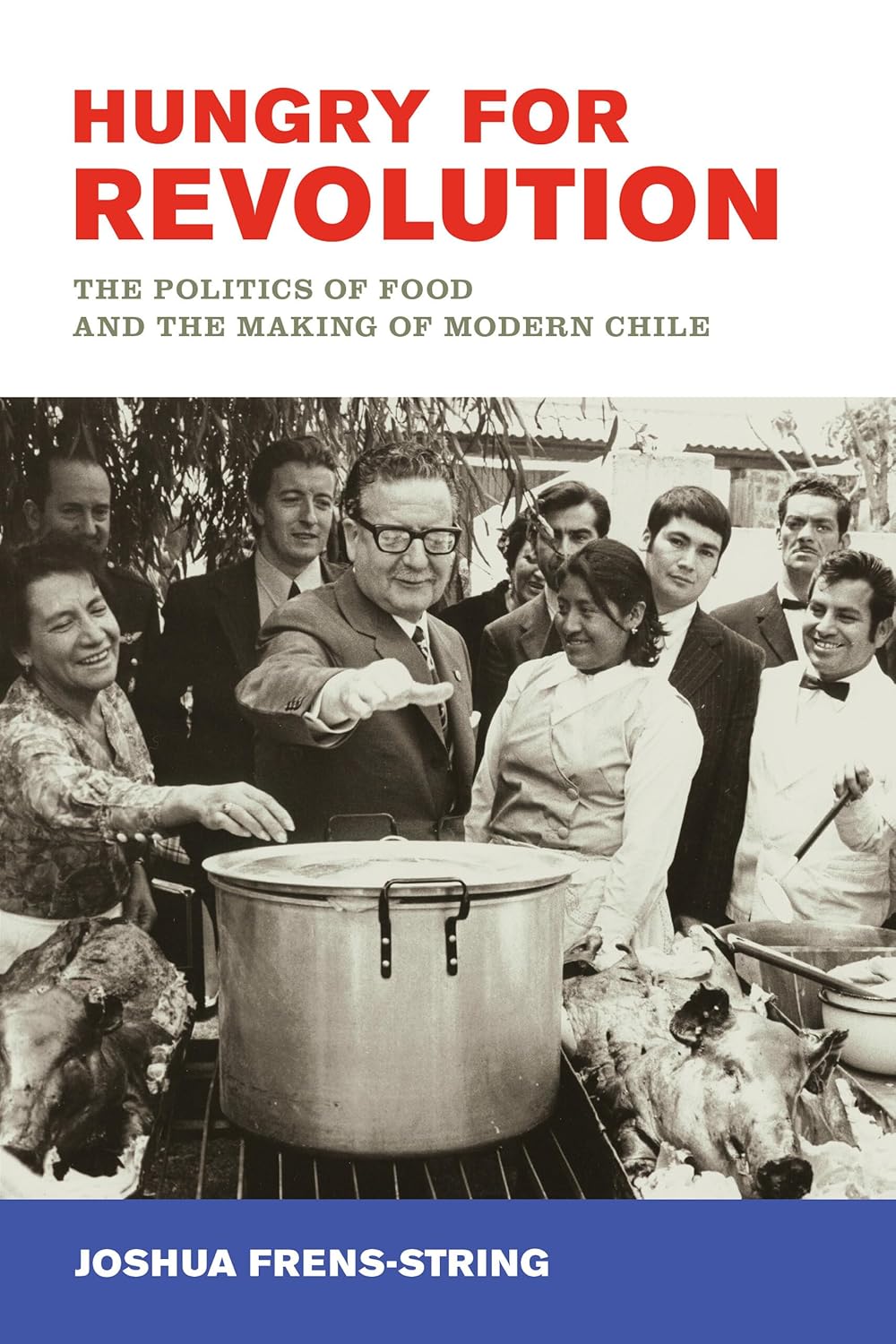
Hungry for Revolution: The Politics of Food and the Making of Modern
Hungry for Revolution: The Politics of Food and the Making of Modern
Price subject to change. Tap below for current.
Couldn't load pickup availability
In this review of Hungry for Revolution, Joshua Frens-String offers a focused, archival-driven account that will appeal to readers interested in twentieth-century Latin American politics and social policy. The book's single biggest reason to read is its clear argument that struggles over food were central to the rise and collapse of Chile's Popular Unity government, presented through concrete links among workers, consumers, scientists, and the state. The narrative style balances scholarly evidence with accessible prose, making it useful for both specialists and informed general readers.
Key Features
- Historical scope: Traces food politics across decades to show how long-term struggles shaped Chilean social policy and political alignments.
- Interdisciplinary approach: Reconstructs ties among workers, consumers, scientists, and the state to illuminate how diverse actors influenced food security as a right.
- Focus on Popular Unity: Explains how food policy contributed to the rise and fall of one of Latin America's most expansive social welfare states.
- Empirical grounding: Uses archival and documentary evidence to connect everyday access to nutrient-rich foodstuffs with broader economic and political processes.
- Rural-urban linkages: Examines state modernization efforts in the agricultural countryside alongside urban working-class demands for reliable food.
Who It's For
This book is well suited to historians, political scientists, and graduate students researching Latin America, social policy, or food studies, as well as informed general readers curious about how everyday needs like food access shape political life. The narrative offers useful case studies and conceptual connections for classroom discussion or seminar reading.
Readers seeking a short popular overview without scholarly detail or those looking for a cookbook or practical farming guide should look elsewhere; the book is a work of historical analysis that centers political and institutional processes rather than prescriptive agricultural advice.
Pros & Cons
Pros
- Provides a coherent thesis linking food security to political outcomes, useful for researchers framing comparative questions.
- Balances archival evidence with readable prose, making complex institutional history approachable.
- Illuminates understudied connections between urban workers and rural modernization efforts, broadening the narrative about Chilean development.
Cons
- The detailed archival focus may feel dense for casual readers seeking a light history; it is primarily an academic treatment.
Specifications
| Title | Hungry for Revolution: The Politics of Food and the Making of Modern Chile |
| Author | Joshua Frens-String |
| Subject | History of Chile; food politics; social policy |
| Geographic focus | Chile, South America |
| Key themes | Food security, Popular Unity, state modernization, urban and rural relations |
Our Verdict
Hungry for Revolution is a valuable, well-documented study for anyone exploring how food policy and citizenship intersected in modern Chile; its archival richness and thematic clarity make it a good investment for students and scholars seeking to connect social welfare experiments to everyday struggles over sustenance.
Frequently Asked Questions
Is this book suitable for classroom use?
Yes. Its archival examples and clear argument make it appropriate for graduate seminars or upper-level undergraduate courses on Latin American history or social policy.
Does the book cover rural agricultural policy as well as urban issues?
Yes. It examines state efforts to modernize the agricultural countryside alongside urban working-class demands for nutrient-rich food.
Is prior knowledge of Chilean history required?
No. While helpful, the author frames key events and institutions so that informed general readers can follow the argument.
Editor's Take
Hungry for Revolution is a well-documented study showing how food politics shaped Chile's Popular Unity; its archival depth and clear argument make it a strong choice for students and scholars.

Recently viewed
Recently viewed products will appear here as customers browse the store.