

Immigration and the Constraints of Justice - A Clear Ethical
Immigration and the Constraints of Justice - A Clear Ethical
Price subject to change. Tap below for current.
Couldn't load pickup availability
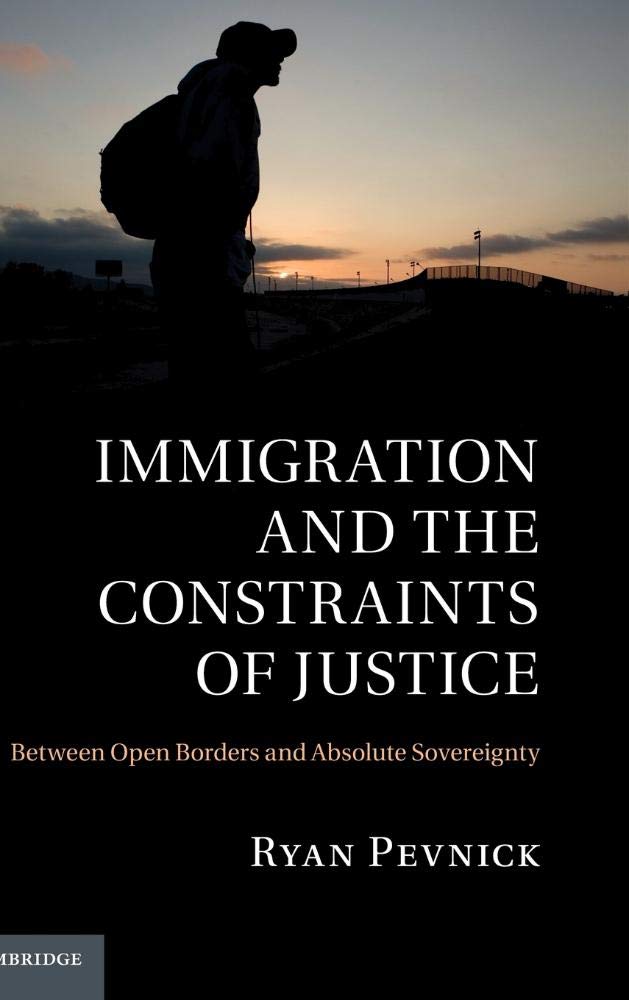
In this review of Immigration and the Constraints of Justice, the bottom line is that this book is for readers who want a careful, philosophically grounded account of how justice limits immigration policy. Ryan Pevnick presents a sober alternative to both open borders and strict nationalist exclusion by rooting citizens' special claims in their collective ownership of state institutions. The result is an argument that allows limited exclusion while also supporting practical policies such as certain guest worker programs, making the book most valuable to students, policy analysts, and philosophically minded citizens.
Key Features
- Institutional ownership thesis: Pevnick locates citizens' special claims in their joint contributions to building institutions, which clarifies how exclusion can be justified without appealing to ethnic or cultural identity.
- Normative constraint analysis: The book systematically explores what justice permits and forbids in immigration policy, offering a principled middle path between competing extremes.
- Policy implications: Pevnick shows how the theory supports concrete measures such as certain guest worker programs, connecting abstract theory to real-world options.
- Comparative critique: The author contrasts his view with liberal nationalism and open borders advocacy, which helps readers see the distinctiveness of the argument.
- Philosophical rigor: The text is grounded in political philosophy and legal-political concepts, useful for readers who want careful argumentation rather than slogans.
Who It's For
This book best serves graduate students, scholars, and policy thinkers interested in political philosophy, immigration ethics, and the foundations of state authority. It is also useful for policymakers seeking a defensible framework that balances citizens' claims with obligations to outsiders.
Readers looking for a pocket guide to immigration law, a journalistic overview, or an advocacy pamphlet for unrestricted migration should look elsewhere; this work is philosophical and argumentative rather than a how-to manual or a policy platform for activists.
Pros & Cons
Pros
- Provides a clear, nonidentity-based account of why citizens may legitimately exclude outsiders.
- Connects theory to policy by supporting targeted solutions like guest worker programs.
- Sharp engagement with competing views such as liberal nationalism and open borders helps clarify disagreements.
Cons
- The book is philosophical and dense in places, which may limit its accessibility for casual readers.
Specifications
| Title | Immigration and the Constraints of Justice |
| Author | Ryan Pevnick |
| Subject | Immigration policy and political philosophy |
| Core thesis | Citizens' ownership of state institutions grounds limited exclusion |
| Policy stance | Supports certain guest worker programs and moderated exclusion |
| Comparative focus | Contrasts with liberal nationalism and open borders positions |
Our Verdict
Immigration and the Constraints of Justice is a well-argued, philosophically rigorous book that will repay careful reading by those engaged with immigration ethics and state legitimacy. It offers a distinctive middle path that is both principled and policy-relevant, making it good value for scholars and serious readers who want a defensible framework for balancing citizens' claims with humanitarian concerns.
Frequently Asked Questions
Does the book defend open borders?
No. Pevnick argues against unrestricted open borders and instead defends a limited right for citizens to exclude based on institutional ownership.
Does it propose concrete policies?
Yes. The author endorses policy measures such as certain guest worker programs as compatible with his theoretical framework.
Is this a legal textbook?
No. It is a work of political philosophy focused on normative constraints rather than practical legal instruction.
Editor's Take
A philosophically rigorous, policy-relevant account arguing that citizens' ownership of state institutions justifies limited exclusion; ideal for scholars and policymakers seeking a defensible middle path.

Recently viewed
Recently viewed products will appear here as customers browse the store.