

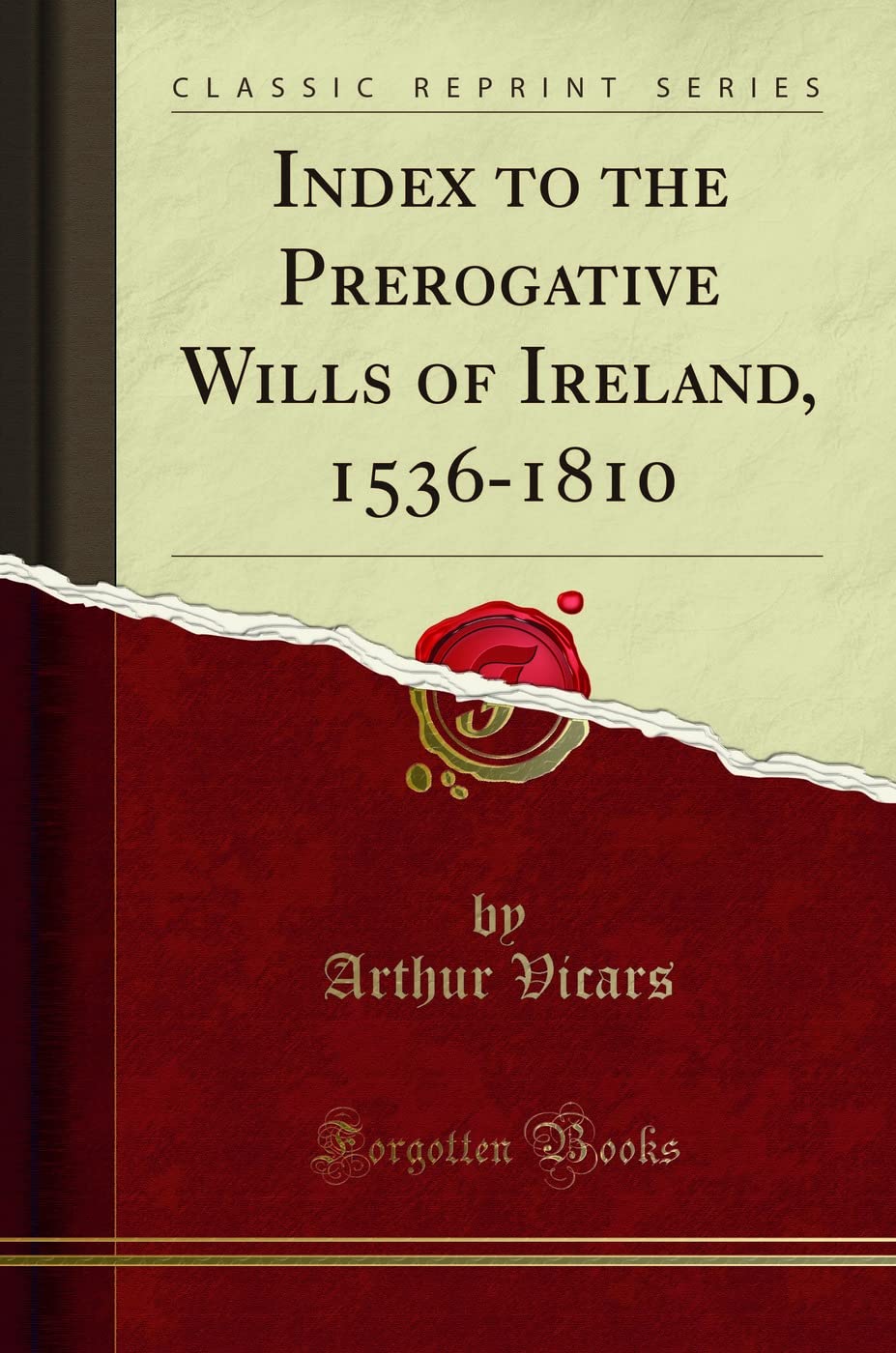
Index to the Prerogative Wills of Ireland 1536-1810 - Genealogy
Index to the Prerogative Wills of Ireland 1536-1810 - Genealogy
Price subject to change. Tap below for current.
Couldn't load pickup availability
In this review of Index to the Prerogative Wills of Ireland, 1536-1810 the reviewer finds a focused, archival reference aimed at family historians and researchers seeking original testamentary leads. The book's biggest asset is its role as an index to centuries of wills, making it a practical starting point for tracing multiple generations and locating primary documents. This review highlights how the volume helps uncover signatures, seals and family bearings that are often absent from other secondary sources, and explains who will get most value from it.
Key Features
- Comprehensive index: Provides organized entries covering wills proved in the Prerogative Court across 1536 to 1810, enabling targeted searches for ancestors.
- Genealogical value: Allows researchers to identify several generations from a single testamentary document, offering names, relationships and contextual clues.
- Historical detail: Highlights that testators often signed and sealed wills, which can reveal handwriting and armorial bearings useful to family history.
- Reference format: Presented as a reprint of an established index, making it suitable for library shelves and repeated consultation by researchers.
- Practical starting point: Functions as a research gateway to original records rather than a narrative history, saving time in locating primary wills.
Who It's For
This volume is best for genealogists, local historians and archivists who need a reliable index to probate material from the Irish Prerogative Court between the 16th and early 19th centuries. It is particularly useful when tracking landed families, merchants or individuals whose social position meant their wills were proved in central ecclesiastical courts.
Those looking for a modern interpretive genealogy or a narrative social history should look elsewhere; this book is an index and tool for locating primary documents rather than a textbook on Irish social life. Casual readers seeking a general history of the period may find the format dry.
Pros & Cons
Pros
- Direct access to probate entries that can reveal multiple family generations from a single record.
- Preserves mentions of signatures and seals, aiding verification of family identity and armorial bearings.
- Reprint format keeps an archival reference affordable and easy to consult in libraries or home shelves.
Cons
- As an index, it does not include full transcriptions or images of the original wills, so researchers must consult archives for the primary documents.
Specifications
| Title | Index to the Prerogative Wills of Ireland, 1536-1810 (Classic Reprint) |
| Author | Arthur Vicars |
| Scope | Wills proved in the Prerogative Court, 1536-1810 |
| Format | Classic reprint reference volume |
| Use | Genealogical and archival research |
| Includes | Indexes to testamentary entries, notes on signatures and seals |
Our Verdict
Index to the Prerogative Wills of Ireland, 1536-1810 is a focused reference that delivers clear research value to family historians and archivists who need to locate Irish probate records. It is good value for those who will follow the index into archives for original wills, but it is not a substitute for primary documents or a narrative history.
Frequently Asked Questions
Does this book contain full wills?
Answer. No; it is an index to wills proved in the Prerogative Court and directs researchers to the original probate records for full texts.
Who compiled the index?
Answer. The index edition is attributed to Arthur Vicars, presented here as a classic reprint for reference use.
Is this useful for beginners?
Answer. Yes, beginners in genealogy will find it useful as a starting point, but they should be prepared to consult archives or repositories to obtain full wills.
Editor's Take
This reprinted index is a practical research tool for genealogists and archivists seeking Irish probate leads from 1536 to 1810; it points to original wills and reveals signatures and seals but requires archival follow-up for full texts.

Recently viewed
Recently viewed products will appear here as customers browse the store.