

Insect Hearing and Acoustic Communication - Comprehensive Research
Insect Hearing and Acoustic Communication - Comprehensive Research
Price subject to change. Tap below for current.
Couldn't load pickup availability
In this review of Insect Hearing and Acoustic Communication the bottom line is simple: this volume is for researchers, graduate students and informed readers seeking a focused compilation of recent studies on insect auditory systems and signalling behaviour. The book assembles contributions that explore hearing organs, sound production and neural processing across diverse insects, making it the single best pick for readers wanting a detailed, research-oriented overview rather than an introductory textbook.
Key Features
- Wide taxonomic scope: Chapters cover moths, crickets, bush-crickets, grasshoppers, cicadas and flies, offering comparative perspectives across common hearing insects.
- Interdisciplinary focus: The volume links neural processing, ecology, evolution and genetics to provide context for acoustic signalling in natural lifestyles.
- Current research synthesis: Leading researchers summarize recent scientific progress and highlight key questions shaping the field today.
- Evolutionary and developmental angles: The book discusses approaches to the evolution of hearing and explores developmental and neural origins of auditory organs.
- Practical relevance: Case studies show how hearing and sound production are embedded in animals' natural behaviour, supporting ecological and behavioural analyses.
- Edited volume format: Multiple expert contributors provide up-to-date perspectives rather than a single-author narrative.
Who It's For
This book is best suited to researchers, advanced students and professionals in behavioural ecology, neuroethology and evolutionary biology who need a concentrated review of recent work on insect acoustic communication. It will also appeal to readers compiling literature reviews or designing experiments on auditory systems.
Those seeking a general introduction to insect biology or a textbook for undergraduate courses should look elsewhere; the volume assumes familiarity with basic neurobiology and evolutionary concepts and is focused on specialist research rather than beginner-level explanations.
Pros & Cons
Pros
- Comprehensive coverage across multiple hearing taxa provides valuable comparative insights.
- Integration of neural, ecological and evolutionary perspectives helps connect mechanisms to function.
- Contributions from leading researchers keep the review current and relevant for active investigators.
- Focused case studies illustrate how acoustic signalling operates in natural contexts.
Cons
- The edited, research-focused format may feel dense to non-specialists or casual readers.
- It is not a step-by-step experimental manual, so readers seeking protocols will need complementary sources.
Specifications
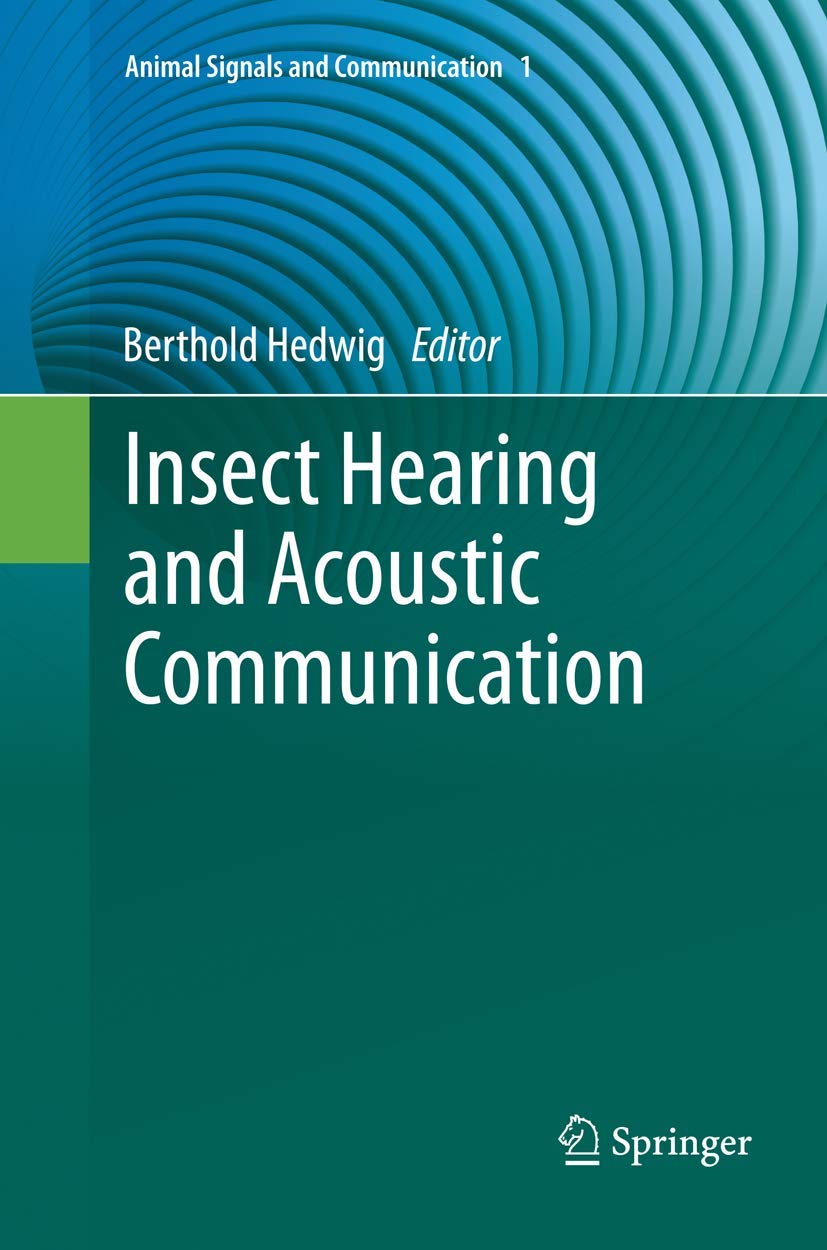
| Title | Insect Hearing and Acoustic Communication |
| Series | Animal Signals and Communication, 1 |
| Editor/Author | Berthold Hedwig |
| Scope | Hearing organs, sound production, neural processing, ecology, evolution, genetics |
| Featured taxa | Moths, crickets, bush-crickets, grasshoppers, cicadas, flies |
| Format | Edited research volume |
Our Verdict
This edited volume is recommended for specialists who need a concise, up-to-date synthesis of insect acoustic communication research; it delivers comparative depth and interdisciplinary context and represents strong value for readers designing studies or compiling literature in neuroethology and behavioural ecology.
Frequently Asked Questions
Is this book suitable for beginners?
The book is research-focused and assumes prior knowledge, so beginners may find it dense and should pair it with an introductory text.
Which insect groups are covered?
Chapters include moths, crickets, bush-crickets, grasshoppers, cicadas and flies, providing comparative coverage across common hearing insects.
Does it discuss evolution and development of hearing?
Yes, the volume addresses approaches to the evolution of hearing and examines developmental and neural origins of auditory organs.
Editor's Take
This edited volume is recommended for specialists seeking a concise, up-to-date synthesis of insect acoustic communication research; it offers comparative depth and interdisciplinary context useful for study design and literature review.

Recently viewed
Recently viewed products will appear here as customers browse the store.