

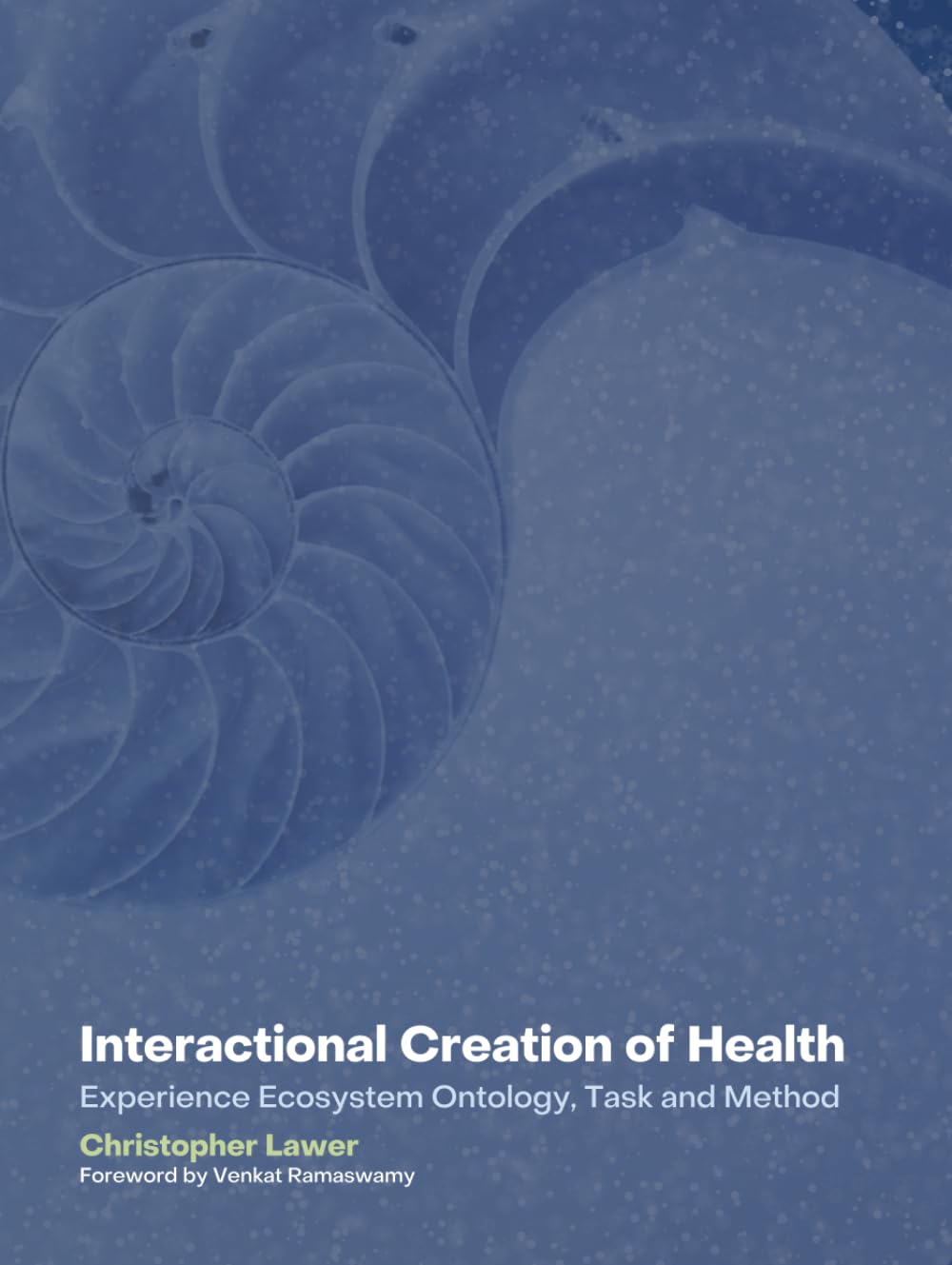
Interactional Creation of Health: Experience Ecosystem Ontology
Interactional Creation of Health: Experience Ecosystem Ontology
Price subject to change. Tap below for current.
Couldn't load pickup availability
In this review of Interactional Creation of Health: Experience Ecosystem Ontology, Task and Method, the book is recommended for designers, practitioners and scholars who want a systems-oriented, interactional approach to lived health experience. The bottom line: it offers a dense, visual framework and a practical twelve-step method that together make it easier to see complex flows and design interventions across individuals, communities and populations. Readers seeking a pragmatic, process-driven guide to shaping health-related experiences will find the book especially useful.
Key Features
- Seven foundations: Presents a novel interactional and ecosystem perspective that clarifies how lived experience with health, disease and illness originates and recurs.
- Visual framework: Uses highly visual models to map complex flows and forces, helping readers translate abstract ideas into observable patterns.
- Twelve-step method: Provides a structured, stepwise method to frame and organize work on improving lived experiences at individual, community and population levels.
- Revised second edition: The fully revised version updates the original framework, making the concepts clearer and more practically applicable.
- Cross-scale focus: Addresses design tasks for individuals, communities, places and populations so practitioners can adapt the approach to different contexts.
Who It's For
This book is strongest for health designers, policy makers, public health practitioners and researchers who need a systems lens on experience and want a repeatable method to guide design or intervention. The visual ontology and twelve-step method support teams that must map interactions and align multiple stakeholders around improved lived experiences.
Those seeking a quick read, a textbook with step-by-step case studies, or a strictly clinical manual should look elsewhere; the book emphasizes conceptual clarity, frameworks and method rather than exhaustive empirical case collections.
Pros & Cons
Pros
- Clear ecosystem perspective helps readers identify patterns and flows missed by narrower models.
- The highly visual presentation makes complex ideas more accessible to multidisciplinary teams.
- The twelve-step method offers a usable process for planning and organizing experience-design work.
Cons
- The book is dense and conceptual, which may slow readers who prefer quick, prescriptive checklists.
Specifications
| Title | Interactional Creation of Health: Experience Ecosystem Ontology, Task and Method |
| Authors / Brand | Christopher Lawer, Prof Venkat Ramaswamy |
| Edition | Second, fully revised version |
| Main contents | Seven foundations and a twelve-step method |
| Focus | Interactional and ecosystem perspective of lived health experience |
| Application | Individuals, communities, places and populations |
Our Verdict
Interactional Creation of Health is a worthwhile investment for practitioners and scholars who need a rigorous, systems-level toolkit for shaping lived health experiences. Its combination of a clear ontology and a structured twelve-step method makes it valuable as a guiding reference that can be applied across scales, though readers should allow time to absorb the conceptual depth.
Frequently Asked Questions
Does this book include practical methods?
Yes. It contains a structured twelve-step method intended to frame and organize practical work on experience creation.
Who are the authors?
The book is by Christopher Lawer with Prof Venkat Ramaswamy and represents a revised second edition of Lawer's framework.
Is it suitable for clinicians?
Clinicians interested in systems and design perspectives will find useful ideas, but those needing clinical protocols should supplement with clinical resources.
Editor's Take
A rigorous, systems-focused guide combining seven conceptual foundations with a twelve-step practical method; ideal for designers and public health practitioners who need a structured approach to shaping lived health experiences.

Recently viewed
Recently viewed products will appear here as customers browse the store.