

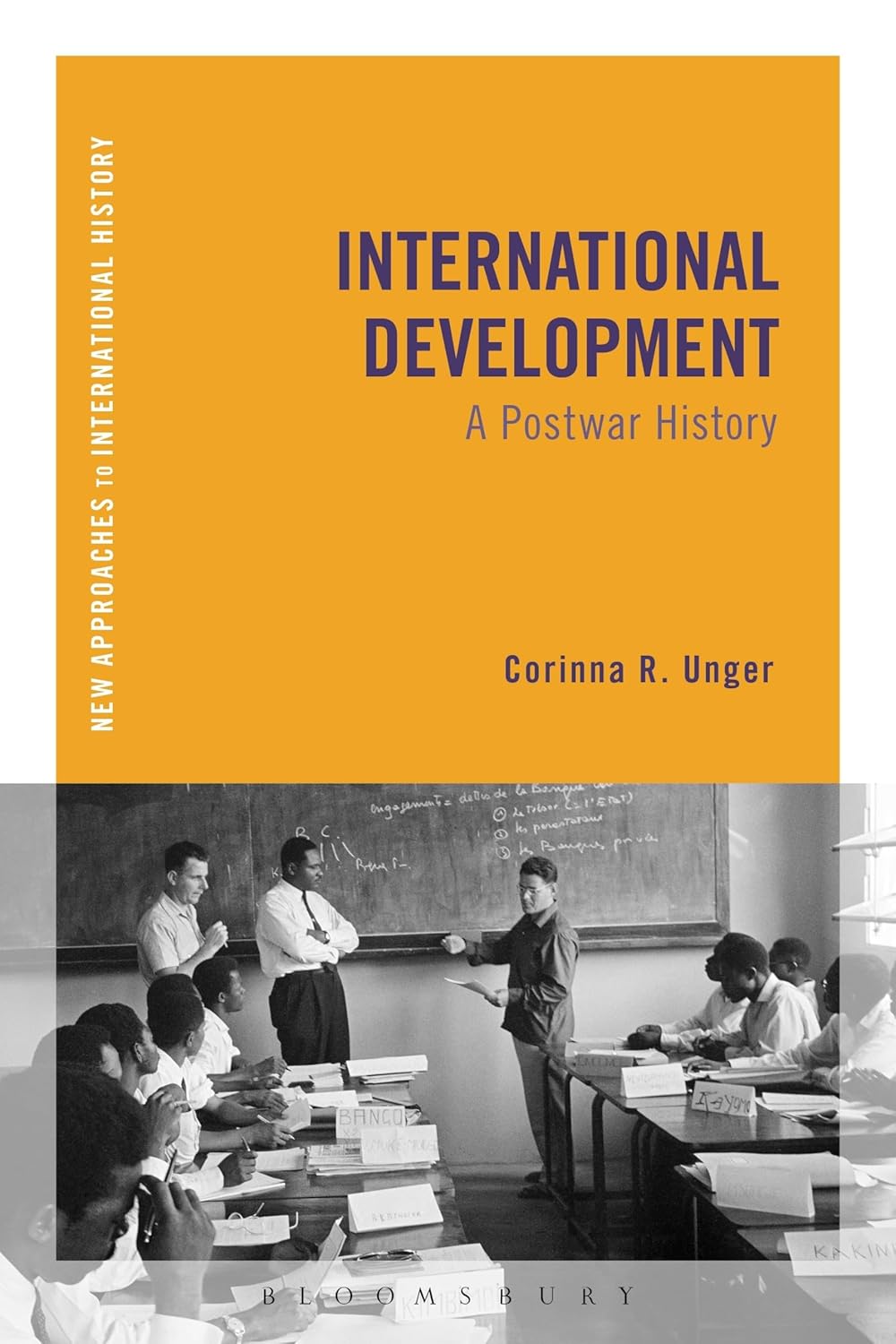
International Development: A Postwar History - Concise Historical
International Development: A Postwar History - Concise Historical
Price subject to change. Tap below for current.
Couldn't load pickup availability
In this review of International Development: A Postwar History, the authors present a concise, historically grounded account ideal for readers seeking perspective on how postwar politics shaped development policy. The book's single biggest reason to buy is its clear longue duree framing that links late colonial administration, World War II, decolonization, and the Cold War to the emergence of modern development practice. This review highlights the book's usefulness to students, researchers, and practitioners who want a synthesized narrative rather than a narrow case study.
Key Features
- Concise historical overview: The book offers a compact narrative of 20th century development policy, making complex trends accessible without sacrificing scholarly nuance.
- Longue duree perspective: Readers gain a multi-decade view that connects colonial governance, wartime planning, and Cold War politics to evolving development ideas.
- Institutional focus: The role of international organizations, colonial administrations, and national governments is examined to show how institutions shaped policy and practice.
- Transnational actors included: Attention to nonstate and transnational actors explains how ideas and projects moved across borders and influenced local outcomes.
- Global case examples: Drawing on development projects from different regions helps illustrate variation in approaches and expectations across time and place.
Who It's For
Scholars and graduate students in history, international relations, and development studies will find this book useful as a compact synthesis that situates postwar development within broader political and intellectual shifts. Instructors can assign selected chapters to provide historical grounding for courses on decolonization, Cold War politics, or development policy.
Practitioners seeking step-by-step project guidance or quantitative program evaluation should look elsewhere; this is a historical and interpretive account rather than a how-to manual. Readers wanting a single-country microhistory will also find the comparative, field-wide lens here is not focused on one national story.
Pros & Cons
Pros
- Provides a clear, integrated narrative linking colonialism, war, and Cold War politics to development theory and practice.
- Balances institutional and transnational perspectives to show how ideas circulated and were implemented.
- Concise length makes it a practical introduction or course reading for broad audiences.
Cons
- The book is interpretive and synthetic, so readers seeking detailed case-level data or methodological instruction may find it limited.
Specifications
| Title | International Development: A Postwar History |
| Series | New Approaches to International History |
| Authors | Corinna R. Unger, Thomas Zeiler |
| Scope | 20th century postwar development policies and practices |
| Perspective | Longue duree historical analysis |
| Focus areas | International organizations, colonial administrations, national governments, transnational actors |
Our Verdict
International Development: A Postwar History is a valuable, concise synthesis for anyone wanting to understand how the politics and institutions of the postwar era shaped modern development thought. It is good value for students and scholars who need a historical overview that connects large trends across regions, though it is not meant as a technical manual for practitioners.
Frequently Asked Questions
Does this book cover a specific region?
It uses examples from different parts of the world to illustrate broader trends rather than concentrating on a single country or region.
Is this a practical guide to development project design?
No. The book is a historical and interpretive overview focused on ideas, institutions, and politics rather than project-level how-to guidance.
Who wrote this book?
It is authored by Corinna R. Unger and Thomas Zeiler and published in the New Approaches to International History series.
Editor's Take
A concise, historically grounded synthesis that links colonialism, World War II, decolonization, and the Cold War to the making of modern development policy; ideal for students and scholars seeking context rather than project-level guidance.

Recently viewed
Recently viewed products will appear here as customers browse the store.