

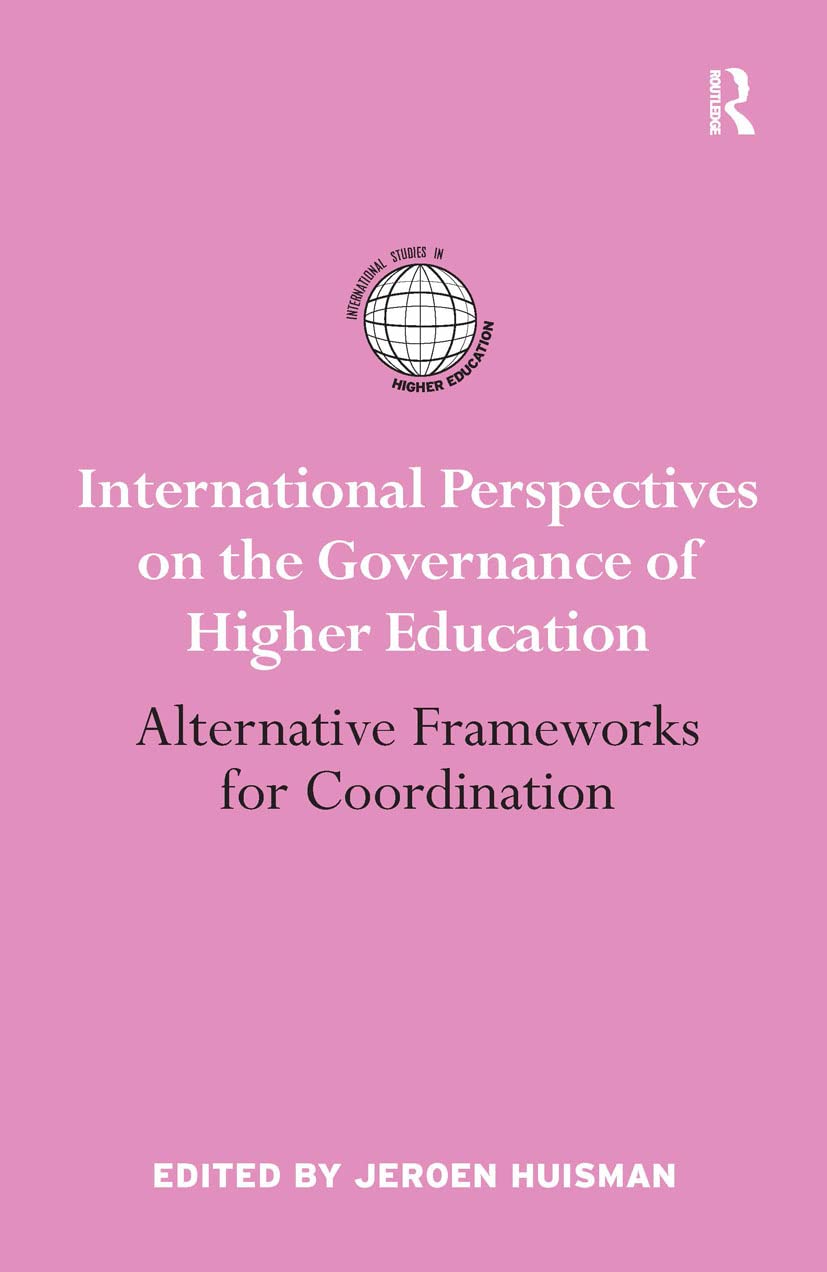
International Perspectives on the Governance of Higher Education
International Perspectives on the Governance of Higher Education
Price subject to change. Tap below for current.
Couldn't load pickup availability
In this review of International Perspectives on the Governance of Higher Education, the book is presented as essential reading for policy makers, institutional leaders, managers, advisors, and scholars who need a rigorous, comparative account of recent governance changes. The single biggest reason to buy is its authoritative, cross-national overview that brings together contributors from across Europe, North America and Australia to explain how political science, public administration and public policy frameworks illuminate coordination in higher education systems.
Key Features
- Comprehensive authorship: Chapters are written by experts from the U.K., the Netherlands, Denmark, Portugal, Norway, Italy, Ireland, Austria, Germany, Canada, the U.S. and Australia, offering a wide comparative perspective.
- Policy-focused analysis: The volume links disciplinary approaches to practical governance questions to help policy makers and managers evaluate system coordination strategies.
- Interdisciplinary frameworks: Uses tools from political science, public administration and public policy to clarify complex governance dynamics.
- System evolution perspective: Traces how governance of higher education systems has evolved in recent years, useful for historical context and contemporary reform debates.
- Targeted readership: Written for scholars and practitioners, the book balances theoretical discussion with applied implications for institutional leaders and advisors.
Who It's For
This book is best for higher education policy makers, university leaders, and doctoral-level researchers who need a comparative, theory-informed account of governance and coordination across national systems. Its emphasis on disciplinary frameworks makes it useful for those seeking to ground reforms or comparative studies in established public policy and political science concepts.
Those looking for a brief, practitioner-only manual or an introductory textbook for undergraduates should look elsewhere; the book is demanding and assumes familiarity with governance debates and social science approaches.
Pros & Cons
Pros
- Wide international authorship gives strong comparative depth and varied national case studies.
- Clear connection between disciplinary frameworks and practical governance issues, aiding policy-relevant reading.
- Comprehensive coverage of recent shifts in governance offers context for ongoing reform discussions.
Cons
- The material is intellectually demanding and may be arduous for readers without a background in political science or public administration.
Specifications
| Title | International Perspectives on the Governance of Higher Education |
| Series | International Studies in Higher Education |
| Editor / Brand | Jeroen Huisman |
| Scope | Comparative national governance across multiple countries |
| Approaches | Political science, public administration, public policy frameworks |
| Intended audience | Policy makers, institutional leaders, managers, advisors, scholars |
Our Verdict
For readers who need a rigorous, comparative and theory-informed treatment of how higher education governance has changed, this volume is good value because it combines international case studies with disciplinary frameworks that make reform debates easier to navigate. Institutional leaders and policy researchers will find it particularly valuable; casual readers or those seeking an introductory primer should expect a demanding read.
Frequently Asked Questions
Does this book cover multiple countries?
Yes, contributors come from the U.K., the Netherlands, Denmark, Portugal, Norway, Italy, Ireland, Austria, Germany, Canada, the U.S. and Australia.
Is this suitable for practitioners without an academic background?
It is aimed at practitioners and scholars but is intellectually demanding, so prior familiarity with governance concepts is helpful.
Which disciplines inform the analysis?
The volume draws mainly on political science, public administration and public policy frameworks.
Editor's Take
This comparative, theory-informed volume is a rigorous resource for policy makers and institutional leaders who need an authoritative overview of recent changes in higher education governance; it offers strong international case studies but is demanding for readers without a governance background.

Recently viewed
Recently viewed products will appear here as customers browse the store.