

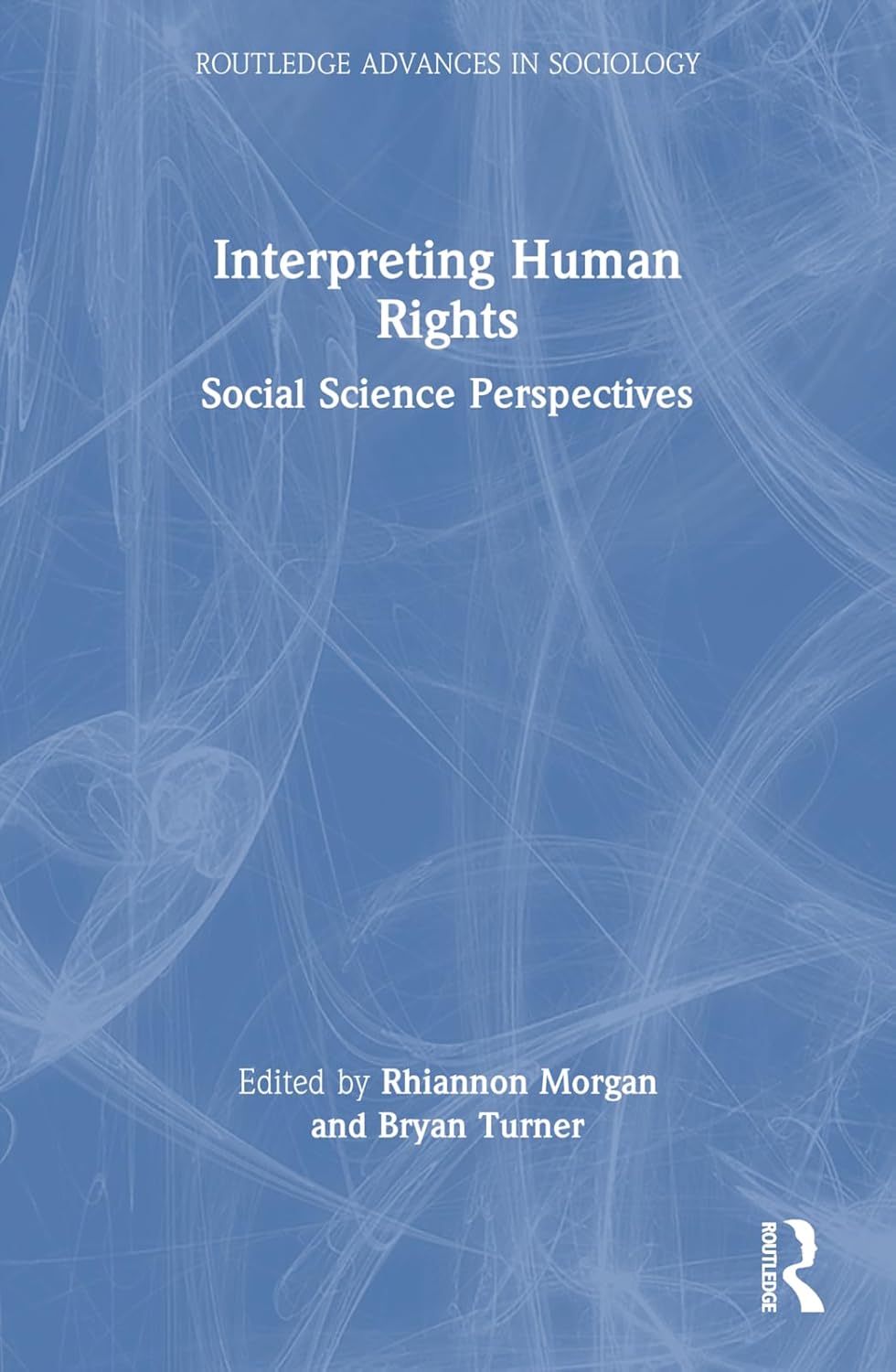
Interpreting Human Rights - Scholarly Social Science
Interpreting Human Rights - Scholarly Social Science
Price subject to change. Tap below for current.
Couldn't load pickup availability
In this review of Interpreting Human Rights the authors present a measured, social-scientific examination of the rise and role of rights in contemporary public culture. This book is for readers who want a rigorous, research-led perspective on how human rights operate as institutions, practices and meanings across different contexts. The single biggest reason to buy is its clear focus on plural analytical approaches that connect theory to concrete issues such as the right to health, indigenous peoples' rights and women and violence, making it a useful reference for scholars and advanced students.
Key Features
- Interdisciplinary approach: Chapters bring together varied social-scientific perspectives to situate human rights within broader cultural and institutional terrains.
- Thematic breadth: The book examines diverse topics from the right to health to indigenous peoples' rights, providing readers with wide comparative material.
- Empirical focus: Contributors link theoretical discussion to concrete research agendas and case studies that illustrate how rights are practiced.
- Institutional analysis: The role of bodies such as the United Nations is considered, helping readers understand how global institutions shape rights politics.
- Cultural politics insight: Chapters address cultural dimensions of rights, so readers can see how claims interact with identity and social conflict.
Who It's For
This volume is best suited to graduate students, researchers and policy analysts in sociology, political science and human rights studies who want an academic, evidence-based collection rather than a primer or activist handbook. It works well as a course text for advanced seminars where different theoretical lenses are being compared.
Readers looking for a concise guide to legal doctrine or a step-by-step advocacy manual should look elsewhere; the book emphasizes social-scientific analysis over legal practice and is geared to readers comfortable with scholarly argumentation and empirical research.
Pros & Cons
Pros
- Offers a plural, rigorous social-scientific framework that clarifies how rights are embedded in culture and institutions.
- Addresses a range of salient topics such as health rights, indigenous rights and gendered violence, making it relevant across subfields.
- Connects theory with institutional analysis, including discussion of the United Nations, which aids comparative research.
Cons
- Because it is academically oriented, the book is less suited to readers seeking practical legal guidance or activism tools.
Specifications
| Title | Interpreting Human Rights |
| Series | Routledge Advances in Sociology |
| Authors / Editors | Rhiannon Morgan, Bryan Turner |
| Subject focus | Social-scientific research on human rights |
| Topics covered | Right to health; indigenous peoples' rights; cultural politics; UN role; women and violence |
| Intended audience | Scholars, graduate students, policy analysts |
Our Verdict
Interpreting Human Rights is a thoughtful, research-driven collection that excels at mapping the complexity of rights in social life. It is recommended for academics and advanced students who need theoretical variety and empirical examples; its focus on institutions and cultural politics makes it good value as a reference for teaching and comparative research.
Frequently Asked Questions
Does this book take a legal approach?
No, the volume foregrounds social-scientific analysis rather than doctrinal legal practice.
Who edited the collection?
The book is edited by Rhiannon Morgan and Bryan Turner.
Are practical case studies included?
Yes, chapters link theoretical discussion to empirical issues such as health rights and indigenous claims.
Editor's Take
A thoughtful, research-driven collection that maps the complexity of human rights through social-scientific approaches; recommended for academics and advanced students who need theoretical variety and empirical examples.

Recently viewed
Recently viewed products will appear here as customers browse the store.