

Interprofessional Care Coordination for Pediatric Autism Spectrum
Interprofessional Care Coordination for Pediatric Autism Spectrum
Price subject to change. Tap below for current.
Couldn't load pickup availability
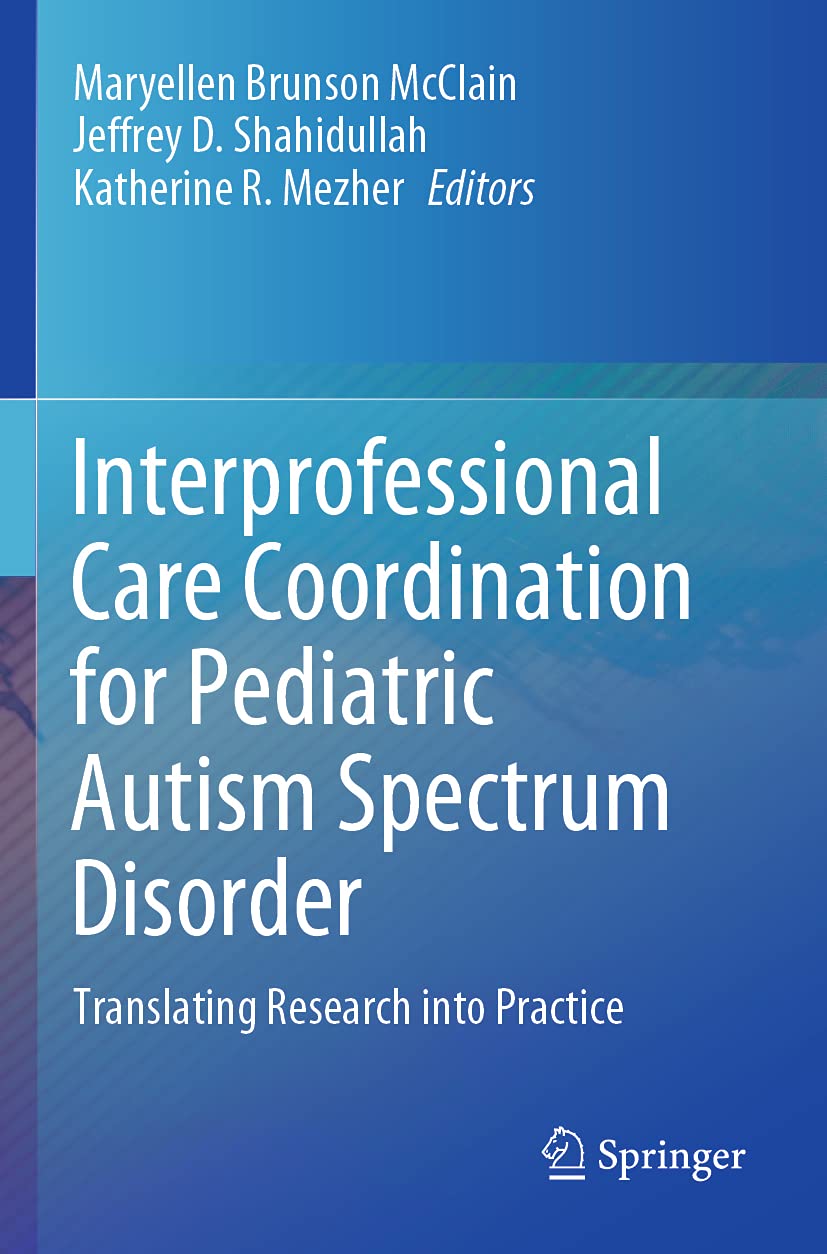
In this review of Interprofessional Care Coordination for Pediatric Autism Spectrum Disorder the editors present a focused, practice-oriented resource aimed at clinicians, educators, and care coordinators working with children and youth on the autism spectrum. The single biggest reason to consider this volume is its emphasis on real-world collaboration across settings and professions, which offers actionable frameworks for screening, evaluation, intervention and long-term care management. The review finds the book most valuable to teams seeking practical guidance on coordinated service delivery rather than a purely theoretical primer.
Key Features
- Interprofessional focus: Offers clear discussion of collaboration across disciplines to improve continuity of care for children with ASD.
- Across the lifespan: Addresses transition services from early childhood into young adulthood to support longer-term planning.
- Screening and evaluation: Presents approaches to screening and multidisciplinary assessment that aid coordinated decision making.
- Culturally responsive practice: Examines advocacy and culturally informed strategies for families from diverse backgrounds.
- Trauma-informed considerations: Considers care approaches for individuals with ASD who have experiences of co-occurring trauma.
Who It's For
The book is best suited to professionals who participate in interdisciplinary teams: pediatric clinicians, school psychologists, speech and language pathologists, occupational therapists, care coordinators, and program managers who must align services across home, school and clinical settings. It is written for readers who want applicable collaboration strategies rather than a narrowly academic treatment.
Those seeking an introductory primer on autism or a parent-focused how-to manual may find some chapters more technical than needed; readers wanting step-by-step parent training resources or extensive case manuals should supplement this volume with family-centered or intervention-specific guides.
Pros & Cons
Pros
- Practical emphasis on interprofessional collaboration that maps well to real service settings.
- Includes content on transitions and long-term care management for youth moving into adulthood.
- Addresses culturally responsive practice and advocacy, supporting equitable service planning.
Cons
- The text focuses on coordination and systems practice rather than providing detailed single-discipline therapy protocols.
Specifications
| Title | Interprofessional Care Coordination for Pediatric Autism Spectrum Disorder |
| Editors/Authors | Maryellen Brunson McClain, Jeffrey D. Shahidullah, Katherine R. Mezher |
| Primary focus | Interprofessional collaboration across screening, evaluation, intervention, and care management |
| Key topics | Transition services, culturally responsive practice, co-occurring trauma |
| Intended audience | Clinicians, educators, care coordinators, interdisciplinary teams |
| Use case | Translating research into coordinated practice across settings |
Our Verdict
This volume is a strong choice for professionals and teams who need a practice-oriented guide to coordinating care for children and youth with ASD. Its focus on interprofessional collaboration, transitions, and culturally responsive approaches makes it a worthwhile investment for programs seeking to improve continuity of services and advocacy. Readers wanting detailed therapy protocols should pair it with intervention manuals, but teams organizing cross-setting care will find clear value.
Frequently Asked Questions
Does this book cover transition planning into adulthood?
Yes, the volume explicitly examines transition services during early childhood and young adulthood to support long-term planning.
Is there content on culturally responsive practice?
Yes, chapters address culturally responsive practice and advocacy for individuals with ASD from diverse backgrounds.
Will it teach specific therapy techniques?
The focus is on coordination and collaboration rather than step-by-step therapy techniques, so supplement with intervention-specific resources if needed.
Editor's Take
A practical, team-focused guide for clinicians and care coordinators, this book delivers actionable frameworks for interprofessional collaboration, transitions, and culturally responsive planning, though it is not a therapy manual.

Recently viewed
Recently viewed products will appear here as customers browse the store.