

Introduction to Mathematical Structures and Proofs - Bridge Textbook
Introduction to Mathematical Structures and Proofs - Bridge Textbook
Price subject to change. Tap below for current.
Couldn't load pickup availability
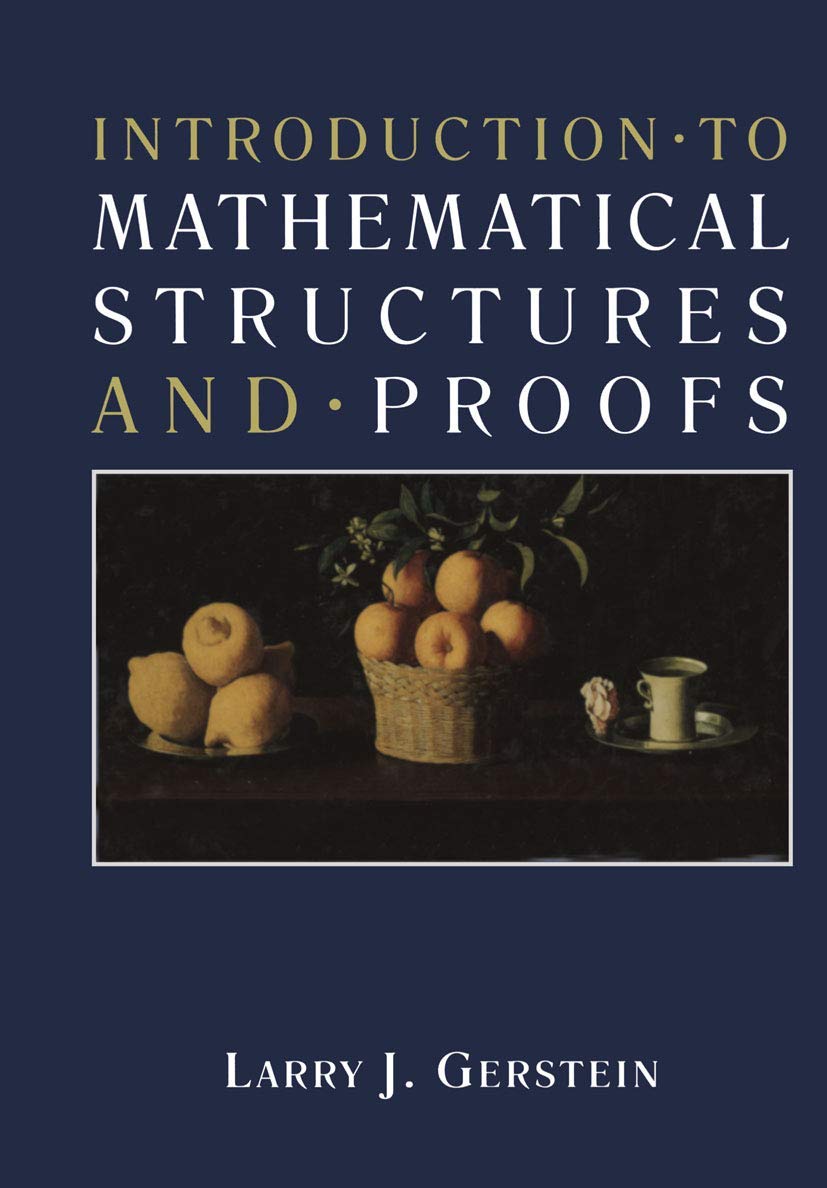
In this review of Introduction to Mathematical Structures and Proofs the author aims squarely at students transitioning from calculus to higher mathematics; the bottom line is that this textbook is an effective single-term bridge that teaches the language and methods of proof without assuming prior exposure. Gerstein focuses on the foundational raw materials-logic, set theory, equivalence relations-and guides readers toward understanding why mathematics is a subject of ideas rather than rote procedures, making this book a solid choice for courses that prepare students for upper-division subjects.
Key Features
- Bridge course focus: Organized to ease the shift from lower-division calculus to advanced courses by presenting the central tools needed for proof-based subjects.
- Foundational topics: Presents logic, set theory, and equivalence relations early so instructors can build on a common base rather than reteaching rudiments.
- Proof emphasis: Teaches students how to read, understand, and create mathematical proofs, moving them from procedural work to conceptual thinking.
- Wide applicability: Prepares students for diverse upper-division classes such as abstract algebra, analysis, topology, and number theory.
- One-term design: Structured for a single academic term so instructors can cover the essentials without overload.
Who It's For
This book is best for undergraduates who have completed lower-division calculus and need a focused course that introduces formal reasoning and proof techniques. It suits instructors designing a one-term bridge course who want a text that emphasizes the ideas behind mathematics rather than extensive technical prerequisites.
Students who already have substantial experience with proofs or who need a reference for advanced, specialized topics rather than introductory proof methods may find the scope narrow; likewise, those seeking a problem-heavy computational textbook should look elsewhere.
Pros & Cons
Pros
- Clear focus on moving students from computation to conceptual understanding of proofs.
- Covers essential foundational material so upper-division instructors can begin courses without re-teaching basics.
- Designed for a one-term course, which helps keep syllabi manageable and coherent.
Cons
- Limited to foundational topics and proof techniques, so it is not a comprehensive reference for advanced subjects.
Specifications
| Title | Introduction to Mathematical Structures and Proofs |
| Author | Larry Gerstein |
| Intended course length | One-term bridge course |
| Primary topics | Logic, set theory, equivalence relations, proofs |
| Target audience | Students transitioning from calculus to upper-division mathematics |
| Use cases | Preparation for algebra, analysis, topology, number theory, combinatorics |
Our Verdict
Introduction to Mathematical Structures and Proofs is a focused, practical bridge textbook that delivers core concepts and proof methods in a single-term format, making it good value for departments needing a concise transition course. Students who must move from procedural calculus work to abstract reasoning will find its emphasis on ideas and the mechanics of proofs particularly useful.
Frequently Asked Questions
Is this book suitable for a one-term class?
Yes. The text is explicitly designed to fit a one-term bridge course and covers the fundamental material instructors usually require.
Which topics does it prepare students for?
It prepares students for upper-division courses such as abstract algebra, real and complex analysis, topology, number theory, and combinatorics by teaching basic proof techniques and foundational concepts.
Do I need prior proof experience to use it?
No. The book is written to ease the transition from calculus and introduces logic and proof methods for students new to higher mathematics.
Editor's Take
A focused, practical bridge textbook that teaches core proof techniques and foundational concepts in a one-term format, making it a strong choice for students transitioning to upper-division mathematics.

Recently viewed
Recently viewed products will appear here as customers browse the store.