

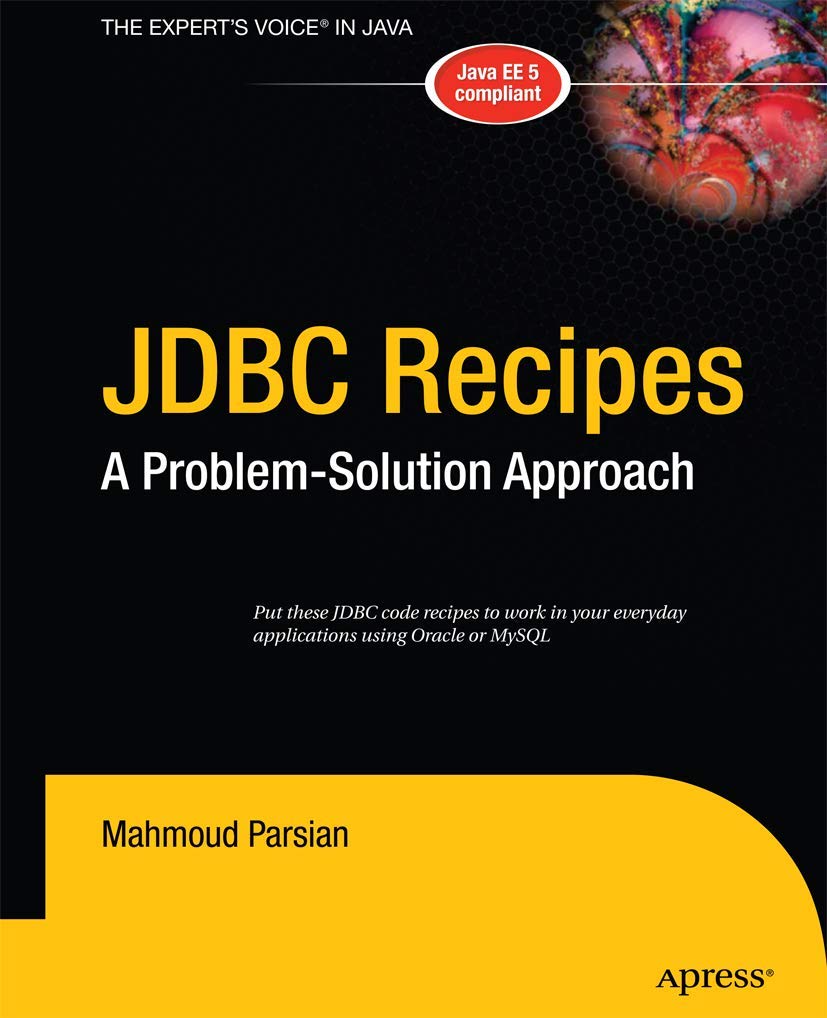
JDBC Recipes: A Problem-Solution Approach - Practical JDBC Solutions
JDBC Recipes: A Problem-Solution Approach - Practical JDBC Solutions
Price subject to change. Tap below for current.
Couldn't load pickup availability
In this review of JDBC Recipes: A Problem-Solution Approach the reviewer finds a compact, highly practical reference for developers working with Java and relational databases. The book is aimed at programmers who need ready-to-use code snippets and pragmatic guidance rather than lengthy theory, and its single biggest selling point is that many solutions are presented so they can be copied into projects with minimal modification. Readers get focused treatments of real JDBC issues such as metadata handling and large binary objects, making it a useful desk reference for everyday development.
Key Features
- Copy-ready solutions: The book provides concise, usable code examples that can be integrated into servlet, JSP, or server-side framework projects with little or no change.
- Metadata focus: Detailed coverage of database and result set metadata helps developers build adapters and connectors that adapt to different schemas at runtime.
- Data type handling: Solutions for handling all data types, including large binary objects, reduce the time spent debugging BLOB and CLOB interactions.
- XML result sets: Presenting JDBC result sets in XML gives a practical approach for systems that exchange or store results as structured documents.
- Integration guidance: Advice on integrating JDBC patterns into web-based applications makes it easier to apply examples in real servlet and JSP environments.
Who It's For
This title is best for Java developers and backend engineers who need a hands-on reference for JDBC tasks and prefer sample-driven solutions over deep theoretical exposition. It suits teams building web applications using servlets, JavaServer Pages, or common server-side frameworks where copying tested snippets speeds development.
It is less appropriate for readers seeking a beginner's introduction to Java or for those wanting an exhaustive textbook on relational theory; the book assumes familiarity with Java and focuses on solving practical JDBC problems rather than teaching core Java syntax from scratch.
Pros & Cons
Pros
- Practical, copy-paste ready examples speed implementation in production code.
- Clear emphasis on database and result set metadata helps build adaptable connectors and frameworks.
- Helpful handling patterns for large binary objects reduce common integration headaches.
Cons
- Not a beginner tutorial; readers need existing Java and JDBC familiarity to follow examples.
- The focused, example-driven format may omit deeper theoretical background for readers seeking academic detail.
Specifications
| Title | JDBC Recipes: A Problem-Solution Approach |
| Author | Mahmoud Parsian |
| Primary focus | Practical JDBC solutions for relational databases |
| Intended use | Integration into web-based Java applications (servlets, JSP, frameworks) |
| Notable topics | Database and result set metadata; XML result sets; BLOB handling |
| Example style | Copy-ready code snippets for direct use |
Our Verdict
JDBC Recipes is a strong, practical reference for experienced Java developers who need reliable, ready-made solutions for everyday JDBC problems. Its emphasis on usable code and metadata-aware techniques makes it good value for teams building database adapters, connectors, or server-side data layers, though beginners will need supplemental introductory material.
Frequently Asked Questions
Does this book include runnable code?
Yes. The book presents copy-ready solutions intended to be integrated into servlet, JSP, or framework projects with little modification.
Will it teach JDBC from scratch?
No. It assumes familiarity with Java and JDBC and focuses on problem-solution patterns rather than basic language instruction.
Does it cover large binary data types?
Yes. The text includes specific solutions for handling large binary objects and other challenging data types.
Editor's Take
JDBC Recipes is a practical, copy-ready reference for experienced Java developers who need reliable JDBC solutions and metadata-aware techniques; it is especially useful for integrating code into web-based applications.

Recently viewed
Recently viewed products will appear here as customers browse the store.