

John II Komnenos, Emperor of Byzantium - Scholarly
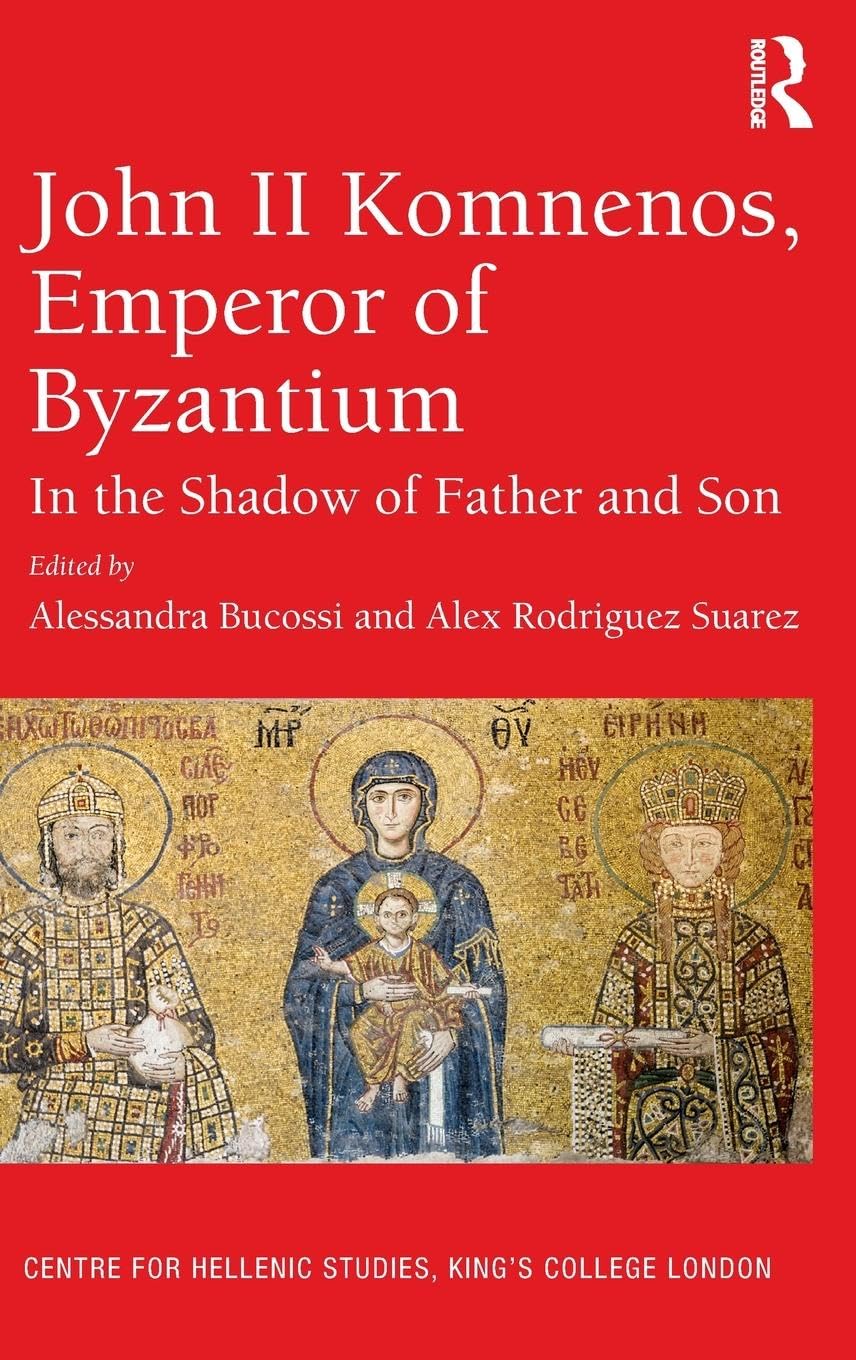
John II Komnenos, Emperor of Byzantium - Scholarly
Price subject to change. Tap below for current.
Couldn't load pickup availability
In this review of John II Komnenos, Emperor of Byzantium: In the Shadow of Father and Son the reviewer finds a focused, scholarly collection aimed at historians and advanced students of Byzantium. The book's main appeal is its corrective perspective: it shows that many innovations attributed to Manuel I were already present under John II, offering new readings of territorial policy and monastic patronage. For readers seeking careful primary-source-aware interpretation rather than a general biography, this volume delivers timely reassessment and expert voices in one concise collection.
Key Features
- Focused scholarship: The essays reassess John II Komnenos's reign and provide specific evidence that shifts credit for innovations previously assigned to his son.
- Territorial analysis: Contributors detail expansion in Asia Minor, improving understanding of military and administrative developments under John II.
- Monastic and urban study: The book highlights construction of a major twelfth-century Constantinople monastic complex, clarifying John II's cultural patronage.
- Expert contributors: Leading Byzantinists contribute, offering rigorous arguments and comparative perspectives on the Komnenian period.
- Research utility: The collection functions as a useful reference for graduate study and for those researching shifts in policy across three Komnenian reigns.
Who It's For
This volume suits graduate students, scholars, and readers with a prior grounding in Byzantine history who want to reassess assumptions about the Komnenian dynasty. The essays assume familiarity with figures like Alexios I and Manuel I and with basic institutional and military vocabulary of the twelfth century.
Casual readers or those seeking a narrative popular biography should look elsewhere; this is a collected volume of specialized essays rather than a single-author life story. Librarians building a university history collection will find it especially appropriate.
Pros & Cons
Pros
- Contributes fresh interpretations that redistribute long-held attributions between John II and Manuel I.
- Provides detailed discussion of Asia Minor expansion, adding regional depth to the period.
- Illuminates cultural patronage with analysis of a major Constantinople monastic complex.
Cons
- The collected-essay format means coverage can be uneven for readers seeking a single, continuous narrative.
Specifications
| Title | John II Komnenos, Emperor of Byzantium: In the Shadow of Father and Son |
| Series | Publications of the Centre for Hellenic Studies, King's College London |
| Editors/Authors | Alessandra Bucossi, Alex Rodriguez Suarez |
| Subject | Twelfth-century Byzantine history, Komnenos dynasty |
| Focus areas | Political history, territorial expansion in Asia Minor, monastic patronage |
| Intended audience | Scholars, graduate students, university libraries |
Our Verdict
For specialists and serious students of Byzantium, this collection is a valuable corrective that deepens understanding of John II's agency and legacy. It is good value for academic collections because it gathers qualified reassessments linking military, administrative, and cultural developments across the Komnenian succession.
Frequently Asked Questions
Does the book argue John II was as important as Alexios I or Manuel I?
The essays argue that John II has been underestimated and that several innovations commonly credited to Manuel I had roots in John II's reign.
Is this suitable for undergraduate coursework?
It is most useful for upper-level undergraduates with prior Byzantine background or for seminar use; it is not a beginner textbook.
Does the volume include primary sources?
The collection engages with written sources and scholarly interpretation, but it is primarily a set of analytical essays rather than a primary-source edition.
Editor's Take
This collection reassesses John II's reign with expert essays that demonstrate his role in territorial expansion and cultural patronage, making it valuable for scholars and advanced students.

Recently viewed
Recently viewed products will appear here as customers browse the store.