

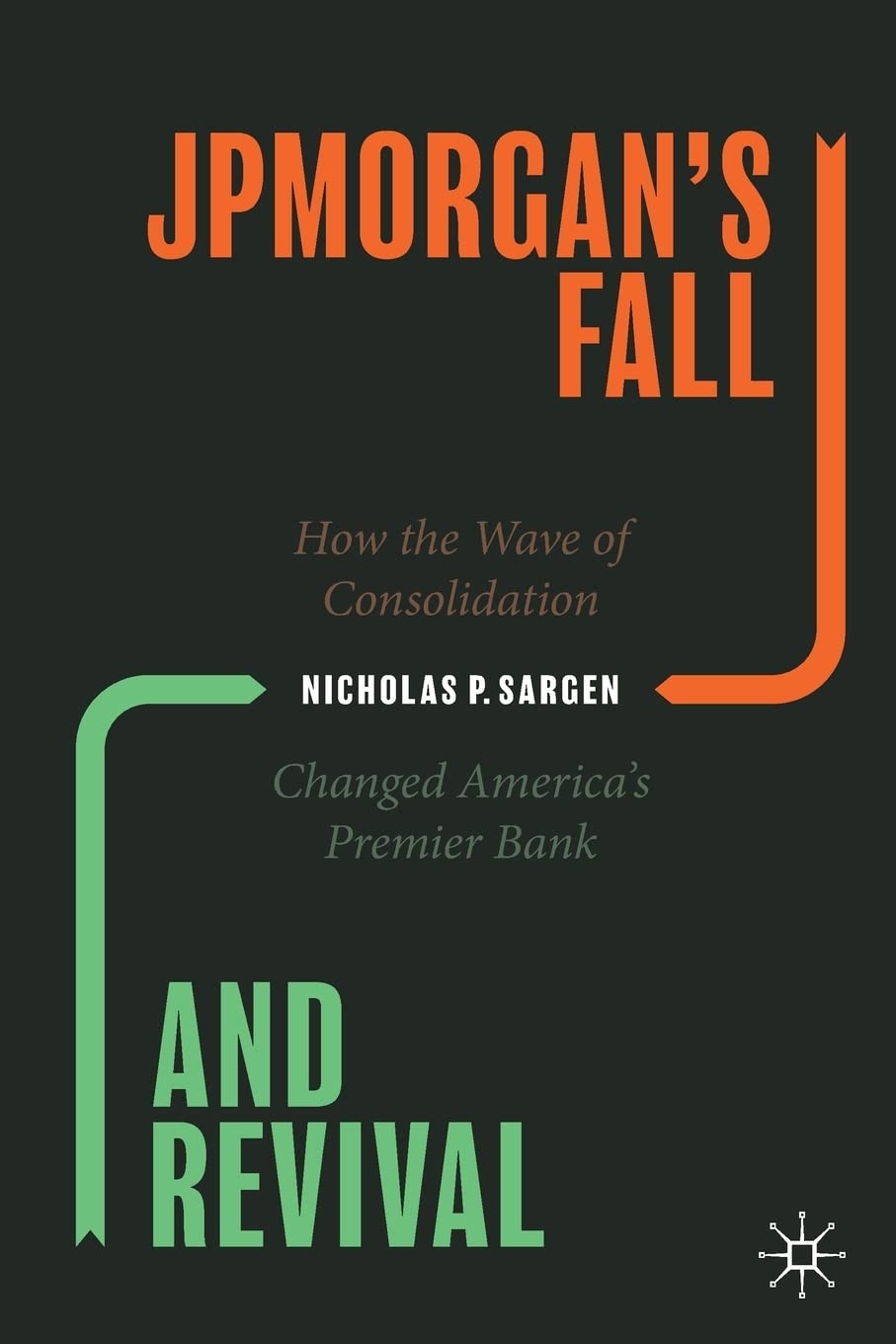
JPMorgans Fall and Revival: How the Wave of Consolidation Changed
JPMorgans Fall and Revival: How the Wave of Consolidation Changed
Price subject to change. Tap below for current.
Couldn't load pickup availability
In this review of JPMorgans Fall and Revival the author Nicholas P. Sargen offers a focused, insider account aimed at readers who want a detailed narrative of corporate change rather than a textbook history. The book's single biggest reason to buy is its access to candid interviews with former senior executives that illuminate what happened inside J.P. Morgan in the run up to the Chase merger. For anyone interested in the era of U.S. banking consolidation in the 1980s and 90s this review finds the book valuable for its firsthand perspectives and narrative clarity.
Key Features
- Insider interviews: Firsthand accounts from former senior executives give concrete examples of strategy and internal debate during pivotal decisions.
- Pre-merger focus: The book chronicles what transpired before J.P. Morgan merged with Chase, helping readers understand the sequence of events that led to institutional change.
- Consolidation context: The narrative places JPMorgan against the larger backdrop of U.S. banking consolidation, clarifying how industry forces shaped the bank's choices.
- Narrative history: Sargen writes with an emphasis on story and personalities, making complex corporate episodes more readable for nonacademic audiences.
- Contemporary relevance: By tracing decisions and outcomes from the 1980s and 90s, readers can draw parallels to current consolidation trends in finance.
Who It's For
This book suits business readers, financial historians, and professionals in banking who want an inside look at strategic decision making during a major consolidation era. It is also useful for nonfiction readers who prefer narrative-driven accounts over dense academic analysis, because the interviews provide color and character to corporate events.
Those seeking a comprehensive, data-heavy economic treatise or a how-to guide for executing mergers should look elsewhere; the focus is narrative and recollection rather than exhaustive quantitative analysis or prescriptive business instruction.
Pros & Cons
Pros
- Provides rare access to former executives whose perspectives clarify internal decision making.
- Places JPMorgans story within the broader U.S. banking consolidation era for useful context.
- Readable narrative style that brings personalities and boardroom dynamics to life.
Cons
- The book emphasizes interviews and narrative, so readers expecting extensive empirical tables or academic citations may find it limited.
Specifications
| Title | JPMorgans Fall and Revival: How the Wave of Consolidation Changed Americas Premier Bank |
| Author | Nicholas P. Sargen |
| Subject focus | J.P. Morgan pre-merger history and banking consolidation |
| Primary content | Interviews with former senior executives and narrative history |
| Time period covered | 1980s and 1990s banking consolidation era |
| Perspective | Insider accounts and corporate transformation |
Our Verdict
For readers who want a readable, well-sourced narrative of how J.P. Morgan changed during a decisive consolidation era, this book delivers strong value through interviews and context. It is recommended for business readers and financial history enthusiasts who prefer qualitative insight into corporate strategy rather than technical economic analysis.
Frequently Asked Questions
Does the book include firsthand sources?
The author relies heavily on interviews with former senior executives, providing primary perspectives on internal decisions.
Is this book a technical economic study?
No, it is a narrative history focused on personalities and decisions rather than exhaustive empirical modeling.
What time period does the book cover?
The narrative centers on the 1980s and 1990s, the era of U.S. banking consolidation leading up to the Chase merger.
Editor's Take
A readable narrative with insider interviews that illuminates J.P. Morgans transformation during the 1980s and 90s consolidation era; recommended for business readers and financial history enthusiasts.

Recently viewed
Recently viewed products will appear here as customers browse the store.