

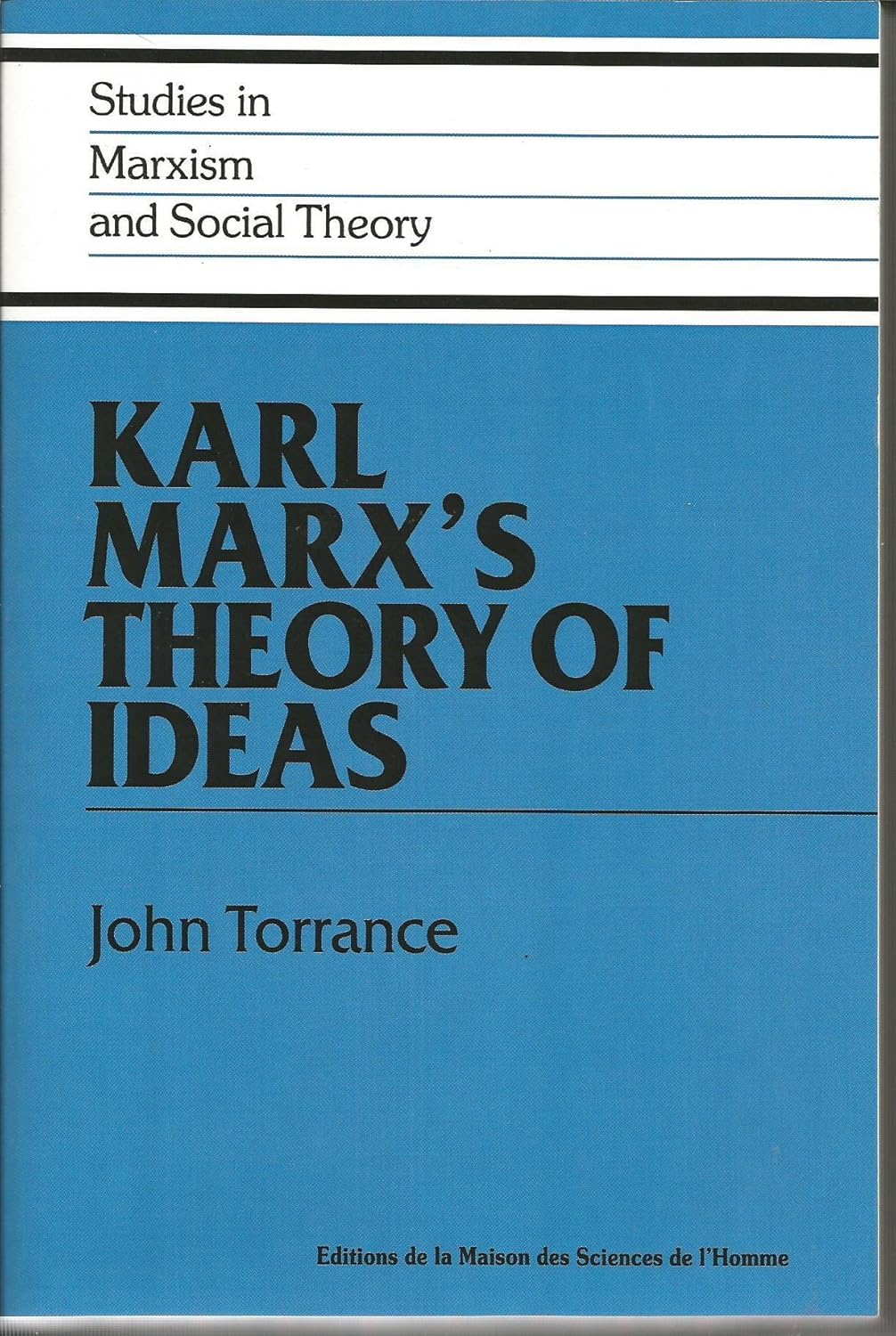
Karl Marx's Theory of Ideas - Clear, Critical Study for Scholars
Karl Marx's Theory of Ideas - Clear, Critical Study for Scholars
Price subject to change. Tap below for current.
Couldn't load pickup availability
Our review of Karl Marx's Theory of Ideas explains why this book remains a useful, critical resource for students and scholars of Marxism. Written as a focused study rather than a textbook, it isolates Marx's sociology of ideas and separates his more rigorous claims from passages driven by revolutionary rhetoric, making it valuable for readers who want a careful exposition of Marx's thought on how social life shapes beliefs. For those seeking a readable, analytic account of Marxist theory rather than a polemic, this book delivers a concise, evidence-based perspective.
Key Features
- Focused analysis: The book carefully distinguishes which parts of Marx's theory of ideas are grounded in systematic argument and which reflect political aims, clarifying often-misunderstood passages for readers.
- Sociology of ideas: It explains how social life shapes and distorts people's beliefs, offering a coherent account of the social origins of ideology that complements Marx's economic analyses.
- Critical perspective: The author presents a fresh evaluation that does not simply celebrate Marx but assesses strengths and weaknesses, helping readers form a balanced view.
- Historical insight: The study traces how Marx's theory influenced later developments and argues it can explain the degeneration of some strands of Marxist thought.
- Scholar-friendly tone: The writing is suitable for advanced undergraduates, graduate students, and researchers who want a tightly argued treatment rather than a broad survey.
Who It's For
This book is best for students of political theory, sociology, and intellectual history who need a rigorous, critical reading of Marx's ideas rather than evangelizing accounts. Instructors who assign focused readings on ideology and the social formation of beliefs will find it a useful secondary text that clarifies contested passages in Marx's work.
Readers looking for an introductory primer on Marxism or a simple political manifesto should look elsewhere; this study assumes some prior familiarity with Marxian themes and aims to refine understanding rather than introduce basic concepts.
Pros & Cons
Pros
- Provides a clear separation of Marx's scientific arguments from his revolutionary rhetoric, making complex ideas more accessible to scholars.
- Emphasizes the role of social life in shaping ideas, offering a useful framework for analyzing ideology.
- Takes a balanced, critical stance rather than uncritical celebration, which helps readers form nuanced judgments.
Cons
- The treatment is specialized and assumes familiarity with Marxist terms and context, so it may be dense for newcomers.
Specifications
| Title | Karl Marx's Theory of Ideas (Studies in Marxism and Social Theory) |
| Author | John Torrance |
| Subject | Marxist theory, sociology of ideas |
| Focus | Critical study separating scientific and political elements |
| Use | Academic study and critical analysis |
| Audience | Students, researchers, instructors |
Our Verdict
For readers who want a disciplined, critical account of Marx's ideas, this book is good value: it disentangles theoretical claims from revolutionary rhetoric and provides a useful framework for studying ideology. Scholars and advanced students will appreciate the careful argumentation and historical perspective, while casual readers should look for a more introductory text.
Frequently Asked Questions
Does the book require prior knowledge of Marx?
Yes. The study presumes some familiarity with Marxian concepts and is aimed at readers seeking deeper analysis rather than a basic introduction.
Is this an uncritical defense of Marx?
No. The author explicitly separates stronger scientific elements of Marx's thought from claims influenced by revolutionary aims and offers critical evaluation.
Who benefits most from reading it?
Advanced undergraduates, graduate students, and scholars of political theory and sociology will gain the most from its focused, analytic approach.
Editor's Take
This focused, critical study disentangles Marx's scientific claims from revolutionary rhetoric, offering scholars and advanced students a useful framework for understanding the sociology of ideas and the evolution of Marxist thought.

Recently viewed
Recently viewed products will appear here as customers browse the store.