

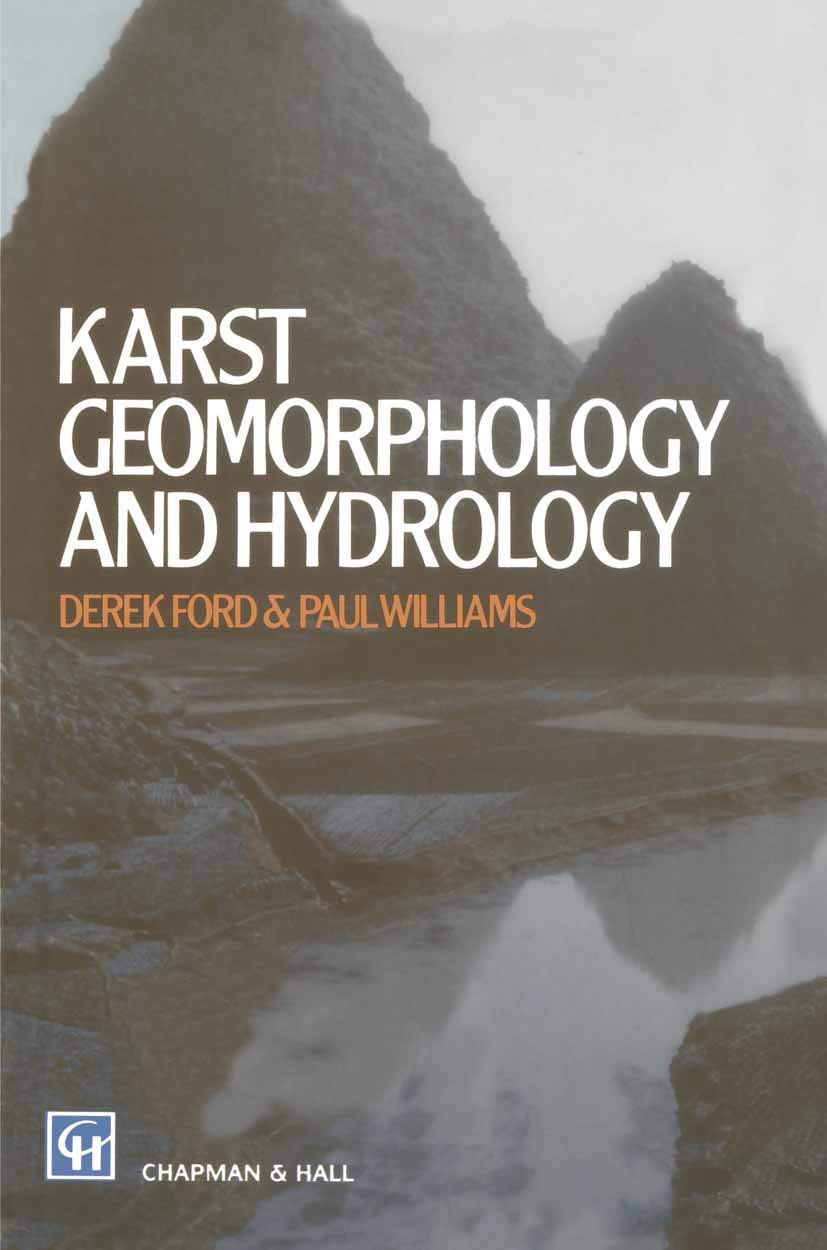
Karst Geomorphology and Hydrology - In-depth academic
Karst Geomorphology and Hydrology - In-depth academic
Price subject to change. Tap below for current.
Couldn't load pickup availability
In this review of Karst Geomorphology and Hydrology the focus is on rigorous, field-oriented readers who need a technical treatment of dissolution processes and karst aquifer behavior. The book is best for graduate students, practicing hydrogeologists and civil engineers looking for explicit discussion of mineral behavior, congruent and incongruent dissolution, and real-world implications for groundwater chemistry; its single biggest strength is the clear explanation of how different minerals release ions and re-form secondary solids in karst settings.
Key Features
- Clear discussion of mineral reactions: The text explains incongruent dissolution of alumino-silicate minerals and how they release ions such as Na+, K+ and HCO- while forming secondary solids like kaolinite, helping readers predict water chemistry changes.
- Karst versus common crustal minerals: The book distinguishes congruent karst minerals from incongruent silicates, giving readers a practical basis for assessing solubility and transport in karst aquifers.
- Case-based exceptions: It notes exceptional conditions such as incongruent dissolution of dolomite and calcite precipitation, which is valuable for interpreting unusual field observations.
- Comprehensive dissolved species coverage: The sampled congruent minerals include the common crustal elements except iron, so readers gain a broad view of likely dissolved inorganic species in karst waters.
- Practical emphasis on solubility range: The discussion of the enormous range of solubility provides context for predicting when minerals will or will not contribute to solution chemistry in surface and near-surface environments.
Who It's For
Hydrologists, civil and environmental engineers, and geology graduate students will find this work most useful because it focuses on the chemical mechanisms that control karst aquifer behavior rather than introductory geology. The treatment suits readers who need to link mineralogy to water chemistry for modeling, contamination assessment, or resource evaluation.
Practitioners seeking a basic popular overview or a richly illustrated field guide should look elsewhere; the book assumes familiarity with geochemical terms and concentrates on process description rather than broad pedagogy or abundant pictorial content.
Pros & Cons
Pros
- Detailed explanation of incongruent versus congruent dissolution helps interpret field water analyses.
- Includes discussion of common dissolved inorganic species derived from crustal minerals, aiding comprehensive chemical budgets.
- Notes exceptional reactions such as dolomite incongruent solution and calcite precipitation, which is useful for atypical sites.
Cons
- Not intended as a beginner text; readers without geochemistry background may find some sections dense.
Specifications
| Title | Karst Geomorphology and Hydrology |
| Author | Derek Ford |
| Subject focus | Karst processes, mineral dissolution, hydrology |
| Chemistry topics | Incongruent and congruent dissolution; ion release and secondary mineral formation |
| Minerals discussed | Alumino-silicates, kaolinite, dolomite, calcite, gibbsite |
| Target audience | Graduate students, hydrogeologists, civil and environmental engineers |
Our Verdict
Karst Geomorphology and Hydrology is a worthwhile, technically focused resource for professionals and advanced students who need to connect mineralogy with groundwater chemistry in karst terrains. Its clear treatment of incongruent and congruent dissolution and attention to exceptional cases provides practical insight and good value for readers who will apply the concepts to field data or numerical models.
Frequently Asked Questions
Does the book explain why some minerals are insoluble?
Yes, it gives examples such as gibbsite that are effectively insoluble under most surface conditions and explains the physical and chemical context.
Will it help with groundwater chemistry interpretation?
Yes, by detailing which minerals release which ions and how secondary solids form, the book supports interpretation of dissolved inorganic species in karst waters.
Is it suitable for beginners?
The book is technical and best for readers with some geochemistry or hydrogeology background rather than complete beginners.
Editor's Take
Karst Geomorphology and Hydrology is a technically focused resource that links mineralogy to groundwater chemistry; it is recommended for hydrogeologists and advanced students who need practical guidance on dissolution processes and karst aquifer behavior.

Recently viewed
Recently viewed products will appear here as customers browse the store.