

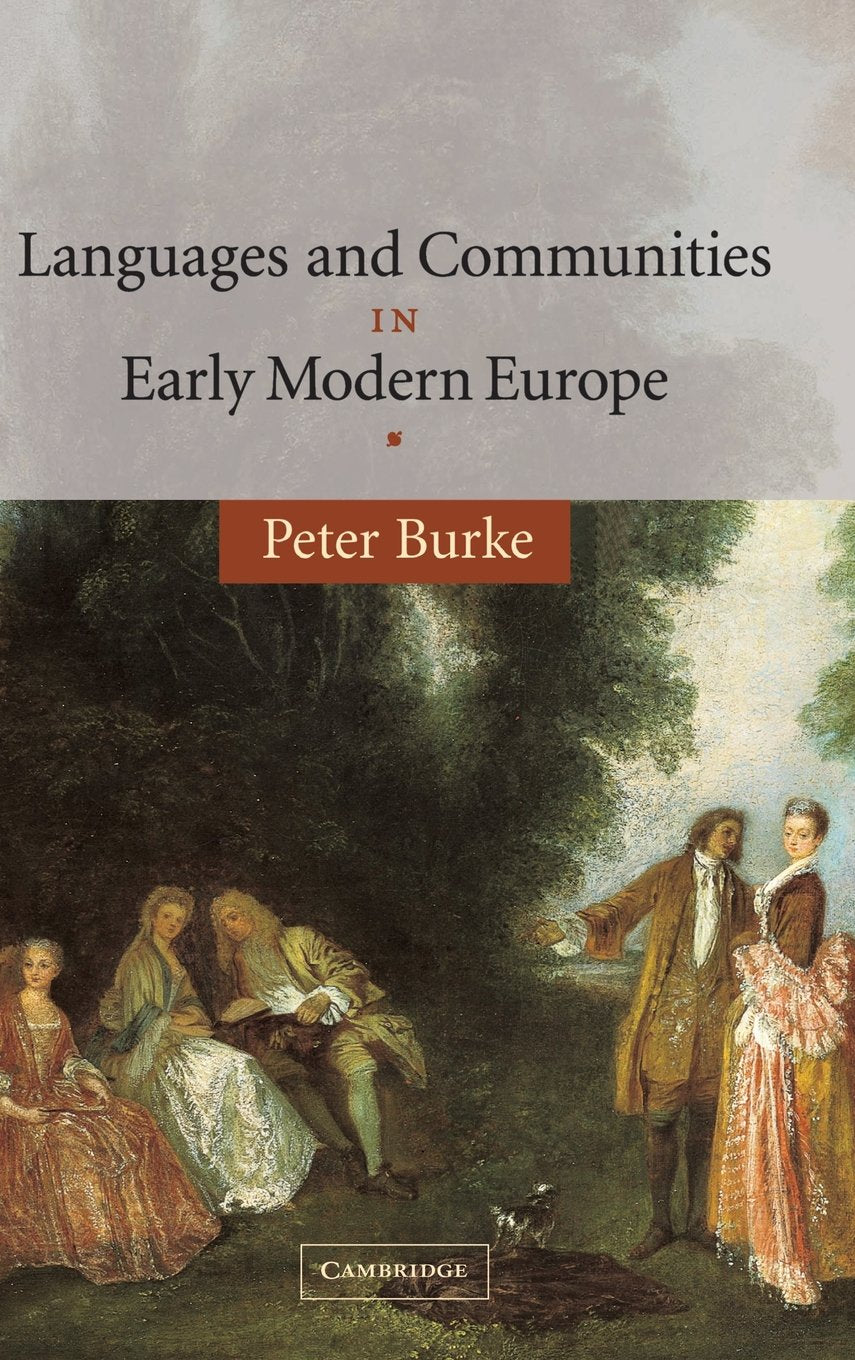
Languages and Communities in Early Modern Europe - Historical Language
Languages and Communities in Early Modern Europe - Historical Language
Price subject to change. Tap below for current.
Couldn't load pickup availability
In this review of Languages and Communities in Early Modern Europe, Peter Burke presents a focused survey of how language shaped identity and social belonging from the invention of printing to the French Revolution. The book is best for readers seeking a thoughtful, historically grounded analysis of language as a social force; the single biggest reason to read it is Burke's clear linking of language choices to community boundaries and cultural competition, which makes complex scholarly debates accessible without losing nuance.
Key Features
- Historical scope: The book traces developments from the invention of printing to the French Revolution, providing a broad chronological frame that clarifies long-term change.
- Language and identity: Burke shows how language operated as a marker of belonging and as a means to identify others, helping readers understand social uses of speech and writing.
- Competition theme: The text examines competition between Latin and vernaculars and among vernaculars themselves, illustrating cultural and institutional pressures that shaped language use.
- Comparative approach: By comparing different vernaculars and varieties, Burke highlights patterns of dominance and subordination across European communities, useful for cross-cultural analysis.
- Accessible tone: The Wiles Lectures format yields a readable, concise presentation that suits advanced students and educated general readers alike.
Who It's For
This book will suit graduate students, lecturers and history-minded general readers interested in cultural history, sociolinguistics and the early modern period who want a synthetic, thematic account of language in society. It is especially valuable for those studying the history of ideas, identity formation, and the social impact of printing.
Readers seeking a technical linguistic grammar, a regional language textbook, or a primary-source edition should look elsewhere, as Burke's aim is synthetic interpretation rather than detailed philological or textual apparatus.
Pros & Cons
Pros
- Clear thematic focus on language as identity makes complex social dynamics intelligible.
- Comparative treatment provides insight into competition between Latin and vernaculars across Europe.
- Concise lecture-based chapters offer a readable entry point for scholars and informed readers.
Cons
- The book is interpretive rather than a primary-source collection, so readers needing original texts or linguistic data may find it limited.
Specifications
| Title | Languages and Communities in Early Modern Europe (The Wiles Lectures) |
| Author | Peter Burke |
| Subject | Social and cultural history of language in early modern Europe |
| Chronological range | From the invention of printing to the French Revolution |
| Key themes | Language and identity; competition of Latin and vernaculars |
| Format | Lecture-based narrative and analysis |
Our Verdict
Languages and Communities in Early Modern Europe is a concise, thoughtful synthesis that rewards readers who want to understand how language helped form social boundaries and cultural hierarchies. It represents good value for historians, cultural scholars and advanced students seeking interpretive clarity rather than exhaustive philological detail.
Frequently Asked Questions
Does the book cover specific European languages?
The book treats Latin and various vernaculars comparatively rather than providing detailed chapters on individual languages.
Is this suitable for classroom use?
Yes; its lecture format and thematic clarity make it suitable for seminars in cultural history or courses on early modern Europe.
Will it include primary texts or linguistic data?
No; Burke focuses on interpretation and synthesis rather than publishing primary-source texts or detailed linguistic corpora.
Editor's Take
A concise, thoughtful synthesis that explains how language shaped identity and cultural competition in early modern Europe; ideal for historians and cultural scholars seeking interpretive clarity.

Recently viewed
Recently viewed products will appear here as customers browse the store.