

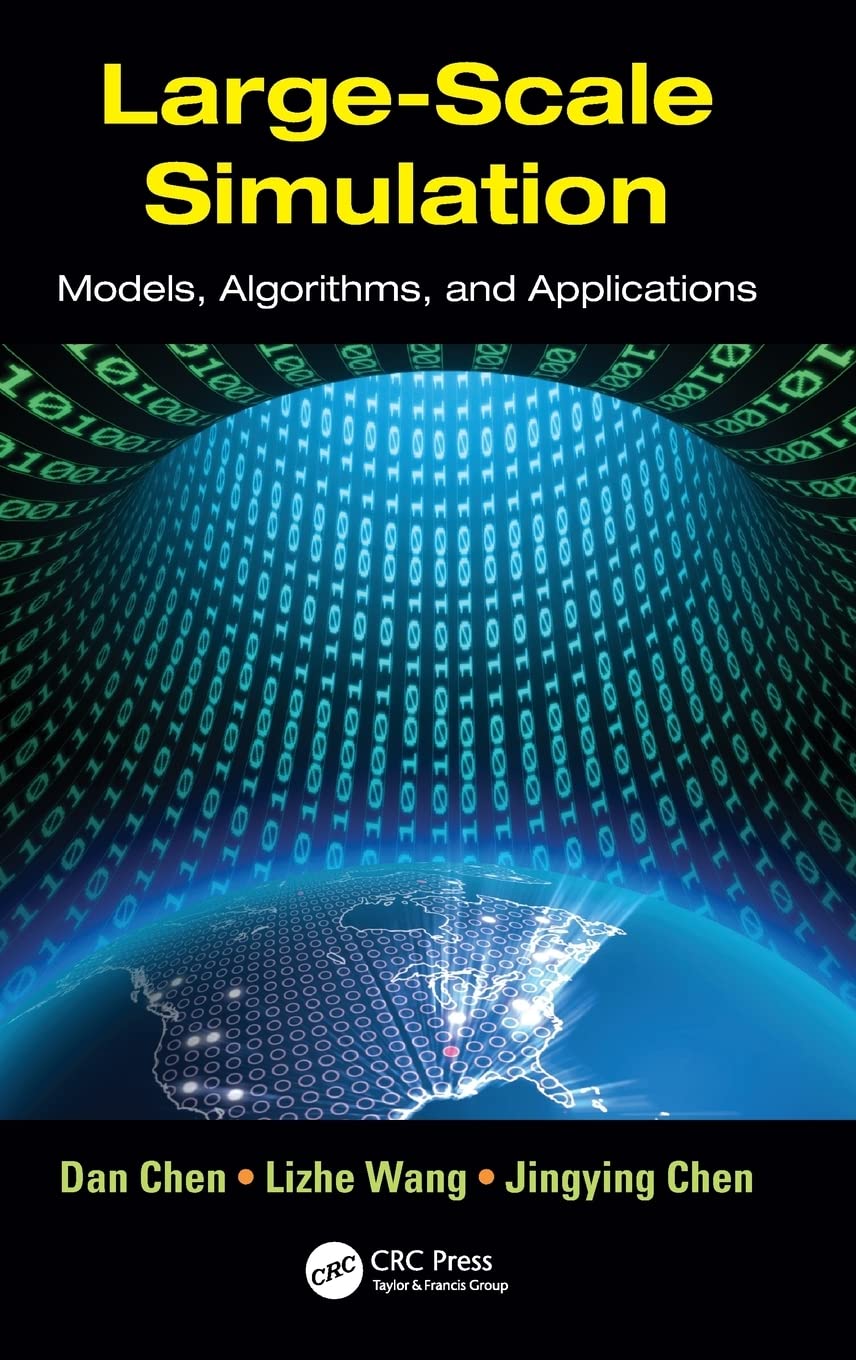
Large-Scale Simulation: Models, Algorithms, and Applications
Large-Scale Simulation: Models, Algorithms, and Applications
Price subject to change. Tap below for current.
Couldn't load pickup availability
Our review of Large-Scale Simulation: Models, Algorithms, and Applications finds it best suited for researchers and advanced practitioners who need a focused, technical reference on modern large-scale simulation methods. The book pulls directly from peer-reviewed papers to present both foundational architecture and concrete algorithmic techniques, so the single biggest reason to buy is its clear connection between theory and implemented mechanisms that support scalable, fault tolerant, and grid-enabled simulations.
Key Features
- Authoritative source: Draws on research published in top-tier conferences and journals to provide a trustworthy foundation for advanced study and implementation.
- Architecture coverage: Describes high-level system architecture and runtime infrastructure that help readers design scalable simulation deployments.
- Middleware focus: Explores middleware and software architecture, including decoupled federate designs that ease integration across simulation components.
- Fault tolerance: Presents fault tolerant mechanisms that assist in maintaining long-running, large-scale experiments under realistic failure conditions.
- Scenario evaluation: Details simulation cloning methods and algorithms that speed up evaluation of alternative scenarios and what-if analyses.
- Practical orientation: Balances theory with implementation-minded explanations useful for developers building simulation platforms.
Who It's For
This book is aimed at graduate students, simulation engineers, and systems researchers working on distributed or grid-enabled simulation who want a compact reference to current methods. Its reliance on published research makes it especially useful for readers who need citations and concrete algorithm descriptions to build or extend prototypes.
It is less suitable for beginners seeking an introductory textbook or for casual readers wanting high-level surveys without implementation detail; those audiences should consider more general simulation primers instead.
Pros & Cons
Pros
- Well grounded in peer-reviewed work, providing credible references and reproducible methods.
- Comprehensive treatment of runtime infrastructure and middleware useful for real-world deployments.
- Covers practical mechanisms like simulation cloning and fault tolerance that accelerate experimentation.
Cons
- Content assumes technical background and may be dense for readers without prior simulation or systems experience.
Specifications
| Title | Large-Scale Simulation: Models, Algorithms, and Applications |
| Authors | Dan Chen, Lizhe Wang, Jingying Chen |
| Scope | Fundamentals, middleware, algorithms for large-scale simulation |
| Source material | Research papers from top-tier peer-reviewed conferences and journals |
| Topics highlighted | Architecture, runtime infrastructure, fault tolerance, simulation cloning |
| Intended audience | Researchers, graduate students, simulation engineers |
Our Verdict
Large-Scale Simulation is a compact, research-driven reference that delivers real technical value to practitioners and researchers building scalable simulation systems. Its emphasis on architecture, middleware, and algorithms makes it a worthwhile investment for those who need implementation-ready ideas and citations; readers seeking an introductory textbook should look elsewhere.
Frequently Asked Questions
Does the book include implementation details?
Yes, it emphasizes algorithms and mechanisms drawn from peer-reviewed work that support practical implementation and evaluation.
Who wrote the material and is it research-backed?
The content is authored by Dan Chen, Lizhe Wang, and Jingying Chen and is compiled from papers published in top-tier, peer-reviewed venues.
Is this suitable for beginners?
Not ideal for beginners; the book assumes background in simulation and systems and is best for advanced students and practitioners.
Editor's Take
A compact, research-driven reference that benefits researchers and simulation engineers with implementation-ready architecture, middleware and algorithm guidance, though it assumes prior technical background.

Recently viewed
Recently viewed products will appear here as customers browse the store.