

Latin American Democracy - In-Depth Political Studies
Latin American Democracy - In-Depth Political Studies
Price subject to change. Tap below for current.
Couldn't load pickup availability
In this review of Latin American Democracy the authors examine the region's long democratic transition and its remaining challenges; the book is best for students and scholars seeking a concise, multi-author survey of institutional change since military rule. The second edition compiles perspectives from academics and practitioners to trace patterns of free competitive elections, peaceful alternations in power, and persistent obstacles such as weak institutions and corruption. The book's biggest strength is its balanced, historical framing that links electoral progress to contemporary threats like transnational crime and globalization.
Key Features
- Comprehensive historical overview: Provides a clear narrative of more than thirty years of democratic transition across Latin American countries, helping readers understand long-term trends.
- Multi-author perspectives: Brings together contributions from academics and practitioners to offer varied analytical angles on consolidation and setbacks.
- Focus on institutional challenges: Explores weaknesses in political institutions and legacies of militarism to explain why democracy remains fragile in parts of the region.
- Coverage of contemporary threats: Addresses corruption, transnational crime, and the effects of globalization as central impediments to stable governance.
- Second edition updates: Reflects developments since the first edition to incorporate recent alternations in power and evolving policy debates.
Who It's For
Researchers, graduate students, and advanced undergraduates in political science or international studies will find this work useful as a survey text that situates recent democratic advances in historical context. It is also a practical resource for policy analysts or regional specialists who need a synthesized account of institutional strengths and vulnerabilities in Latin America.
Readers seeking a basic introduction to political concepts or a heavily data-driven empirical volume with econometric analysis should look elsewhere; this book emphasizes qualitative synthesis and expert essays rather than exhaustive statistical annexes.
Pros & Cons
Pros
- Thoughtful synthesis of three decades of political change that clarifies major patterns in the region.
- Diverse contributor base that reduces single-author bias and offers multiple viewpoints.
- Clear attention to contemporary challenges such as corruption and transnational crime, making the book relevant to current debates.
Cons
- Limited methodological detail for readers wanting comprehensive empirical data or advanced econometric tests.
- As a multi-author volume, chapter depth varies and some essays read more like overviews than original research.
Specifications
| Title | Latin American Democracy |
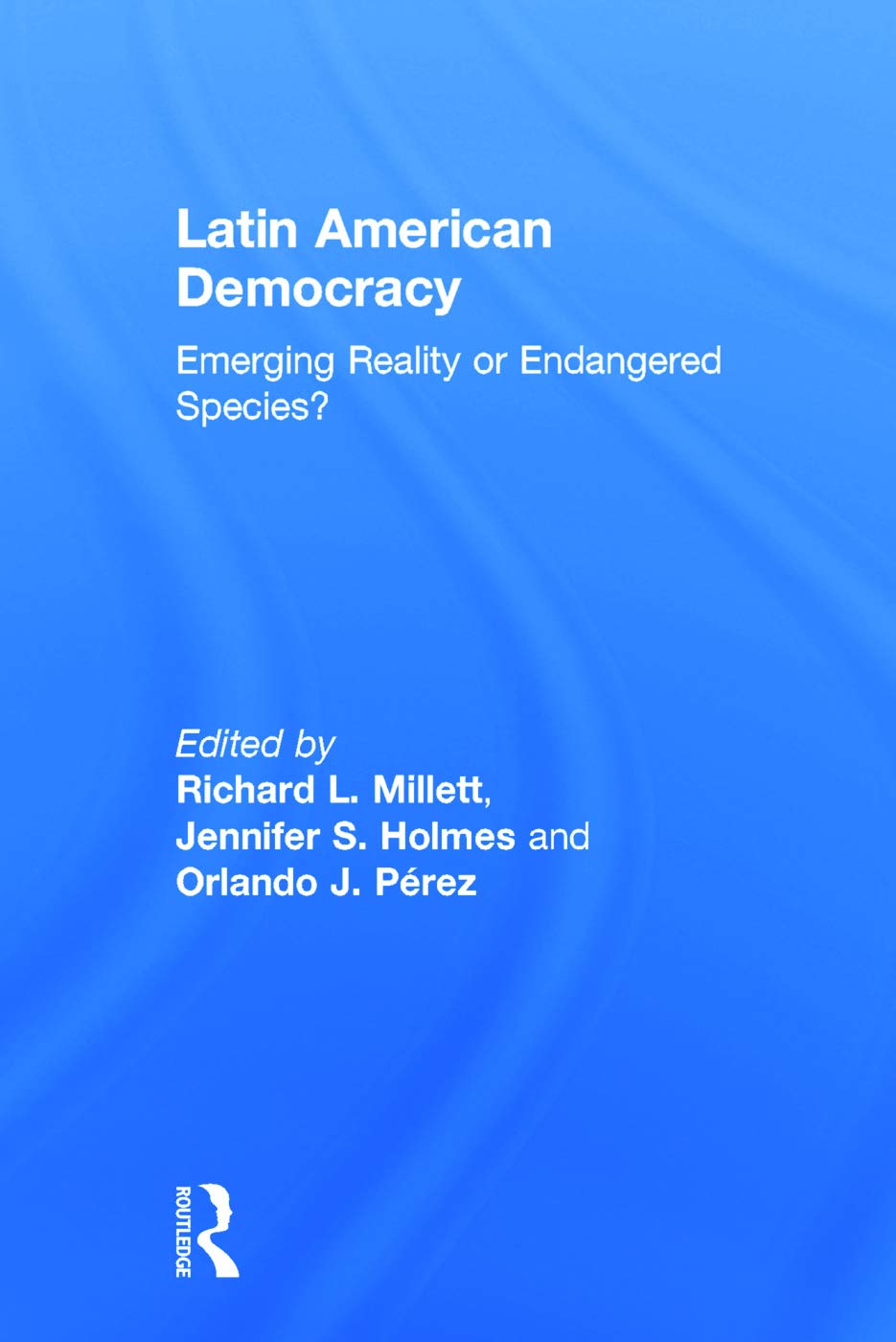
| Authors/Editors | Richard L. Millett, Jennifer S. Holmes, Orlando J. Perez |
| Edition | Second edition |
| Subject area | Politics & Government; International & World Politics |
| Geographic focus | Latin America and the Caribbean |
| Approach | Multi-author scholarly essays and synthesis |
Our Verdict
Latin American Democracy is a solid, value-minded text for anyone who wants a scholarly synthesis of democratic transition in the region; it excels at framing institutional progress and persistent threats, and it is particularly valuable for coursework and policy reading where historical perspective and expert commentary matter more than raw datasets.
Frequently Asked Questions
Is this book suitable for classroom use?
Yes, it is well suited to undergraduate or graduate courses that cover Latin American politics and democratic transitions.
Does the book include recent political developments?
Yes, the second edition updates the analysis to reflect developments and alternations in power since the earlier edition.
Is the volume data-heavy?
No, the book emphasizes qualitative synthesis and expert essays rather than exhaustive statistical tables or econometric analysis.
Editor's Take
Latin American Democracy is a well-balanced, multi-author survey ideal for students and policy analysts, offering historical context and expert commentary on democratic advances and ongoing institutional challenges.

Recently viewed
Recently viewed products will appear here as customers browse the store.