

Latin American Experiments in Neoconservative Economics - and Analysis
Latin American Experiments in Neoconservative Economics - and Analysis
Price subject to change. Tap below for current.
Couldn't load pickup availability
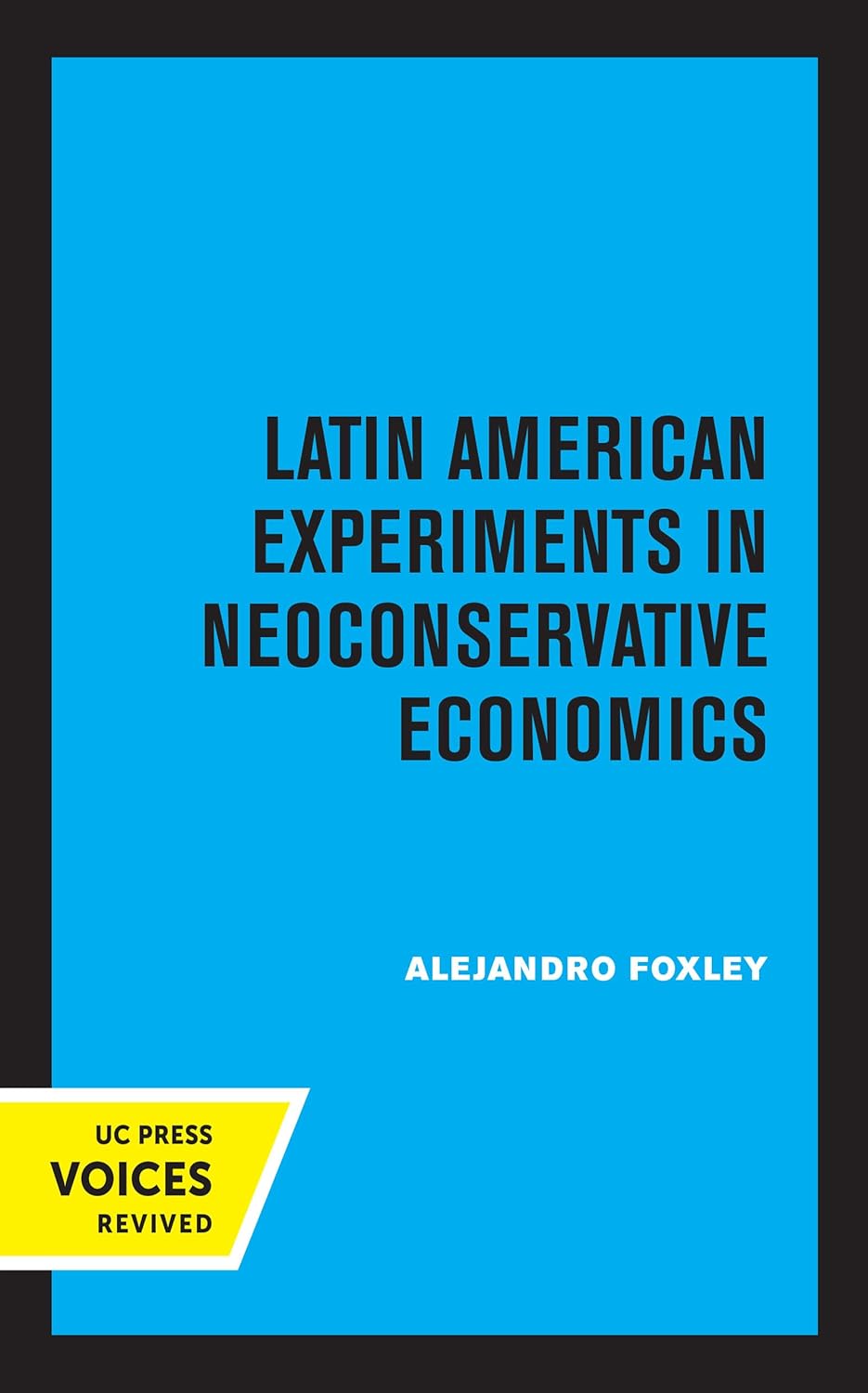
In this review of Latin American Experiments in Neoconservative Economics, the bottom line is clear: this is a focused, scholarly examination best suited for readers who want a critical, historical account of late 20th century market reforms in South America. Alejandro Foxley traces how monetarist stabilization and structural reform were implemented in Chile, Uruguay, and Argentina under authoritarian conditions, and the book's single biggest reason to buy is its detailed narrative of policy design and political context that links economic stabilization to broader social and institutional consequences.
Key Features
- Comparative analysis: Offers direct comparisons of policy choices in Chile, Uruguay, and Argentina, helping readers understand differences in implementation and outcomes.
- Focus on monetarist stabilization: Explains how radical measures to control inflation were designed and why they became central to economic strategy in the period covered.
- Examination of structural change: Describes privatization, reduced government expenditures, and market liberalization as long-term components of the reform package.
- Political context: Situates economic policies within authoritarian regimes and examines the role of centralized authority and repression in shaping reform pathways.
- Historical perspective: Traces the emergence and adoption of neoconservative ideas in the region, useful for students of economic history and policy.
Who It's For
This book is aimed at economists, policy students, historians, and informed readers who want a rigorous, context-rich study of neoliberal-style reforms in Latin America during the late 20th century. Researchers who value a policy-centered narrative that connects stabilization programs to structural reform will find the work especially useful.
Readers looking for prescriptive how-to guides, contemporary policy toolkits, or a broad survey covering many countries beyond Chile, Uruguay, and Argentina should look elsewhere; the book is deliberately concentrated on a set of specific national experiments rather than offering a global playbook.
Pros & Cons
Pros
- Clear comparative framework that highlights differences across three national cases.
- Thorough treatment of monetarist stabilization and long-term structural reforms.
- Useful political analysis showing how authoritarian contexts shaped policy choices.
Cons
- The narrow geographic focus may disappoint readers seeking a broader regional survey.
Specifications
| Title | Latin American Experiments in Neoconservative Economics |
| Author | Alejandro Foxley |
| Geographic focus | Chile, Uruguay, Argentina |
| Thematic focus | Monetarist stabilization and structural reform |
| Political context | Authoritarian regimes and centralized authority |
| Primary topics | Privatization, expenditure cuts, market liberalization |
Our Verdict
Latin American Experiments in Neoconservative Economics is a valuable, tightly focused study for anyone researching late 20th century economic policy in South America; its strength is connecting monetarist stabilization and structural reforms to political conditions, making it good value for scholars and advanced students who need depth rather than breadth.
Frequently Asked Questions
Does the book cover multiple countries?
Yes. It concentrates on Chile, Uruguay, and Argentina and compares their policy experiments.
Is this a policy manual?
No. It is a historical and analytical study of past reforms rather than a contemporary how-to guide.
Who benefits most from reading this book?
Economists, historians, and policy researchers interested in the political economy of stabilization and structural reform will benefit most.
Editor's Take
A tightly focused, analytic study that links monetarist stabilization and structural reforms to authoritarian political contexts; ideal for scholars and advanced students seeking depth rather than breadth.

Recently viewed
Recently viewed products will appear here as customers browse the store.