

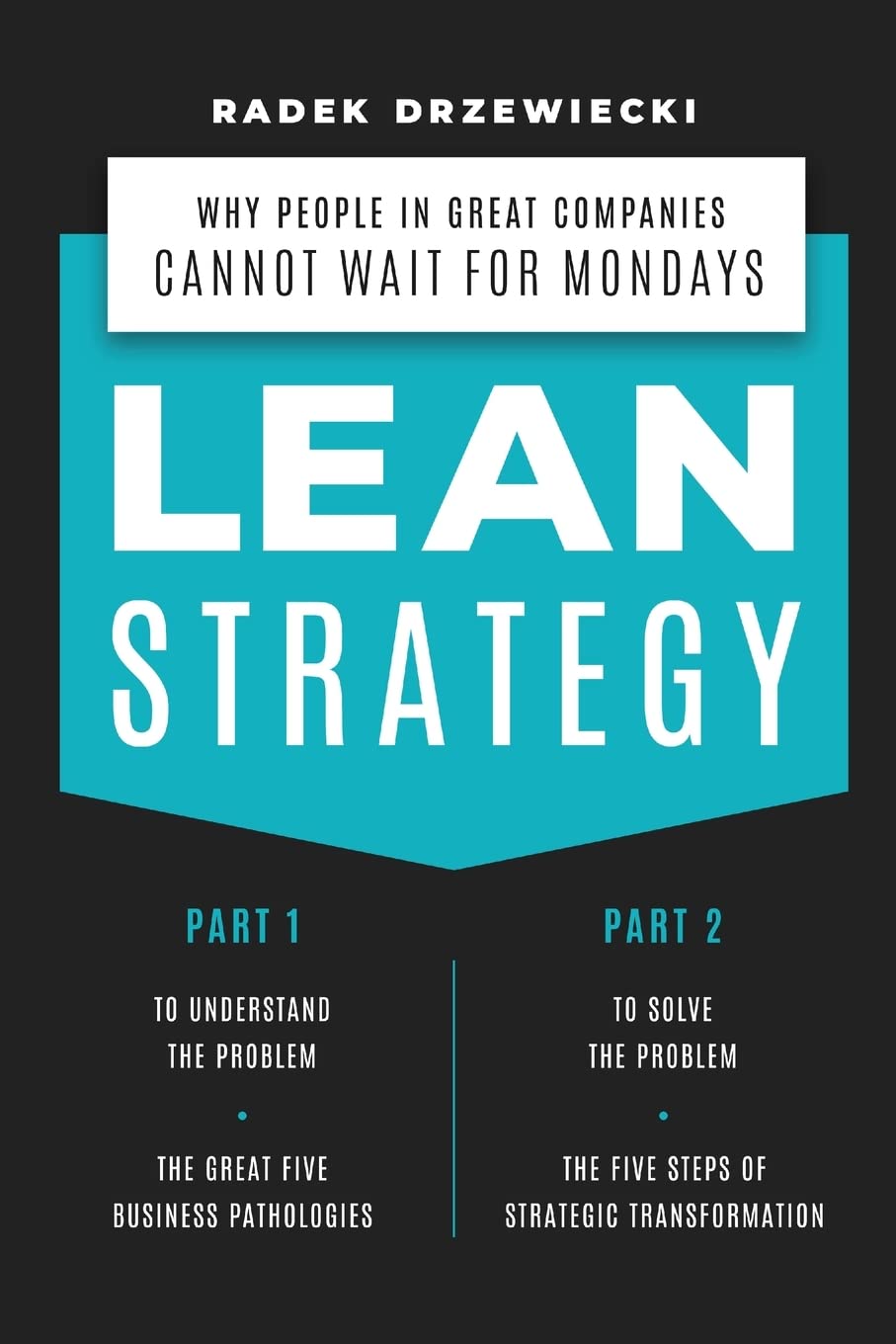
Lean Strategy Why people in great companies can't wait for Mondays
Lean Strategy Why people in great companies can't wait for Mondays
Price subject to change. Tap below for current.
Couldn't load pickup availability
In this review of Lean Strategy, the book is best for managers and leaders who want a strategic, human-centered approach to lean thinking rather than another toolkit manual. Radek Drzewiecki wrote the book to challenge common myths and to show how becoming LEAN creates purpose, belonging and conscious leadership; the single biggest reason to read it is its emphasis on connecting lean to trust, autonomy and employee responsibility, making it useful for organizations that want sustained cultural change rather than one-off projects.
Key Features
- Strategic focus: Presents lean as a company strategy that provides a clear purpose of existence rather than a set of disconnected tools.
- Human-centered leadership: Emphasizes conscious leadership and trust among managers to build autonomy and responsibility at the team level.
- Myth-busting intent: Directly addresses common misconceptions about lean, helping readers separate ideology from practical strategy.
- Employee engagement: Aims to create workplaces where people gladly come to work by fostering belonging and influence for individuals.
- Practical orientation: Encourages moving beyond implementation projects to create systemic change that strengthens long-term results.
Who It's For
Lean Strategy is aimed at mid to senior leaders, change agents and managers in established organizations who need a strategic lens for lean transformation and want to deepen employee autonomy and responsibility. It works well for readers who are frustrated with tool-focused programs and who seek a philosophical and organizational framing for lean.
Those seeking a step-by-step how-to manual for specific lean tools, templates or shop-floor techniques should look elsewhere; this book is about becoming LEAN at the cultural and strategic level rather than teaching individual implementation checklists.
Pros & Cons
Pros
- Focuses on purpose and belonging, which helps align lean with long-term organizational goals.
- Highlights trust and conscious leadership as central elements, useful for leadership development.
- Takes on common myths, which clarifies what lean should and should not be in practice.
Cons
- Not a practical toolkit: readers expecting detailed implementation steps or templates may find it conceptual rather than operational.
Specifications
| Title | LEAN STRATEGY: Why people in great companies can't wait for Mondays |
| Author | Radek Drzewiecki |
| Primary focus | Becoming LEAN through strategy, purpose and leadership |
| Core themes | Purpose, belonging, influence, trust, conscious leadership |
| Intended audience | Managers, leaders, change agents |
| Approach | Strategic and human-centered rather than tool-focused |
Our Verdict
Lean Strategy is a thoughtful, values-driven guide for leaders who want lean to be an organizational identity rather than a list of projects. It is good value for anyone focused on culture, trust and long-term results, but those who need tactical templates should complement it with a practical implementation resource.
Frequently Asked Questions
Is this book a how-to manual?
No. The book is intentionally strategic and conceptual, focusing on becoming LEAN rather than step-by-step tool instructions.
Who wrote this book?
The author is Radek Drzewiecki, who wrote it to inspire strategic approaches and counter myths about lean.
Will this help with employee engagement?
Yes. The book explicitly links lean strategy to belonging, influence and autonomy, which supports improved engagement.
Editor's Take
Lean Strategy is a values-driven, strategic guide for leaders who want lean to become an organizational identity rather than a toolbox; it is ideal for those focused on culture, trust and long-term results.

Recently viewed
Recently viewed products will appear here as customers browse the store.