

Learning the Art of Electronics Lab Course - Hands-On Circuit Practice
Learning the Art of Electronics Lab Course - Hands-On Circuit Practice
Price subject to change. Tap below for current.
Couldn't load pickup availability
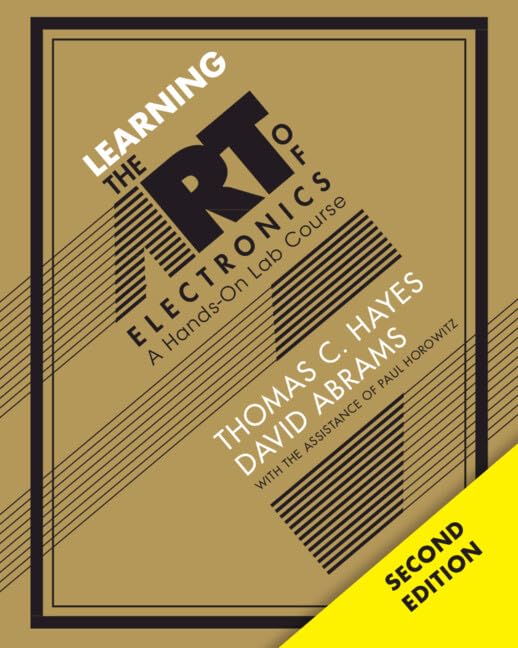
In this review, the new edition of Learning the Art of Electronics: A Hands-On Lab Course is assessed as a practical, workshop-focused companion for students and self-learners who want to move from theory to functioning circuits. Its single biggest reason to buy is the extensive hands-on lab curriculum that replaces older components with modern tools, giving readers projects that demonstrate real-world analog and digital techniques. The review finds it particularly valuable for those who learn by building, experimenting, and using a contemporary ARM microcontroller and FPGA in place of legacy parts.
Key Features
- Expanded analog labs: New experiments on amplifiers and automatic gain control let readers explore signal conditioning with hands-on circuits.
- Updated digital section: Rebuilt digital labs use an FPGA, offering more realistic digital design experience than older programmable logic devices.
- Modern microcontroller projects: A powerful ARM microcontroller enables C programming and more sophisticated applications like a lunar lander and voice recorder.
- Online supplements: Many labs include online material that extends the printed instructions and provides additional resources for experiments.
- Practical IDE guidance: The book introduces using an Integrated Development Environment to compile and download code, smoothing the transition to embedded development.
Who It's For
This edition suits undergraduate engineering students, electronics hobbyists with basic fundamentals, and instructors who want a lab-driven course with contemporary tools. The emphasis on hands-on projects and practical programming makes it useful for learners moving from breadboarding to embedded systems.
Those seeking a pure theory text, a brief overview, or a beginner book with no prior exposure to circuits should look elsewhere; the lab course assumes some familiarity with basic electronics and programming concepts to get the most from the projects.
Pros & Cons
Pros
- Lab-centered approach gives immediate, practical experience with analog and digital circuits.
- Updated components like an FPGA and ARM microcontroller provide relevant, modern skills.
- Online supplements and expanded meter treatment deepen hands-on learning and measurement practice.
Cons
- Not a beginner primer; readers without prior circuit knowledge may need supplementary basics.
Specifications
| Title | Learning the Art of Electronics: A Hands-On Lab Course |
| Authors | Thomas C. Hayes, David Abrams, Paul Horowitz |
| Content focus | Hands-on analog and digital labs with modern embedded projects |
| Digital tools | FPGA for digital sections |
| Microcontroller | ARM microcontroller for C programming projects |
| New labs | Amplifiers, automatic gain control, and expanded meter coverage |
| Supplemental material | Many labs have online supplements |
Our Verdict
Learning the Art of Electronics: A Hands-On Lab Course is a strong value for learners who prefer project-based study and want modern embedded experience. With updated digital sections, an ARM microcontroller, and practical lab guidance, it bridges classroom theory and real circuits, making it a sensible pick for courses and motivated self-study.
Frequently Asked Questions
Does this edition include modern microcontroller projects?
Yes, it uses a powerful ARM microcontroller and includes C-programmable projects like a lunar lander and voice recorder.
Are the labs supported online?
Many of the labs have online supplements that expand instructions and resources for experimentation.
Is this book suitable for complete beginners?
It is best for readers with some basic electronics knowledge; complete beginners may need an introductory primer first.
Editor's Take
This lab-focused edition offers modern, hands-on analog and digital projects using an FPGA and ARM microcontroller, making it a practical choice for students and hobbyists who learn by building.

Recently viewed
Recently viewed products will appear here as customers browse the store.