

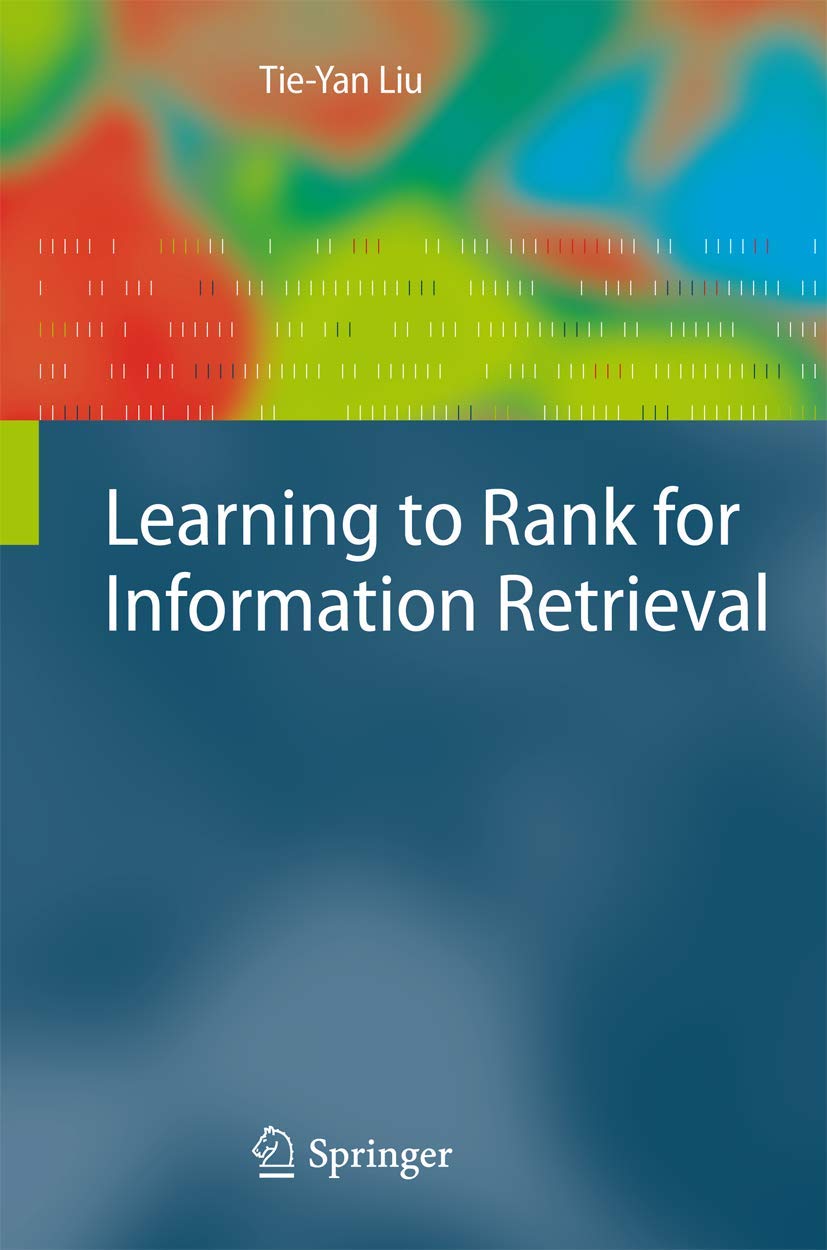
Learning to Rank for Information Retrieval - Practical ML for Search
Learning to Rank for Information Retrieval - Practical ML for Search
Price subject to change. Tap below for current.
Couldn't load pickup availability
In this review of Learning to Rank for Information Retrieval the reviewer finds it is a focused, technical resource aimed at readers who need a clear bridge between information retrieval concepts and machine learning ranking methods. The single biggest reason to buy is its concentrated treatment of ranking techniques that matter for building effective search systems: it connects theory to practical ranking tasks used across search engines, question answering, and recommendation systems. This makes it valuable for practitioners and advanced students seeking a disciplined, research-informed guide rather than a broad introductory textbook.
Key Features
- Ranker-focused coverage: Explains the role of the ranker and how it matches processed queries to indexed documents, helping readers understand the central component of search systems.
- Machine learning emphasis: Shows how leveraging machine learning in the ranking process improves retrieval performance across applications like collaborative filtering and online advertising.
- Application breadth: Relates ranking methods to diverse uses including question answering, multimedia retrieval, and text summarization, so readers see practical cross-domain relevance.
- Research-driven explanations: Presents concepts with attention to research and development trends, useful for readers who want to follow or contribute to ranking technology advances.
- Problem-oriented framing: Situates ranking challenges within the context of a rapidly growing Web and real search difficulties, clarifying why specific solutions matter.
Who It's For
This book is best for graduate students, data scientists, search engineers, and researchers who already have a grounding in information retrieval or machine learning and want a focused treatment of ranking techniques. It serves those building or evaluating rankers in production systems, or anyone wanting a deeper research perspective on ranking as a core search component.
Those looking for a gentle introduction to basic programming or an entry-level overview of machine learning should look elsewhere; this title assumes familiarity with foundational concepts and is compact rather than encyclopedic.
Pros & Cons
Pros
- Concentrated focus on ranking provides depth for practitioners developing search systems.
- Clear connections between machine learning approaches and practical retrieval tasks improve applicability.
- Cross-application examples show the relevance of ranking to recommendation and question answering.
Cons
- Not intended as an introductory text, so readers without prior IR or ML background may find it dense.
Specifications
| Title | Learning to Rank for Information Retrieval |
| Author | Tie-Yan Liu |
| Primary topic | Ranking methods for search and information retrieval |
| Focus areas | Machine learning for ranking, ranker design, applications |
| Applications covered | Search engines, question answering, collaborative filtering, multimedia retrieval |
| Intended audience | Researchers, search engineers, graduate students |
Our Verdict
Learning to Rank for Information Retrieval is a concentrated, research-aware guide best suited to practitioners and advanced students who need to apply machine learning to ranking problems. It delivers strong value for anyone implementing or studying rankers because it emphasizes practical relevance across search, recommendation, and related retrieval tasks.
Frequently Asked Questions
Is this book suitable for beginners?
It assumes prior knowledge of basic information retrieval and machine learning, so beginners should first consult an introductory text.
Does it cover practical implementation?
The book links theory to practical ranking tasks and applications, making it useful for engineers implementing rankers.
Which applications are emphasized?
The text highlights search engines, question answering, collaborative filtering, multimedia retrieval, and advertising-related ranking use cases.
Editor's Take
A concentrated, research-aware guide for practitioners and advanced students applying machine learning to ranking problems, offering strong practical value for building and understanding rankers.

Recently viewed
Recently viewed products will appear here as customers browse the store.