

Lexical Plurals: A Morphosemantic Approach - In-depth
Lexical Plurals: A Morphosemantic Approach - In-depth
Price subject to change. Tap below for current.
Couldn't load pickup availability
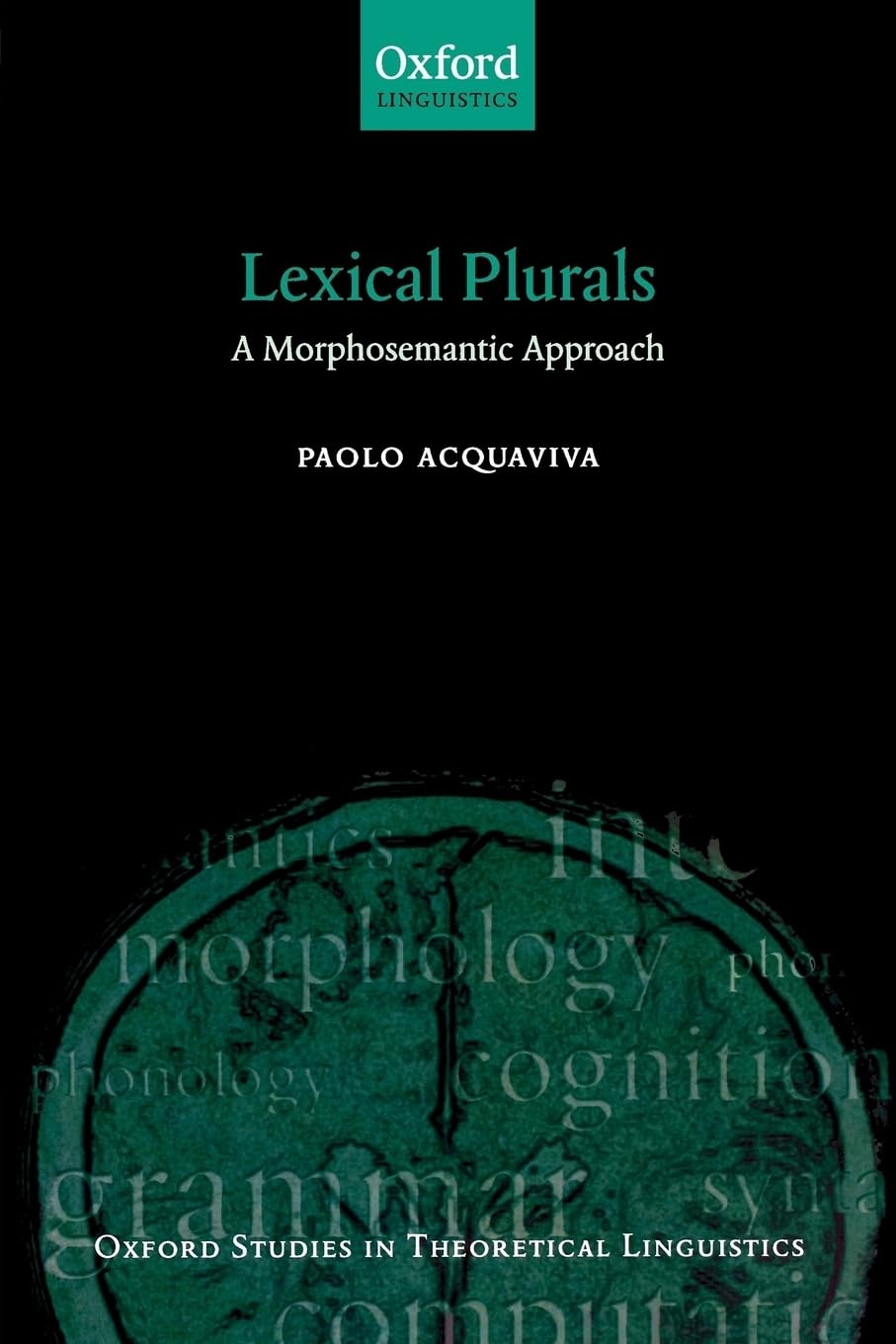
In this review of Lexical Plurals: A Morphosemantic Approach, the bottom line is clear: this is a targeted, rigorous study for linguists and advanced students interested in how plural forms can be lexicalized. Paolo Acquaviva presents a unified approach using tools from formal semantics and theoretical morphology, making the book most valuable to readers who want a sustained analytic treatment rather than a general introductory overview. The work rewards readers who seek depth on the relation between grammar and the lexicon and expect careful argumentation rather than broad survey.
Key Features
- Unified theoretic approach: The author applies a consistent analytic framework across diverse cases to clarify how lexical plurals relate to semantics and morphology.
- Formal semantics tools: Use of formal semantic methods helps make explicit the meanings associated with lexicalized plural forms, improving theoretical precision.
- Theoretical morphology integration: Bringing morphology into the analysis illuminates the interface between form and lexical meaning in pluralization.
- Case studies and examples: Numerous language-dependent examples demonstrate the variety of plural irregularities and ground the theoretical claims.
- Structured two-part layout: The book's division into an introductory approach and a detailed second part helps readers follow the argument from method to application.
Who It's For
Lexical Plurals is best for graduate students, researchers, and advanced scholars in linguistics who already have a foundation in semantics and morphology and who want a focused, research-oriented account of lexical plural phenomena. It is well suited to those working on the lexicon-grammar interface or conducting comparative morphological studies.
Readers seeking a basic textbook introduction to morphology or a broad survey suitable for undergraduates should look elsewhere; the book assumes familiarity with formal methods and expects readers to engage with dense analytic argumentation rather than introductory exposition.
Pros & Cons
Pros
- Provides a coherent, unified framework that ties together many disparate cases of lexical plurals.
- Employs formal semantics and theoretical morphology in a complementary way, improving conceptual clarity.
- Rich, language-specific examples illustrate abstract claims and make the analysis concrete.
Cons
- The work is specialized and may be challenging for readers without prior training in formal semantics and morphology.
Specifications
| Title | Lexical Plurals: A Morphosemantic Approach |
| Series | Oxford Studies in Theoretical Linguistics |
| Author | Paolo Acquaviva |
| Focus | Lexicalization of plural noun forms using semantics and morphology |
| Structure | Introduction followed by a two-part analytic presentation |
| Audience | Graduate students and researchers in linguistics |
Our Verdict
Lexical Plurals is a strong, focused contribution for specialists who want a unified, formal analysis of plural lexicalization; its careful theoretical work and illustrative examples make it good value for researchers and advanced students, while its specialist orientation means it is not the right choice for beginners.
Frequently Asked Questions
Does this book require prior knowledge of formal semantics?
Yes; the book uses tools from formal semantics and assumes readers have a working familiarity with semantic theory.
Is this a general textbook on morphology?
No; it is a focused research monograph that examines lexical plural phenomena rather than providing a broad introductory survey.
Who benefits most from reading it?
Graduate researchers and linguists studying the lexicon-grammar interface or plural morphology will gain the most from the detailed analyses.
Editor's Take
Lexical Plurals is a focused, rigorous study offering a unified formal account of plural lexicalization; recommended for graduate students and researchers seeking depth on the lexicon-grammar interface.

Recently viewed
Recently viewed products will appear here as customers browse the store.