

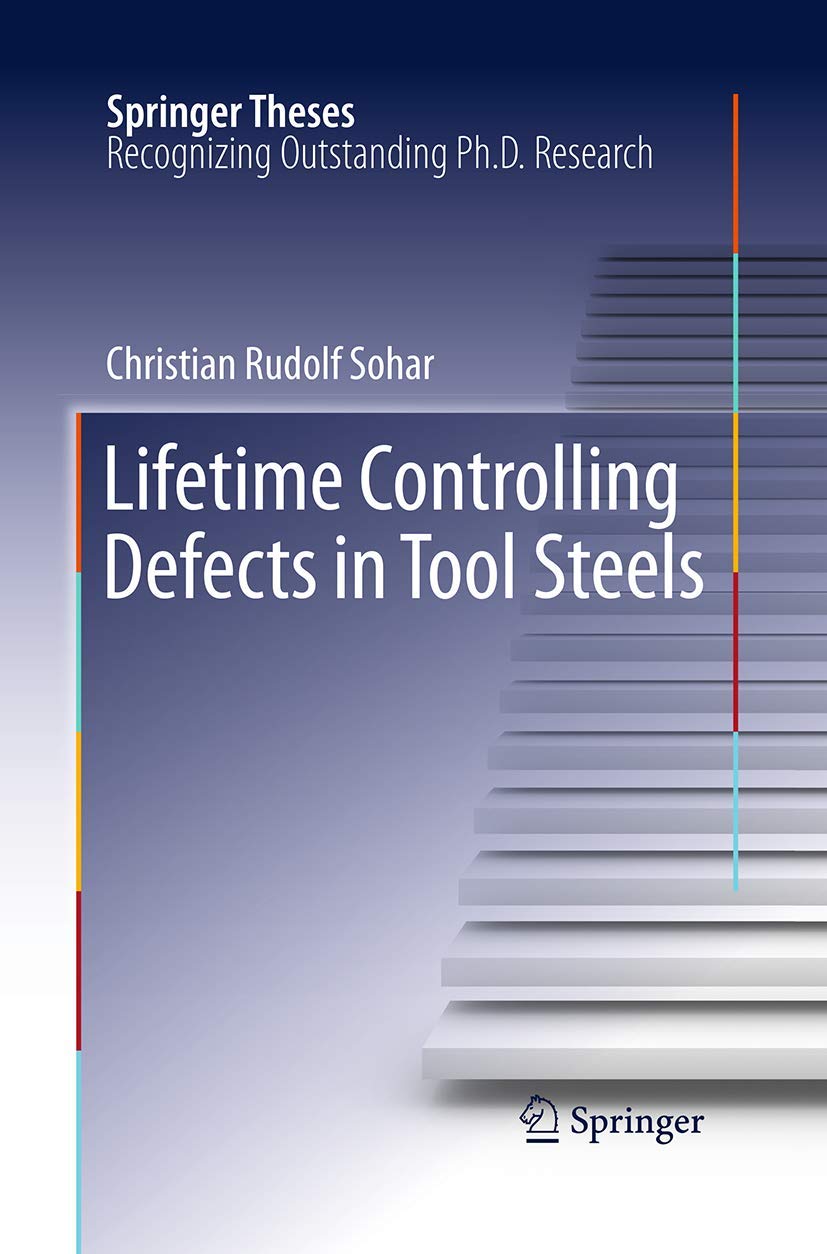
Lifetime Controlling Defects in Tool Steels - Gigacycle Fatigue
Lifetime Controlling Defects in Tool Steels - Gigacycle Fatigue
Price subject to change. Tap below for current.
Couldn't load pickup availability
Our review of Lifetime Controlling Defects in Tool Steels finds it most valuable for graduate students and researchers focused on fatigue and microstructure in hard metallic materials. Christian Sohar presents an interdisciplinary investigation into the gigacycle fatigue behavior of tool steels and the single biggest reason to consult this thesis is its detailed, methodical experimental treatment that ties materials science, metallurgy, chemistry and mechanical engineering into practical insight. This review highlights why the depth of experimental description and analysis makes the work a durable reference rather than a brief overview.
Key Features
- Interdisciplinary approach: The thesis combines methods from materials science, metallurgy, chemistry, physics and mechanical engineering to provide a rounded understanding of tool steel behavior under very high cycle fatigue.
- Gigacycle fatigue focus: Extensive discussion of gigacycle fatigue experiments clarifies the unique challenges and phenomena that appear at very high numbers of load cycles.
- Experimental detail: Detailed descriptions of experimental techniques make it straightforward for other researchers and students to reproduce or adapt the tests.
- Microstructure emphasis: Emphasis on complex microstructures links hardness and defect populations to mechanical response, helping practitioners interpret failure modes.
- Educational value: The thesis provides a general introduction to steel tools and fatigue that supports newcomers while still offering depth for specialists.
Who It's For
This thesis is best suited for graduate students, academic researchers and materials engineers who need a technically rich, method-focused resource on fatigue in hard tool steels and the role of microstructural defects. The level of experimental detail and interdisciplinary framing makes it a practical reference for those designing fatigue experiments or interpreting failure in high-hardness steels.
Readers seeking a short textbook overview or a highly applied industrial manual with immediate process recipes should look elsewhere; this is a research thesis aimed at understanding mechanisms and experimental practice rather than step-by-step shopfloor procedures.
Pros & Cons
Pros
- Thorough experimental descriptions that aid reproducibility and deeper study.
- Interdisciplinary analysis tying microstructure, chemistry and mechanics for a fuller interpretation of fatigue behavior.
- Focused treatment of gigacycle fatigue, an area often underrepresented in standard texts.
Cons
- The material is thesis-level and dense, so it may be challenging for casual readers without prior background in materials science.
Specifications
| Title | Lifetime Controlling Defects in Tool Steels (Springer Theses) |
| Author | Christian Rudolf Sohar |
| Subject | Gigacycle fatigue of tool steels and defect control |
| Approach | Interdisciplinary experimental and analytical study |
| Intended audience | Graduate students and researchers in materials science and engineering |
| Content focus | Microstructure, hardness and mechanical behavior under very high cycle fatigue |
Our Verdict
Lifetime Controlling Defects in Tool Steels is a valuable, well-documented thesis for anyone needing experimental rigor and mechanistic insight into gigacycle fatigue of hard steels. Its interdisciplinary treatment and extensive experimental detail make it good value as a long-term reference for researchers and advanced students who will use the methods and analysis rather than a quick primer for beginners.
Frequently Asked Questions
Does this thesis include experimental methods?
Yes. The work extensively discusses experimental techniques and results, with enough detail to inform reproducible testing.
Is this suitable for industrial engineers?
It is useful for industrial engineers who require mechanistic understanding and experimental guidance, but not for those needing brief, hands-on process recipes.
What topics does it cover?
The thesis covers gigacycle fatigue, microstructural defects, hardness effects and an interdisciplinary analysis combining metallurgy, chemistry and mechanics.
Editor's Take
A technically thorough thesis offering experimental rigor and interdisciplinary insight into gigacycle fatigue of tool steels; ideal for researchers and advanced students seeking a durable reference.

Recently viewed
Recently viewed products will appear here as customers browse the store.