

Linear Electric Actuators and Generators - Unified Design & Control
Linear Electric Actuators and Generators - Unified Design & Control
Price subject to change. Tap below for current.
Couldn't load pickup availability
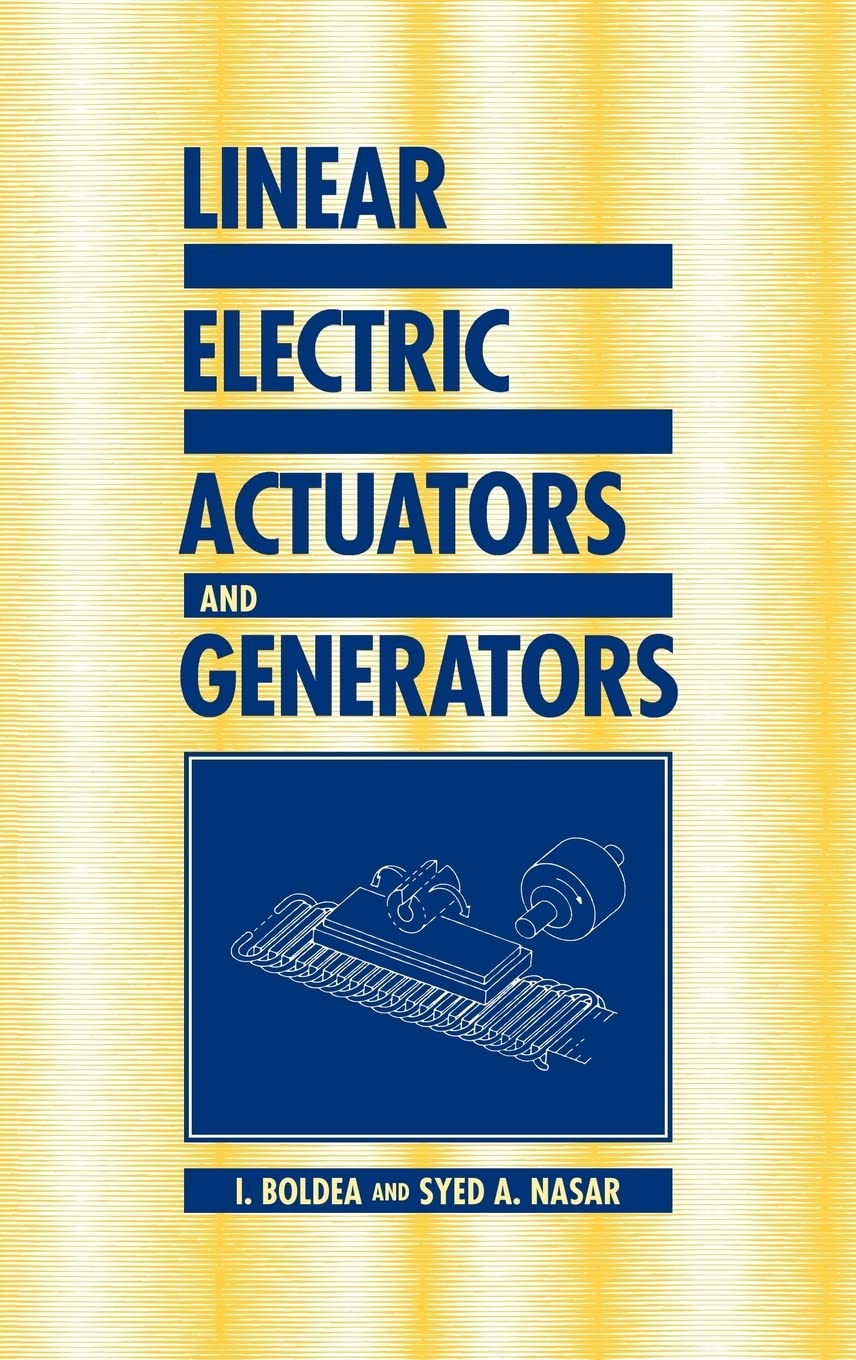
In this review of Linear Electric Actuators and Generators, the reviewer finds a focused, technical resource best suited to engineers and advanced students who need a unified reference on devices that convert between electrical and linear mechanical energy. The book's biggest strength is its comprehensive treatment of construction, operation, control, and design across multiple actuator families, making it valuable for anyone designing or researching linear motion systems rather than a casual reader seeking basic introductions.
Key Features
- Unified coverage: Presents a single, coherent treatment of both linear electric actuators and generators so readers can compare construction and control approaches across device types.
- Range of machine types: Describes linear induction, permanent-magnet, linear reluctance, switched reluctance, and linear stepper actuators, giving designers specific architectures to consider for different applications.
- Control and design focus: Goes beyond principle-of-operation material to address control and detailed design methodologies that are often missing in the literature.
- Application breadth: Uses examples from loudspeakers and microphones to magnetically levitated material transfer, helping readers connect theory to practical uses.
- Engineering orientation: Emphasizes performance calculations and construction details useful for professional development and advanced coursework.
Who It's For
This book is aimed at practicing electrical and mechanical engineers, graduate students, and researchers who design or study linear motion machines and energy conversion in limited-travel systems. It is especially helpful for those working on precision material handling, acoustic transducers, or magnetic levitation systems who need a single reference covering both actuators and generators.
Readers seeking a gentle, introductory textbook or hobbyist-level project guide may find the treatment too technical; similarly, those wanting exhaustive experimental datasets or ready-to-run CAD files should look for supplemental resources to pair with this text.
Pros & Cons
Pros
- Comprehensive unified treatment makes it easier to compare different linear machine types in one place.
- Explicit focus on control and design methodologies fills a gap left by many operation-focused texts.
- Practical examples tie theory to applications from loudspeakers to magnetic levitation systems.
Cons
- Technical depth and engineering orientation make it less suitable for casual readers or beginners without prior background.
Specifications
| Title | Linear Electric Actuators and Generators |
| Authors | I. Boldea, Syed A. Nasar |
| Coverage | Construction, operation, control, and design of LEAs and LEGs |
| Device types described | Linear induction, permanent-magnet, linear reluctance, switched reluctance, linear stepper |
| Applications discussed | Loudspeakers, microphones, magnetic levitation material transfer |
| Audience | Engineers, researchers, graduate students |
Our Verdict
Linear Electric Actuators and Generators is a solid, engineering-focused reference that earns its place on the shelf of anyone designing or researching limited-travel linear machines. Its unified scope and emphasis on control and design provide practical value that justifies the investment for professionals and advanced students, though beginners will likely need more introductory material to get the most from it.
Frequently Asked Questions
Does this book cover control methods?
Yes. The book specifically addresses control and detailed design methodologies in addition to operation and construction.
Which types of linear machines are included?
It covers linear induction, permanent-magnet, linear reluctance, switched reluctance, and linear stepper actuators plus related generators.
Is this suitable for beginners?
The treatment is technical and best suited to engineers and graduate students; beginners may need supplementary introductory texts.
Editor's Take
A solid engineering reference for designers and researchers, offering unified coverage of construction, control, and design of linear actuators and generators; not ideal for beginners.

Recently viewed
Recently viewed products will appear here as customers browse the store.