

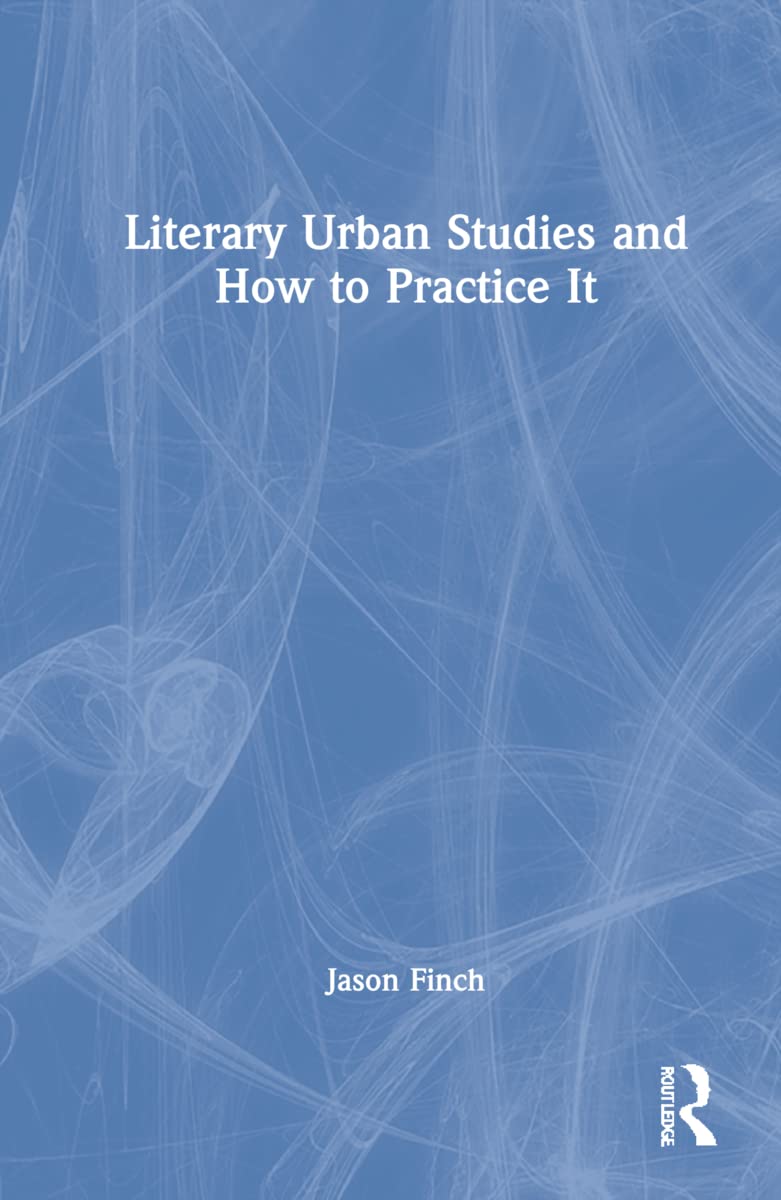
Literary Urban Studies and How to Practice It - Core Textbook
Literary Urban Studies and How to Practice It - Core Textbook
Price subject to change. Tap below for current.
Couldn't load pickup availability
In this review of Literary Urban Studies and How to Practice It the reviewer finds a focused, classroom-ready introduction to a growing interdisciplinary field. The book is presented as the first textbook in literary urban studies and is best for students and instructors who need a structured, method-oriented guide to reading city literature. Its biggest strength is a clear three-unit layout that moves from conceptual tools through historical approaches to practical urban readings, making it a useful course text or reference for researchers exploring spatial approaches in literature.
Key Features
- First textbook in the field: Sets out a clear, teachable definition of literary urban studies that instructors can adopt for seminars and courses.
- Three-unit structure: Guides readers from conceptual foundations to historical readings and finally to practice, which helps learners build skills progressively.
- Methods and terms: Introduces urban methods of reading and core terminology so readers can apply a consistent analytical approach to city texts.
- Historic and global scope: Covers pre-modern, realist, modernist, postcolonial and planetary frames to show how period labels operate in place-based readings.
- Practical orientation: Emphasises how to investigate located qualities of narratives, making it applicable for both classroom assignments and individual research.
Who It's For
This book is ideal for undergraduate and graduate students taking courses in urban literature, cultural geography, or literary criticism who need a concise, method-driven textbook. It is also well suited to instructors looking for a single-volume syllabus anchor that introduces methods alongside representative texts.
Researchers new to spatial humanities or scholars seeking a compact orienting volume will find the historical unit and method chapters especially helpful. Readers wanting detailed archival case studies or exhaustive bibliographies should look elsewhere, as the book's strength is synthesis and method rather than exhaustive primary-document annotation.
Pros & Cons
Pros
- Clear pedagogical organization supports step-by-step skill development for reading city literature.
- Balances conceptual tools and concrete examples across historical and global perspectives.
- Accessible language makes complex spatial theory usable for classroom discussion and assignments.
Cons
- Not a detailed archival or empirical casebook, so specialists seeking exhaustive primary-source evidence may need supplementary texts.
Specifications
| Title | Literary Urban Studies and How to Practice It |
| Author | Jason Finch |
| Primary focus | Introduction to literary urban studies and methods |
| Structure | Three units: concept/methods, historical readings, practical applications |
| Coverage | Pre-modern to planetary, realist, modernist, postcolonial perspectives |
| Intended use | Textbook for courses, reference for researchers |
Our Verdict
Literary Urban Studies and How to Practice It is a compact, well-organised textbook that succeeds as an introductory course book and practical guide to spatial reading. It offers good value for instructors and students who need a method-first treatment of city literature and a readable synthesis of historical approaches, though specialists may supplement it with deeper case studies.
Frequently Asked Questions
Is this book suitable for undergraduate courses?
Yes. Its clear organization and method chapters make it particularly suitable as a core undergraduate or introductory graduate course text.
Does it cover non-Western urban literatures?
The book addresses postcolonial and planetary perspectives, indicating attention to non-Western contexts alongside traditional periods.
Is this a methods manual or a scholarly monograph?
It functions primarily as a textbook combining methods with historical readings rather than an exhaustive monograph focused on one author or city.
Editor's Take
A compact, method-driven textbook that introduces literary urban studies through a three-unit structure; ideal for courses and researchers who need a clear, practical guide to reading city literature.

Recently viewed
Recently viewed products will appear here as customers browse the store.