

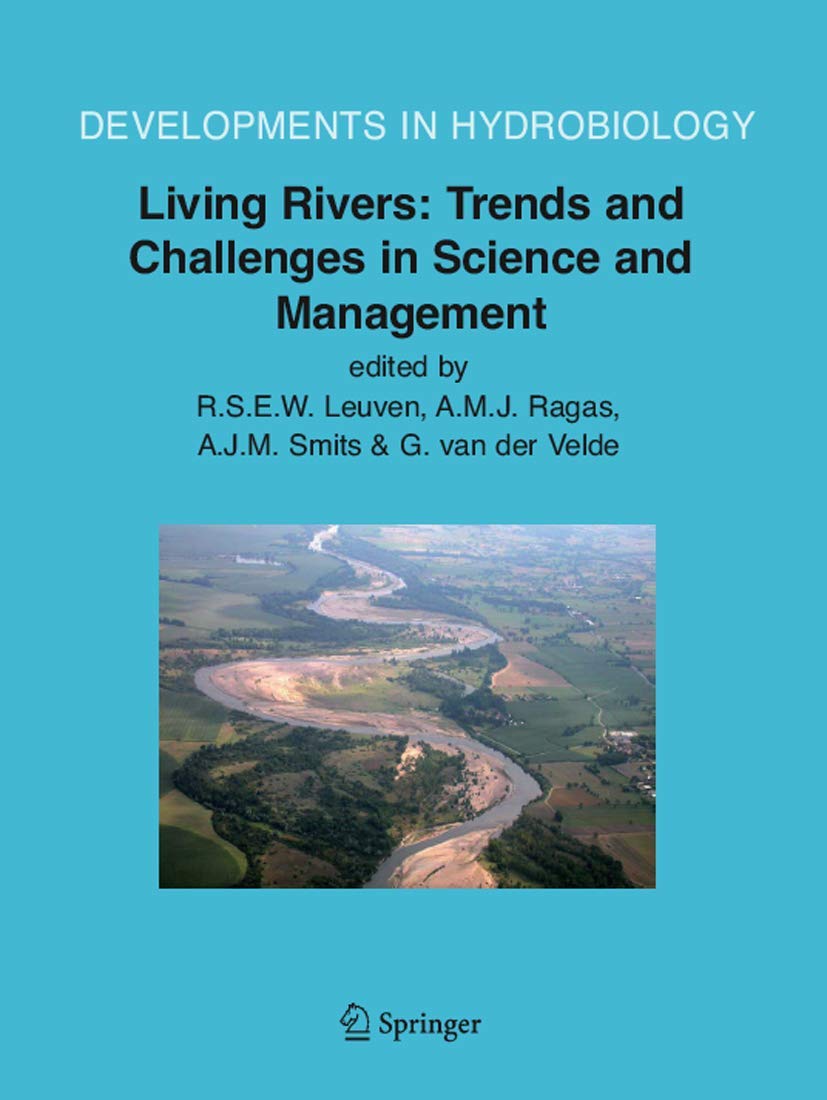
Living Rivers: Trends and Challenges in Science and Management - River
Living Rivers: Trends and Challenges in Science and Management - River
Price subject to change. Tap below for current.
Couldn't load pickup availability
In this review of Living Rivers: Trends and Challenges in Science and Management the book is recommended for professionals and students seeking an integrated, research-driven perspective on sustainable river basin management. The single biggest reason to buy is its interdisciplinary approach: ecology, economy and sociology are examined together to show how sustainability principles are applied and where evidence remains thin. This review focuses on the book's usefulness for applied researchers, environmental managers and policy students who need case studies and expert synthesis rather than an introductory textbook.
Key Features
- Integrative perspective: Combines ecological, economic and sociological viewpoints so readers can see how the three pillars of sustainable water management interact in practice.
- Case study coverage: Presents data and experiences from the Allier, Meuse, Rhine, Sava, Tagliamento and Illinois rivers to ground theory in real-world examples.
- Expert contributions: Chapters authored by specialists provide authoritative summaries of structure, functioning and management of living rivers.
- Policy relevance: Links scientific findings to contemporary policy frameworks such as the European Water Framework Directive, helping practitioners connect research with regulation.
- Comparative insight: Cross-regional material enables comparison between European rivers and a US example, useful for comparative research and planning.
Who It's For
The book is best for environmental scientists, river basin managers, graduate students in water management and policy advisors who need an integrated, evidence-based perspective on river sustainability. It is particularly useful to readers who value case studies and expert synthesis over introductory coverage.
Those seeking a concise textbook or a how-to field manual for immediate engineering design or construction practices should look elsewhere; this volume emphasizes interdisciplinary understanding and management challenges rather than step-by-step technical procedures.
Pros & Cons
Pros
- Thorough interdisciplinary treatment that illuminates links between ecology, economy and sociology.
- Valuable case studies from multiple European rivers and the Illinois river for comparative analysis.
- Authored by specialists, offering credible, research-based discussion relevant to policy and management.
Cons
- Not a practical field manual for engineering tasks, so those needing technical construction guidance may find it lacking.
Specifications
| Title | Living Rivers: Trends and Challenges in Science and Management |
| Series | Developments in Hydrobiology, 187 |
| Editors/Authors | R.S.E.W. Leuven, A.M.J. Ragas, A.J.M. Smits, G. van der Velde |
| Scope | Ecology, economy and sociology of sustainable river management |
| Case studies | Allier, Meuse, Rhine, Sava, Tagliamento (Europe) and Illinois (USA) |
| Intended audience | Researchers, river managers, policy students |
Our Verdict
Living Rivers is recommended for readers who want a research-led, interdisciplinary view of river basin sustainability and policy implications. Its expert chapters and comparative case studies deliver strong value for environmental managers and academics who need context and synthesis, though readers seeking practical engineering instructions should pair it with technical manuals.
Frequently Asked Questions
Does the book include real river data?
Yes, it includes data and experiences from multiple European rivers and the Illinois river to support its analyses.
Is this book suitable for policy makers?
Yes, the text links scientific findings to policy frameworks such as the European Water Framework Directive, making it relevant for policy work.
Will it teach technical engineering methods?
No, the emphasis is on interdisciplinary management and analysis rather than step-by-step engineering procedures.
Editor's Take
Living Rivers delivers a research-led, interdisciplinary view of sustainable river basin management with expert chapters and comparative case studies, ideal for managers and academics who need synthesis rather than technical field guidance.

Recently viewed
Recently viewed products will appear here as customers browse the store.