

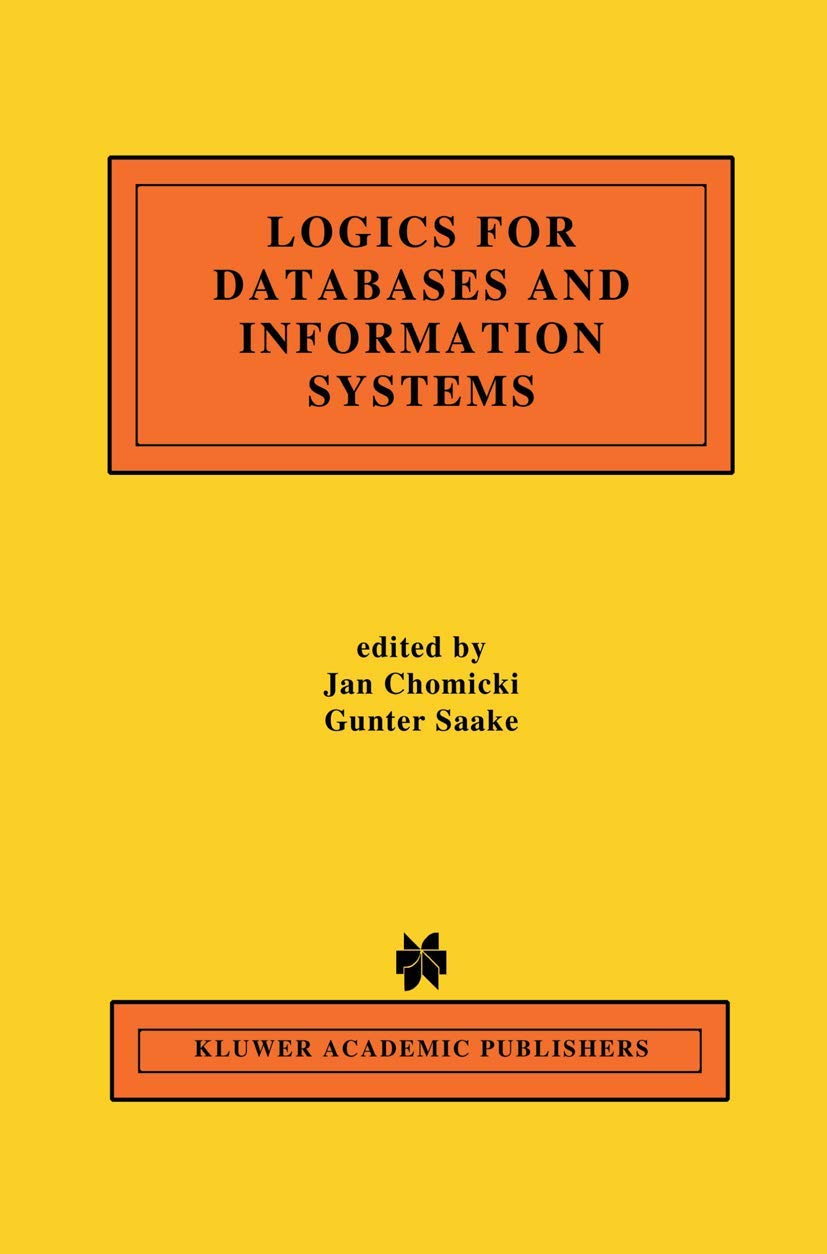
Logics for Databases and Information Systems - Practical Temporal
Logics for Databases and Information Systems - Practical Temporal
Price subject to change. Tap below for current.
Couldn't load pickup availability
In this review of Logics for Databases and Information Systems the focus is on how temporal logic is presented as a practical tool for managing historical data. The book is best for readers who need a clear, structured survey of temporal database languages and theory; its single biggest strength is the way it ties formal semantics to implementation concerns, showing how temporal logic can be used in real temporal database applications. The review looks at clarity, scope, and the book's usefulness as a reference for developers and researchers.
Key Features
- Temporal focus: The text explains why time matters in information systems and offers a systematic approach to handling out-of-date and historical data.
- Formal semantics: Readers gain a concise treatment of temporal logic semantics that supports reliable reasoning about time-stamped information.
- Implementation awareness: The chapters connect abstract logic to implementable ideas, making it useful for practitioners considering temporal extensions to databases.
- Application coverage: The book surveys a range of temporal database applications, including archival and inherently historical data such as medical and cadastral records.
- Survey style: Rather than new theorems, it collects recent developments and organizes the field, which helps readers quickly catch up with existing approaches.
- Interdisciplinary relevance: The approach is suitable for both theoretical researchers and engineers who need to design or query temporal databases.
Who It's For
The book is aimed at database researchers, advanced students, and software engineers who need a solid introduction to temporal logic applied to databases and want a survey of recent work in the field. It is particularly relevant for those building systems that must archive and query historical records, or for teams designing temporal extensions to existing data stores.
It is less suitable for complete beginners seeking a hands-on tutorial with code examples or for readers looking for entirely novel research results; those audiences should supplement this book with implementation guides or current research papers for implementation-level details.
Pros & Cons
Pros
- Well organized survey that clarifies the role of temporal logic in temporal database design and querying.
- Clear discussion of formal semantics that supports sound reasoning about historical data.
- Useful linkage between theory and practical concerns, aiding implementers who must handle archived or time-varying records.
- Relevant examples of inherently historical domains, making the material concrete and relatable.
Cons
- Not focused on novel research results; it primarily surveys rather than presenting new methods.
- The book does not provide extensive implementation code, so practitioners will need additional resources for hands-on development.
Specifications
| Title | Logics for Databases and Information Systems |
| Series | The Springer International Series in Engineering and Computer Science |
| Authors | Jan Chomicki, Gunter Saake |
| Main topic | Temporal logic applied to temporal databases |
| Scope | Survey of recent developments and application examples |
| Use cases | Archival data, medical, cadastral, judicial records |
Our Verdict
For readers who need a rigorous, survey-style treatment of how temporal logic supports temporal databases, this book is a practical and compact resource. It bridges formal semantics and implementation concerns well, making it good value for researchers and engineers who must reason about historical data, though hands-on implementers will want complementary code-focused materials.
Frequently Asked Questions
Does this book explain how temporal logic is applied to databases?
Yes, it explicitly shows how temporal logic can be used in temporal database applications and ties the formal semantics to implementation considerations.
Is this a practical programming guide with code examples?
No, the book is a survey and theoretical treatment rather than a code-first tutorial, so developers should pair it with implementation resources.
Who benefits most from reading this book?
Researchers, advanced students, and engineers designing or querying systems that manage historical or time-varying records will benefit most.
Editor's Take
A rigorous survey that links temporal logic semantics to practical concerns, making it a useful reference for researchers and engineers working with archival or historical database records.

Recently viewed
Recently viewed products will appear here as customers browse the store.