

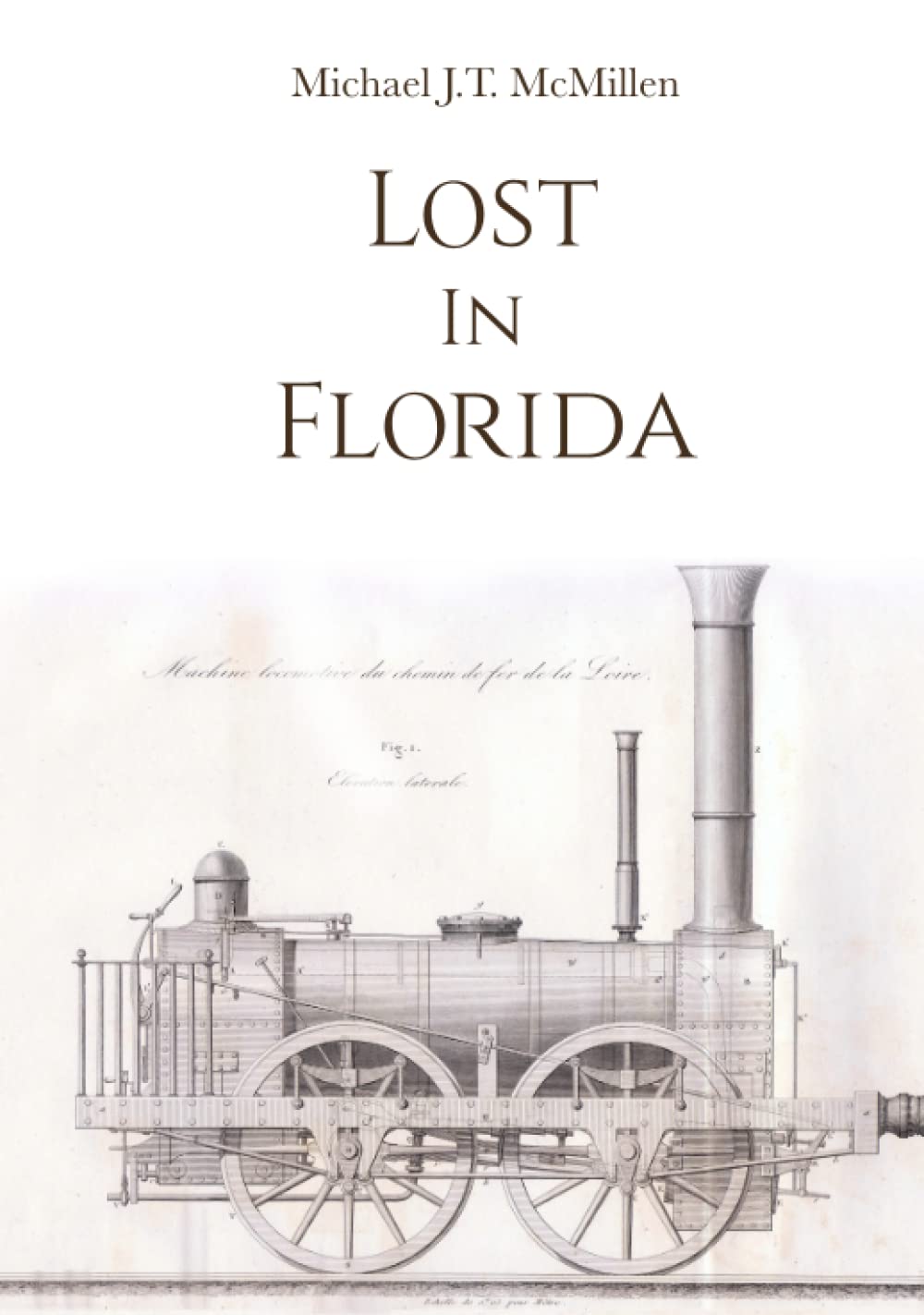
Lost in Florida: Prelude to Equipment Finance - Historical Case Study
Lost in Florida: Prelude to Equipment Finance - Historical Case Study
Price subject to change. Tap below for current.
Couldn't load pickup availability
In this review of Lost in Florida: Prelude to Equipment Finance, the reader gets a focused, archival look at an early 19th century financial scheme that connects railroad equipment, banking and territorial politics. The book is best for historians, finance practitioners curious about the roots of equipment finance, and readers who appreciate tight narrative reconstruction. The single biggest reason to buy is its deep, document-driven exploration of how a proposed Pensacola Railroad, backed by the Bank of Pensacola and territorial guarantees, reveals early patterns of finance, speculation and infrastructure planning.
Key Features
- Archival narrative: Reconstructs the 1836 Pensacola Railroad scheme from primary documents to show how locomotives and bonds were used as financial instruments.
- Focus on finance: Explains the Bank of Pensacola's role in issuing bonds and controlling the railroad, clarifying early examples of institutional influence over infrastructure.
- Regional context: Situates the plan within Florida Territory politics and the economic aims to channel cotton and lumber through Pensacola Bay.
- Case-driven insight: Uses the Pensacola real estate and military lobbying angle to illustrate how finance and public policy intersected in the antebellum era.
- Compact scope: Concentrates on a single scheme and set of actors, making the narrative accessible for targeted study rather than a broad survey.
Who It's For
Lost in Florida is aimed at readers who want a focused case study at the intersection of finance and local history: graduate students of economic history, equipment finance professionals seeking historical perspective, and local historians of Florida and Gulf trade. The book's emphasis on documents and institutional roles makes it useful as a reference for those researching early banking and transportation schemes.
Readers looking for a broad social history, a sweeping national narrative, or a technical primer on modern equipment leasing should look elsewhere; the book is narrowly centered on the Pensacola Railroad plot, the Bank of Pensacola's bond financing, and the territorial guarantees that framed the scheme.
Pros & Cons
Pros
- Provides a concentrated, evidence-based reconstruction of a single, illustrative finance scheme from 1836.
- Clarifies the role of a bank and territorial guarantees in channeling public and private interests toward a speculative infrastructure plan.
- Offers useful regional context connecting cotton, lumber trade goals, and Pensacola real estate ambitions.
Cons
- Very narrow focus may feel limited to readers wanting broader histories or comparative studies.
Specifications
| Title | Lost in Florida: Prelude to Equipment Finance |
| Author | Michael J.T. McMillen |
| Subject | History of equipment finance and regional infrastructure schemes |
| Setting | Florida Territory, 1836 |
| Key actors | Pensacola Railroad, Bank of Pensacola, William H. Chase |
| Primary themes | Bonds, territorial guarantees, real estate and military lobbying |
Our Verdict
Lost in Florida is a concise, document-rich case study that rewards readers who want to understand an early example of equipment finance and local speculation. Its focused scope and archival approach make it good value for historians and finance professionals seeking historical precedent rather than casual readers seeking broad narrative sweep.
Frequently Asked Questions
Does the book cover technical details of locomotives?
The book centers on the financial and institutional story and does not serve as a technical manual on locomotive design.
Is this a broad history of Florida?
No, it is a targeted study of one 1836 scheme linking the Pensacola Railroad plan, the Bank of Pensacola and territorial guarantees.
Who is William H. Chase in the narrative?
William H. Chase appears as the local leader of the group promoting the railroad and related real estate and banking plans.
Editor's Take
A concise, document-rich case study that clarifies how the Pensacola Railroad scheme and Bank of Pensacola bond financing exemplify early equipment finance; recommended for historians and finance professionals seeking historical precedent.

Recently viewed
Recently viewed products will appear here as customers browse the store.