

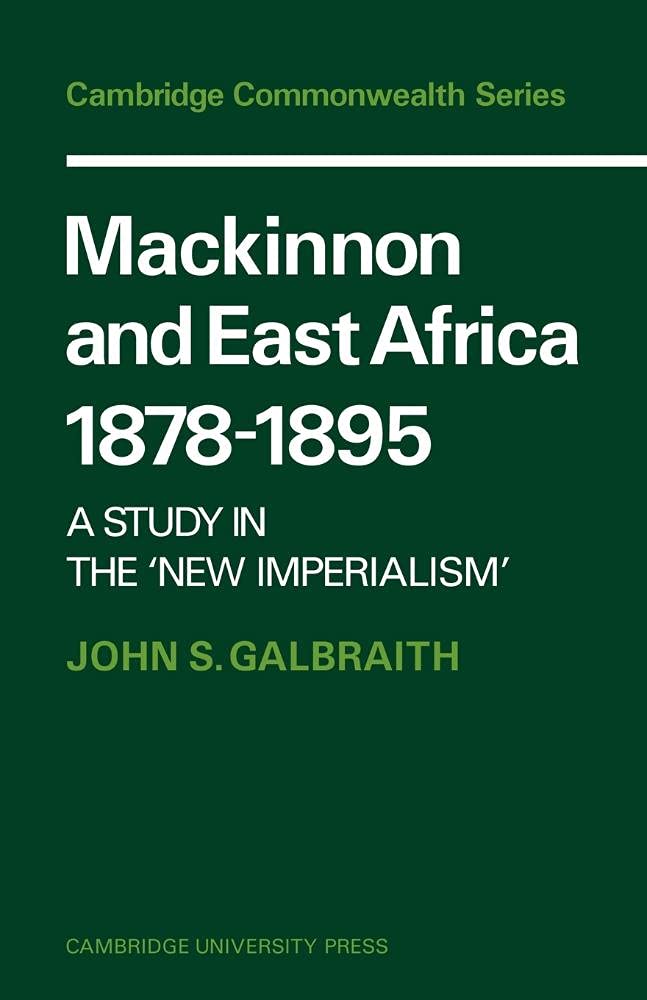
Mackinnon and East Africa 1878-1895: A Study in the New Imperialism
Mackinnon and East Africa 1878-1895: A Study in the New Imperialism
Price subject to change. Tap below for current.
Couldn't load pickup availability
In this review of Mackinnon and East Africa 1878-1895 the reviewer finds a focused academic study for readers seeking a clear account of British influence, company rule, and the transition to formal colonial control in east Africa. The book is best for students, historians and policy readers who want a concise narrative about the Imperial British East Africa Company and the political context that led from informal influence in Zanzibar to partition with German interests. The single biggest reason to buy is its tight examination of how private enterprise and government policy interacted during the era of New Imperialism.
Key Features
- Historical focus: Provides a concentrated account of British informal influence from Zanzibar and the shift to mainland control, clarifying the diplomatic background that framed late 19th century east African politics.
- Company history: Describes the rise and fall of the Imperial British East Africa Company and why its short tenure mattered for later colonial administration.
- Political context: Explains Bismarck's support for Carl Peters and the 1886 partition that created British and German spheres, offering useful context for international rivalry in the region.
- Key personalities: Covers figures such as Sir John Kirk and William Mackinnon, helping readers gauge how individual leadership and policy decisions affected outcomes.
- Concise narrative: Delivers a readable, focused study rather than a sprawling survey, making it suitable for coursework or concentrated research.
Who It's For
This book suits undergraduates, graduate students and general readers interested in colonial and African history who want a precise case study of late 19th century east Africa. It is especially helpful for those studying the mechanics of imperial expansion where private companies acted as agents of state influence and where diplomatic rivalry shaped territorial control.
Readers seeking a broad survey of African history across centuries, or a richly illustrated popular history with social and cultural detail, should look elsewhere; this work is focused on political and administrative developments and the role of specific actors in the Imperial British East Africa Company episode.
Pros & Cons
Pros
- Concentrated treatment of the 1878-1895 period makes it easy to follow the chain of events leading to partition.
- Clear explanation of how government reluctance and company management interacted to shape outcomes.
- Useful coverage of key figures, providing insight into diplomatic and administrative decisions.
Cons
- Not intended as a comprehensive social history, so readers wanting broad cultural detail may find it limited.
Specifications
| Title | Mackinnon and East Africa 1878-1895: A Study in the New Imperialism |
| Series | Cambridge Commonwealth Series |
| Author | John S. Galbraith |
| Geographic focus | East Africa, Zanzibar and mainland territories |
| Period covered | 1878 to 1895 |
| Primary subjects | Imperial British East Africa Company; British and German partition |
Our Verdict
The book is a sound, economical study for readers focused on the political and administrative dynamics of late 19th century east Africa; it explains why informal influence gave way to company rule and then to formal colonial control, making it good value for students and historians wanting a compact, authoritative case study of New Imperialism.
Frequently Asked Questions
Does this book cover the Imperial British East Africa Company?
Yes; it traces the establishment, short tenure and failures of the Imperial British East Africa Company and its role in regional administration.
Is the book appropriate for classroom use?
Yes; its focused narrative and clear political context make it suitable for undergraduate or graduate courses on imperial or African history.
Does it discuss the German role in partition?
Yes; it explains Bismarck's backing of Carl Peters and the resulting partition into British and German spheres in 1886.
Editor's Take
A concise, focused study that explains how British informal influence, company rule and international rivalry led to partition and formal colonial control, making it valuable for students and historians interested in New Imperialism.

Recently viewed
Recently viewed products will appear here as customers browse the store.